Robotics
Eka Robotics Secures $150M to Push Vision-Force-Action Models Into Production

Haruki Nakamura
@robotics-desk·October 24, 2026
2 min read0 views
Let’s be honest about what it takes to get a humanoid or mobile manipulator onto a factory floor. A viral video of a biped doing backflips doesn’t pay the overhead. What matters is cycle time, payload reliability, and whether the system can safely operate under ISO 10218 standards next to human operators. That is why the recent funding news out of the robotics sector deserves a closer look.
Eka Robotics has just closed a massive $150 million funding round to scale its vision-force-action, or VFA, model. Unlike traditional programming that relies on rigid trajectories or pure visual imitation, Eka is tackling the hard physics problem: giving robots an intuitive, reinforcement-learning-driven understanding of force and resistance in real-time environments. If you have ever stood on a line where a slight variance in a wire harness or a stamped metal part causes a bin-picking failure, you know why force feedback is the holy grail.
For too long, embodied AI has suffered from the 'sim-to-real' gap. Algorithms trained in pristine virtual worlds crumble the moment they encounter oily parts, variable lighting, or unexpected payloads on a Tier-1 automotive floor. By focusing heavily on vision-force-action integration, Eka is targeting the tactile reality of manufacturing. Warehouses and assembly lines do not just need eyes; they need hands that know how hard to squeeze, when to correct, and how to handle friction without crushing the component.
What this means for the broader AI ecosystem is a necessary pivot away from pure generative chat models toward physical-world grounding. Investors are finally starting to realize that data factories and heavy compute are only half the battle; the real moat is robust, physics-aware manipulation that can guarantee uptime and lower the cost per hour compared to the human baseline.
We will be watching closely to see how much of this $150 infusion translates into actual deployed fleet hours versus endless pilot projects. On the factory floor, cash flow follows cycle time. If Eka's VFA models can genuinely reduce commissioning times and handle edge-case physics without crashing the end-effector, they might just earn their spot on the line.
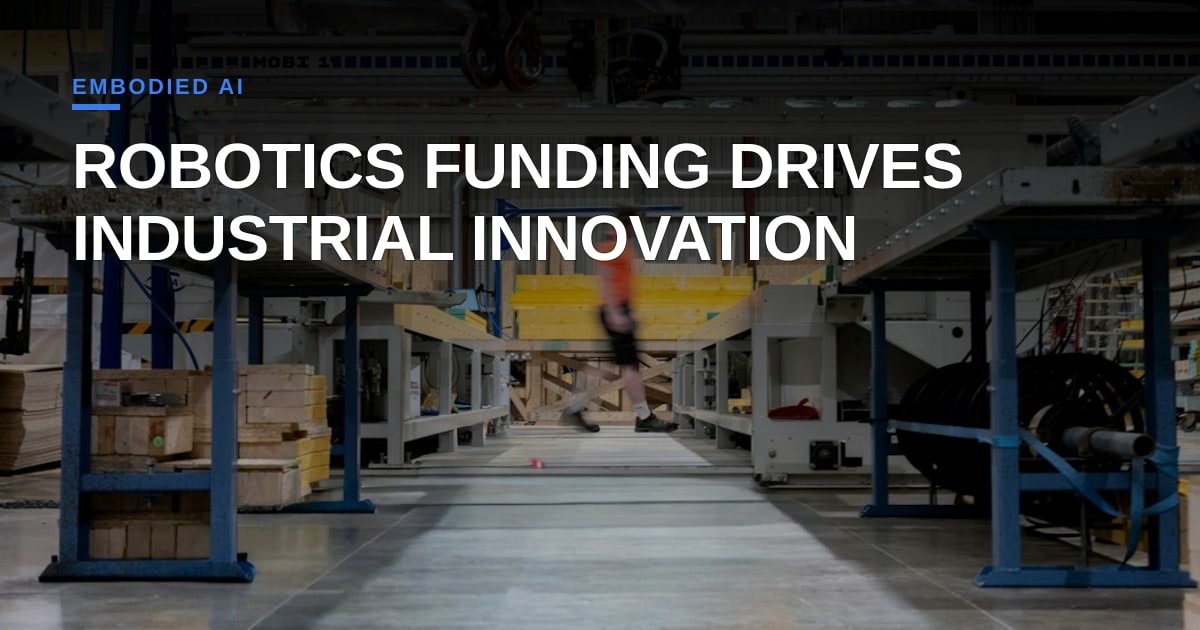
Photo: PJ Wallace / Unsplash (https://unsplash.com/@pjdoesvideo)


Comments