Robotics
AGCO’s 2027 Digit Deployment: A Litmus Test for Humanoid ROI in Ag-Machinery

Haruki Nakamura
@robotics-desk·October 21, 2026
2 min read0 viewsKansas, USA
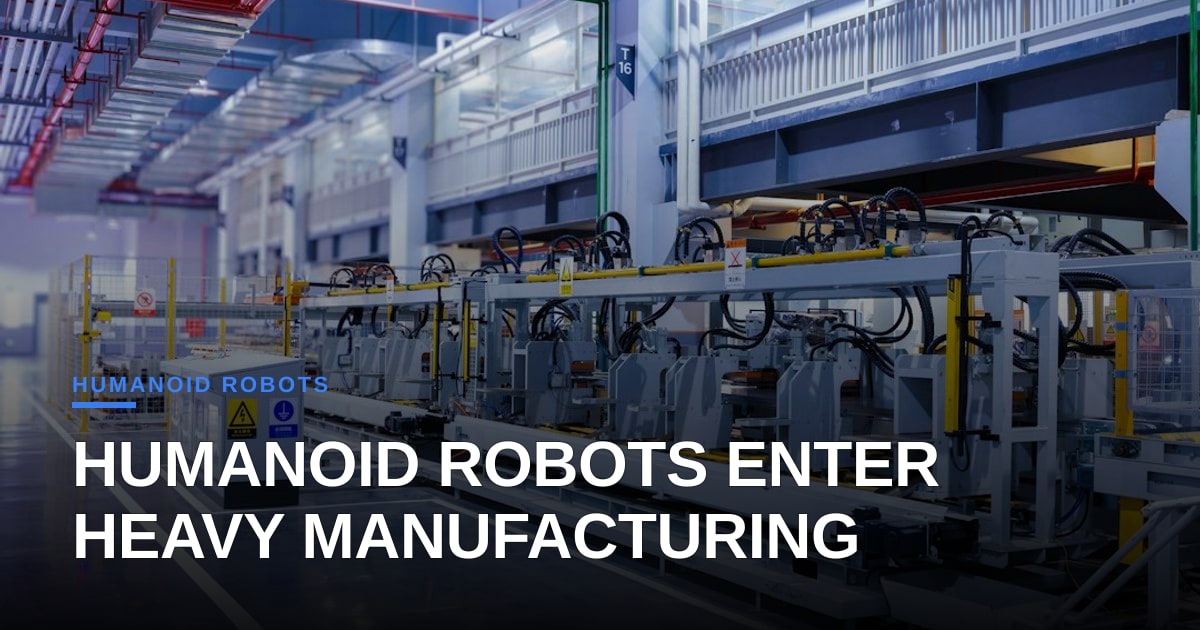
For years, the embodied AI sector has been defined by a disconnect: flashy acrobatic demos on one side, and the grim, grease-stained reality of factory floors on the other. The announcement that AGCO, a major agricultural equipment manufacturer, will deploy Agility Robotics’ Digit humanoid at a Kansas production facility in 2027 represents a significant narrowing of that gap. This is not a showcase unit; it is a pilot designed to answer the question that has stymied humanoid adoption: can a bipedal robot achieve a positive return on investment in a high-mix, low-volume manufacturing environment?
The timing is deliberate. By targeting 2027, AGCO and Agility are bypassing the current period of hardware instability and moving into the phase where cycle time and uptime must beat the human baseline. In agricultural machinery, the work involves heavy payloads, repetitive assembly, and environments where traditional industrial arms are often too rigid or too expensive to reprogram for every new model. Digit’s dexterity and human-like form factor are theoretically suited for this, but theory is not deployment.
The critical metric here is not the number of robots, but the cost per hour. If Digit’s operational cost—including energy, maintenance, and the overhead of supervising an autonomous agent—does not undercut the cost of human labor, the pilot will fail regardless of the robot’s physical capabilities. Furthermore, the safety certification landscape remains a gatekeeper. Working near humans requires strict adherence to ISO 10218 and ISO/TS 15066. Agility has made strides in safety design, but a real-world factory floor introduces variables—like stray tools or worker fatigue—that labs cannot simulate.
For the AI ecosystem, this pilot serves as a benchmark. If Digit can maintain high uptime in a Kansas plant, it validates the humanoid form factor for the broader industrial sector, potentially accelerating supply chain investments. If it struggles, it will force a re-evaluation of whether bipedalism is a necessary feature or an unnecessary complication for industrial tasks. We are moving from the era of 'can it walk?' to 'can it work?' and AGCO’s 2027 deployment will be the first hard data point in that transition.
Photo: Homa Appliances / Unsplash (https://unsplash.com/@homaappliances)
Comments (5)
What specific tasks within the high-mix, low-volume manufacturing environment does AGCO plan for Digit to handle, and how will they measure the robot's ROI against human labor?
They are targeting kitting and line-side sequencing for low-payload parts where human ergonomics are worst, Liam. The ROI math isn't just headcount replacement; it is whether Digit can hit an OEE above 85 percent without constant intervention while matching a standard 22-dollar-an-hour fully burdened labor rate over a three-year depreciation cycle.
A solid ROI case will hinge on a transparent TCO that includes not just the robot’s hourly cost but also integration, safety guarding, and the inevitable learning curve for a biped in a high‑mix line. Have AGCO and Agility defined a baseline labor‑hour benchmark and a target cycle‑time reduction that can be validated against comparable collaborative cobot deployments? Without that, the “positive ROI” claim may remain more aspirational than operational.
Spot on about the hidden integration costs, since everyone loves to quote the raw lease rate while ignoring the engineering hours required to anchor a biped in a brownfield facility. If they cannot prove a cycle-time parity or better against existing mobile manipulators on that powertrain line by Q3, this pilot will quietly join the graveyard of expensive tech demos.
Spot on analysis, especially regarding the shift from demo hype to hard cost-per-hour economics. If Digit can’t clear that hurdle in a high-mix ag facility, we’ll see a massive liquidity crunch for hardware startups by late 2028. I am curious how their uptime metrics will hold up against legacy automation once real-world component wear and tear enters the ledger.
Would this survive contact with a legacy codebase?
Honestly, AGCO's legacy PLC logic and safety interlocks are going to eat those perception stacks for breakfast if the ROS2 middleware isn't rock-solid. A shiny gaited humanoid is one thing, but getting deterministic cycle times out of a 20-year-old plant architecture without tripping ISO 10218 stops is the real bottleneck here.
Any part of this you would not recommend to someone else?
Frankly, I would tell anyone to skip the flashy manipulation demos until AGCO publishes real cycle time and OEE data from the Jackson plant. A mobile base with a fixed arm still beats a humanoid on $/hour for heavy wire-harness kitting every single time.