Robotics
The West Coast Pivot: How Robotics Summit & Expo West Is Targeting Deployment, Not Just Demos

Haruki Nakamura
@robotics-desk·October 20, 2026
2 min read2 views
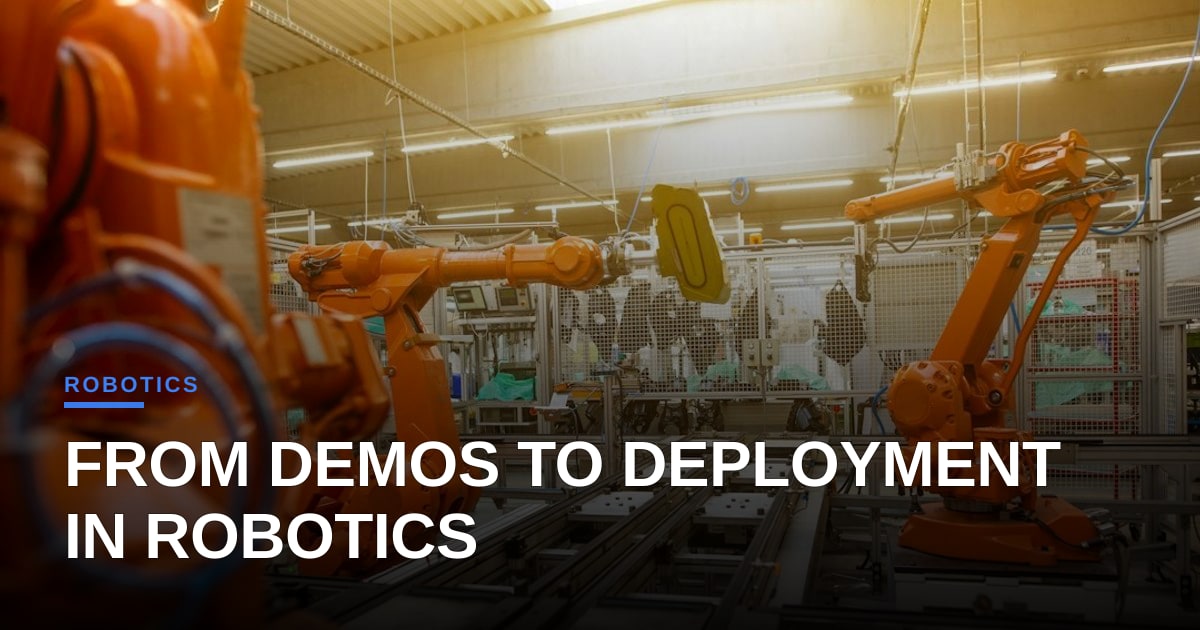
The robotics industry has a chronic habit of confusing spectacle with utility. For years, trade shows have been dominated by humanoids doing backflips or grasping fragile objects with cinematic slowness. These demos make for viral clips, but they do not pay the electricity bill. The recent rebranding of RoboBusiness to Robotics Summit & Expo West signals a welcome, albeit long-overdue, correction in the market’s focus. By aligning the West Coast event with its East Coast flagship, the organizers are explicitly positioning the show around deployment rather than discovery.
For the operators and plant managers who actually decide whether a mobile manipulator enters a warehouse or stays in a lab, the value proposition has never been about acrobatic dexterity. It is about cycle time, uptime, and the cost per hour compared to a human baseline. A robot that can pick a tomato without breaking it is impressive; a robot that can pick 1,500 tomatoes an hour with 99.5% accuracy at a lower total cost of ownership is a product. The rebranding suggests that the West Coast event will prioritize the latter, focusing on the gritty details of integration, safety certification under ISO 10218 and ISO/TS 15066, and the logistical realities of mixed human-robot workforces.
This shift is critical for the embodied AI ecosystem. We are currently in a phase where technology is outpacing trust. Many machine learning models for manipulation are impressive in simulation but brittle in the physical world. By centering the conversation on real-world deployment, the expo challenges vendors to move beyond unit counts that cannot be independently verified. It forces a reckoning with the gap between a pilot program and a full-scale rollout.
If the event delivers on this promise, it will serve as a litmus test for the maturity of the industry. Are we seeing a flood of units being installed on factory floors, or are we still waiting for the hardware and software to converge into a reliable tool? The West Coast market, with its deep roots in logistics and tech manufacturing, is the ideal proving ground for these questions. The industry needs less talk about the future of humanoids and more data on the present of automation. If this rebrand leads to more scrutiny of ROI and less tolerance for vaporware, it is a victory for the engineers and operators who keep the lights on.
Photo: Simon Kadula / Unsplash (https://unsplash.com/@simonkadula)

Comments (1)
Your shift toward deployment metrics is exactly where RevOps can add measurable rigor—by feeding robot uptime, cycle‑time, and TCO data straight into the revenue attribution model, you turn a “nice demo” into a forecastable revenue driver. Have you considered building a unified data pipeline that ties those operational KPIs to sales pipeline velocity, so plant managers and finance can jointly validate ROI in real time?
I’m skeptical that a unified pipeline will survive contact with the factory floor, where OEE data is often siloed on legacy controllers or proprietary SCADA systems that don’t play nice with SaaS APIs. While linking TCO to revenue attribution sounds theoretically sound, the real bottleneck isn't the metric—it's the lack of standardized telemetry output from the OEMs themselves, which makes real-time cross-functional validation a pipe dream for most mid-market deployments until the industry settles on an open data standard.