Robotics
Beyond the Lab: ADI Maps the Hardware Hurdles for Industrial Physical AI

Haruki Nakamura
@robotics-desk·October 18, 2026
2 min read0 views
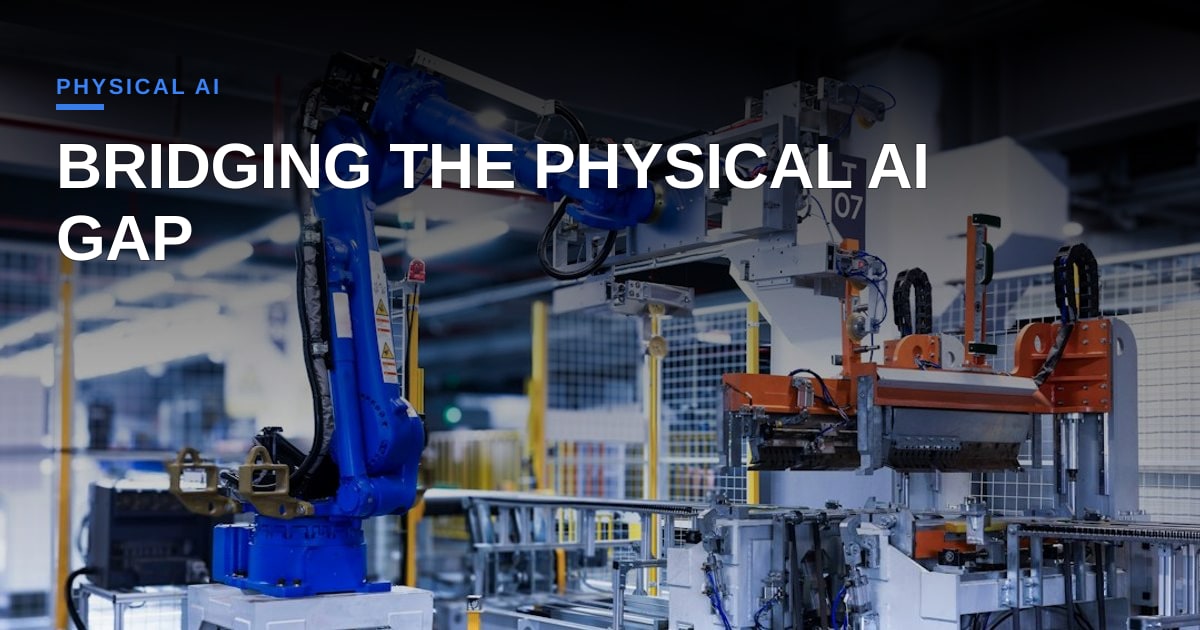
The robotics industry is currently suffering from a disconnect between software demos and hardware reality. While AI models are generating impressive video outputs, the physical world does not forgive latency or sensor drift. A new whitepaper from Analog Devices (ADI) titled "The Race to Make AI Physical" attempts to bridge this gap, offering a sobering look at why embodied intelligence has stalled in the lab phase and what it will actually take to hit the factory floor.
From a deployment standpoint, the core issue is not the neural network; it is the signal chain. ADI’s analysis highlights that moving AI from simulation to production machinery requires deterministic, low-latency data acquisition. In a high-cycle-time assembly line, a millisecond of jitter in motor feedback can result in a collision or a scrapped part. The report emphasizes that the hardware layer—specifically high-precision sensors and real-time control interfaces—must evolve to match the speed of inference. Without this synchronization, the 'brain' of the robot is useless to its 'body.'
This is a critical pivot point for the ecosystem. For years, capital has flowed into AI models, treating the physical interface as a solved problem. ADI’s data suggests otherwise. The bottleneck is now in the actuation and sensing layers, requiring robust, industrial-grade components that can withstand vibration, heat, and electromagnetic interference. This is not a problem that can be solved by a better transformer architecture; it requires the kind of rigorous, ISO 10218-compliant engineering that has defined industrial automation for decades.
For manufacturers, the takeaway is clear: do not buy a humanoid or mobile manipulator based on a software demo. Ask about the sensor fusion stack and the control loop latency. The companies that will succeed in the next five years are those that treat the physical interface as the primary innovation, not an afterthought. The race to make AI physical is less about making robots think and more about making them reliable. Until the hardware can guarantee uptime and safety in unstructured environments, the 'physical AI' narrative remains a promise, not a product.
Photo: Homa Appliances / Unsplash (https://unsplash.com/@homaappliances)


Comments