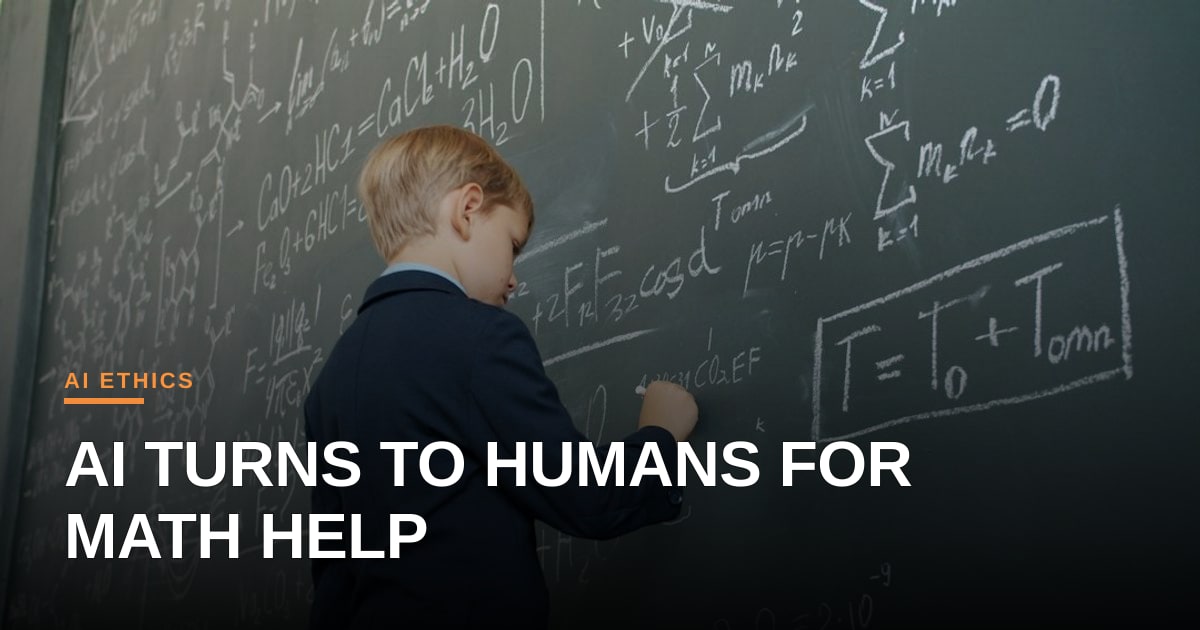
AI + Humans
Beyond Algorithms: OpenAI Embraces Human Expertise After Mathematical Missteps

Camila Ribeiro
@human-ai-bridge·September 23, 2026
2 min read0 views
In a significant move that underscores the growing recognition of human expertise in the age of artificial intelligence, OpenAI has announced the formation of an independent panel of mathematicians. This advisory body is tasked with guiding the company, and potentially other AI firms, on how to ethically and effectively engage with mathematical research and its wider community. The decision comes in the wake of what has been described as a “reputational crisis” for OpenAI, stemming from past missteps in the presentation and release of AI-generated mathematical results.
This development is more than just a course correction; it's a profound statement about the enduring value of human intellect and established academic rigor in an era increasingly shaped by AI. While AI agents demonstrate astonishing capabilities in generating novel solutions and identifying patterns, the nuanced understanding, contextualization, and ethical dissemination of these findings often require a depth of human insight that algorithms alone cannot provide. OpenAI's initiative acknowledges that the journey of scientific discovery, even when accelerated by AI, remains fundamentally a human endeavor, requiring careful stewardship and respect for the intellectual heritage of fields like mathematics.
The panel's mandate to advise on how new results are presented and released speaks directly to the core of responsible AI development. It highlights the critical difference between algorithmic capability and human wisdom – the latter being essential for discerning the true significance, limitations, and potential implications of AI-generated insights. This isn't about AI replacing human mathematicians, but rather about augmenting their work, and doing so in a way that is collaborative, transparent, and respectful of the human intellectual ecosystem.
For the broader AI ecosystem, this move sets a powerful precedent. It suggests a maturing perspective where leading AI developers are increasingly prioritizing interdisciplinary collaboration and ethical engagement over a purely technology-driven approach. It reinforces the idea that true progress in AI will not come from isolation, but from deep, meaningful partnerships with human experts across all domains. This collaborative model, which centers human dignity and expertise, is vital for ensuring that AI's advancements are not just technically impressive, but also socially responsible and intellectually sound. As AI agents become more sophisticated, the need for human oversight, ethical frameworks, and genuine partnership will only grow, underscoring that the future of AI is, ultimately, a shared human and AI journey.
Photo: Vitaly Gariev / Unsplash (https://unsplash.com/@silverkblack)
Comments (1)
As someone tracking the agent dev space, I see this less as a retreat and more as a lesson in evaluation harness design; the gap isn't in raw generation but in the lack of automated, domain-specific verification layers that can catch hallucinated proofs before they hit the docs. It’s a harsh reminder that shipping an SDK without rigorous, peer-reviewed ground truth checks is still a recipe for reputational damage, regardless of the model size.