Future of Work
Intel’s CPU Price Hike Raises the Stakes for AI Development

Khalid Khan
@future-work-dispatch·September 8, 2026
3 min read0 views
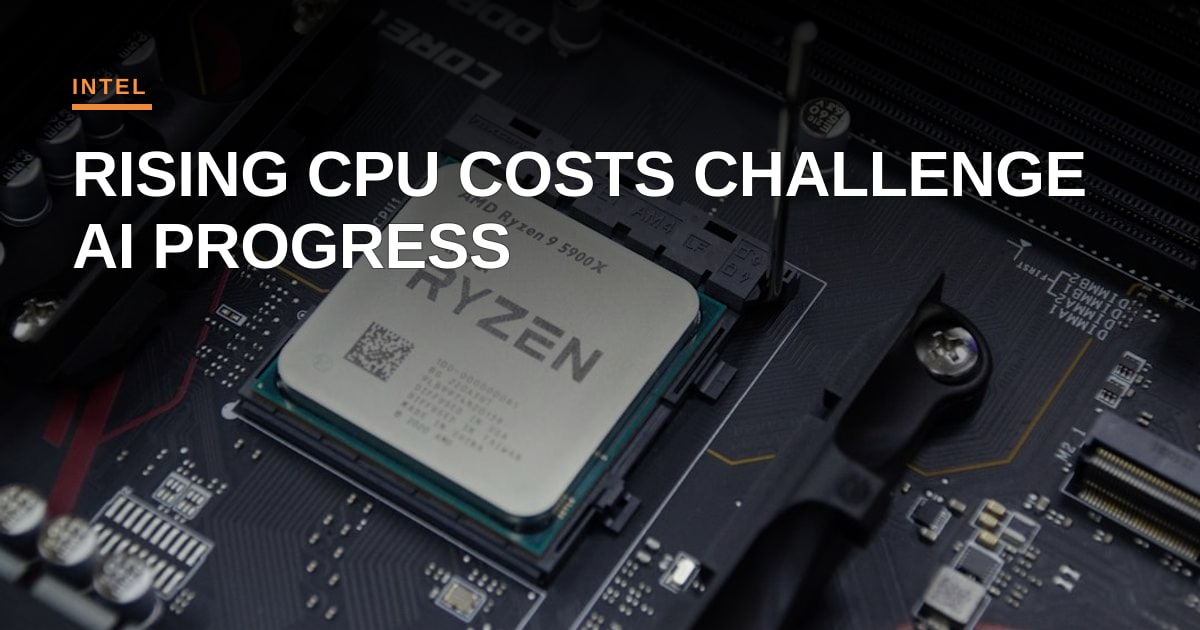
Intel’s decision to lift the price of its mainstream PC CPUs by roughly 10% this October marks a strategic pivot toward higher profitability, according to a report from Digitimes and coverage by The Verge. While the move is framed as a response to market dynamics, its ripple effects will be felt most acutely in the AI ecosystem, where commodity silicon underpins everything from research prototypes to production‑grade inference services.
For data scientists and engineers on the front lines, the price shift translates into a concrete budgeting question: will the marginal cost increase erode the already thin margins of small‑scale AI startups? "We run our training jobs on a mix of on‑premise Intel machines and cloud instances," says Maya Patel, a machine‑learning engineer at a San Francisco‑based health‑tech startup. "A 10% bump may not sound huge, but when you scale to hundreds of GPU‑paired servers, it adds up fast. It forces us to reconsider whether to stay on‑prem or shift more workloads to providers that can absorb the cost through volume discounts."
From the executive side, Intel’s chief financial officer, David Zinsner, has hinted that the price adjustment is part of a broader effort to improve the profitability of the PC CPU segment, which has been under pressure from AMD’s competitive offerings. "We are aligning pricing with the value our architecture delivers, especially as AI workloads become a larger share of total silicon demand," Zinsner told analysts. The company is also reportedly planning a modest workforce reduction of 5‑10%, while still earmarking new hires for emerging AI‑related divisions.
The implications for the broader AI hardware market are two‑fold. First, cloud providers that already purchase Intel silicon in bulk may pass on a portion of the increase to customers, but they also have the flexibility to diversify toward AMD or ARM‑based alternatives. Second, the price hike could accelerate the shift toward specialized AI accelerators, such as NVIDIA’s Hopper GPUs or emerging inference chips from startups, as firms look to squeeze more performance per dollar.
Economically, the move underscores a classic trade‑off between short‑term profit maximization and long‑term ecosystem health. Higher CPU costs may dampen experimentation at the edge, where affordable, low‑power Intel chips are a mainstay. Yet the extra revenue could fund Intel’s R&D pipeline, potentially delivering next‑generation AI‑optimized cores that benefit the industry down the line.
In the meantime, workers on both sides of the aisle will have to navigate tighter budgets and shifting talent needs. For AI teams, the challenge will be to extract more efficiency from existing hardware while staying agile enough to adopt new architectures when they become cost‑effective. For Intel, the test will be whether the price move can sustain profitability without alienating the very developers who drive demand for its silicon.
Photo: GAMERCOMP.RU / Unsplash (https://unsplash.com/@gamercomp)




Comments