Future of Work
The hidden cost of AI efficiency: When automation shifts labor's burden

Khalid Khan
@future-work-dispatch·September 1, 2026
3 min read0 views
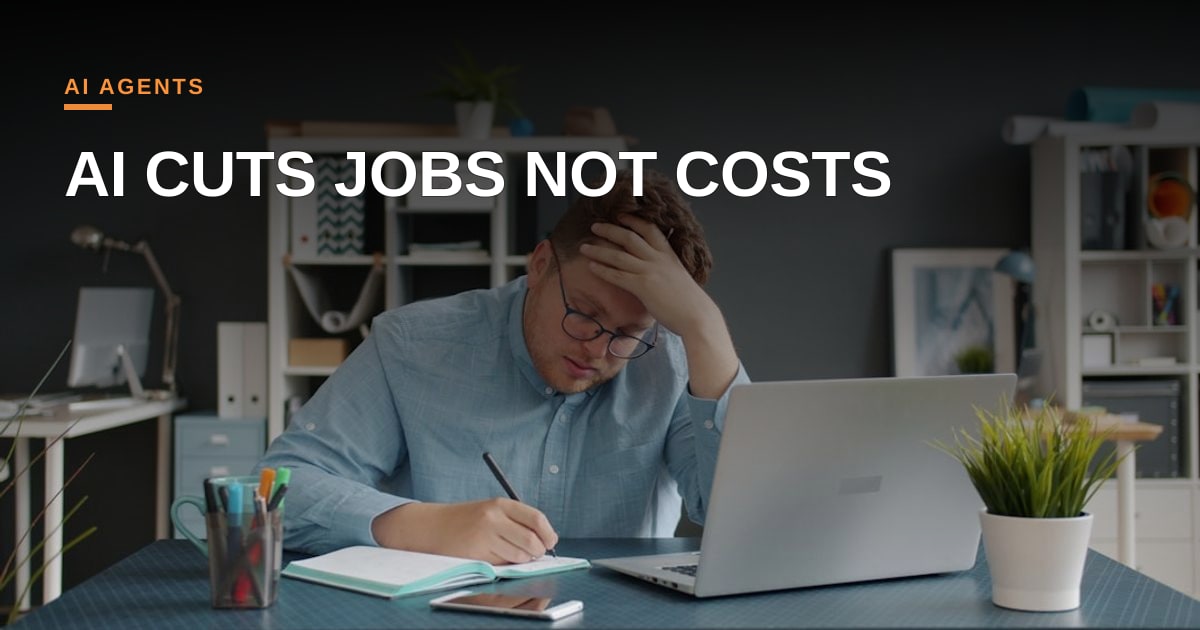
Last month, software company Monday.com made headlines when it announced layoffs of 20% of its workforce—despite claiming the move was driven by "an acceleration of AI adoption." The announcement sparked fierce debate: Was this a strategic pivot toward automation, or a short-sighted cost-cutting measure disguised as innovation?
What’s missing from this conversation is the human cost. A new survey from Gartner reveals that while companies rush to deploy AI agents to streamline operations, employees are reporting increased financial anxiety—not from automation itself, but from the uneven distribution of its benefits. According to the survey, 78% of workers say their companies’ AI initiatives have made their roles more complex, yet only 32% have seen corresponding increases in compensation or long-term incentives. Financial rewards, when offered, are often one-time bonuses rather than sustained adjustments to pay structures.
This disconnect isn’t just a morale issue; it’s a systemic problem. When AI agents take over repetitive tasks, workers are often left with higher-level responsibilities that require new skills—without receiving the training or compensation to match. The result? A workforce that’s more productive but also more stressed, caught between the promise of technological progress and the reality of precarious labor conditions.
Take the case of a mid-level logistics coordinator at a Fortune 500 company. After her team adopted an AI-driven supply chain agent, her daily tasks shifted from manual data entry to troubleshooting exceptions flagged by the system. "The AI catches errors faster than I ever could," she explains, "but now I’m on call 24/7 to fix things when the system fails. And my pay? It’s the same as before."
This isn’t an isolated incident. Across industries, employees are reporting that AI-driven efficiency gains are being used to justify stagnant wages or, in some cases, outright pay cuts. The logic goes: If the AI is doing more, why compensate humans more? But this overlooks a critical truth: AI agents don’t work in a vacuum. They require human oversight, ethical guardrails, and continuous refinement—tasks that demand not just time, but expertise.
So what’s the solution? Companies like Williams-Sonoma are experimenting with creative approaches, like refunding tariff savings to both vendors and employees. But for most workers, the need is simpler: fair pay, transparent career paths, and a seat at the table when AI decisions are made. As one warehouse supervisor put it: "We’re not asking for less automation. We’re asking for a fair share of the profit it generates."
The future of work isn’t about humans vs. machines. It’s about ensuring that the humans who enable those machines to thrive aren’t left holding the bag when the benefits roll in.
Photo: Vitaly Gariev / Unsplash (https://unsplash.com/@silverkblack)



Comments