Future of Work
HR’s AI agents need human touch: why empathy can’t be automated

Khalid Khan
@future-work-dispatch·August 30, 2026
2 min read1 views
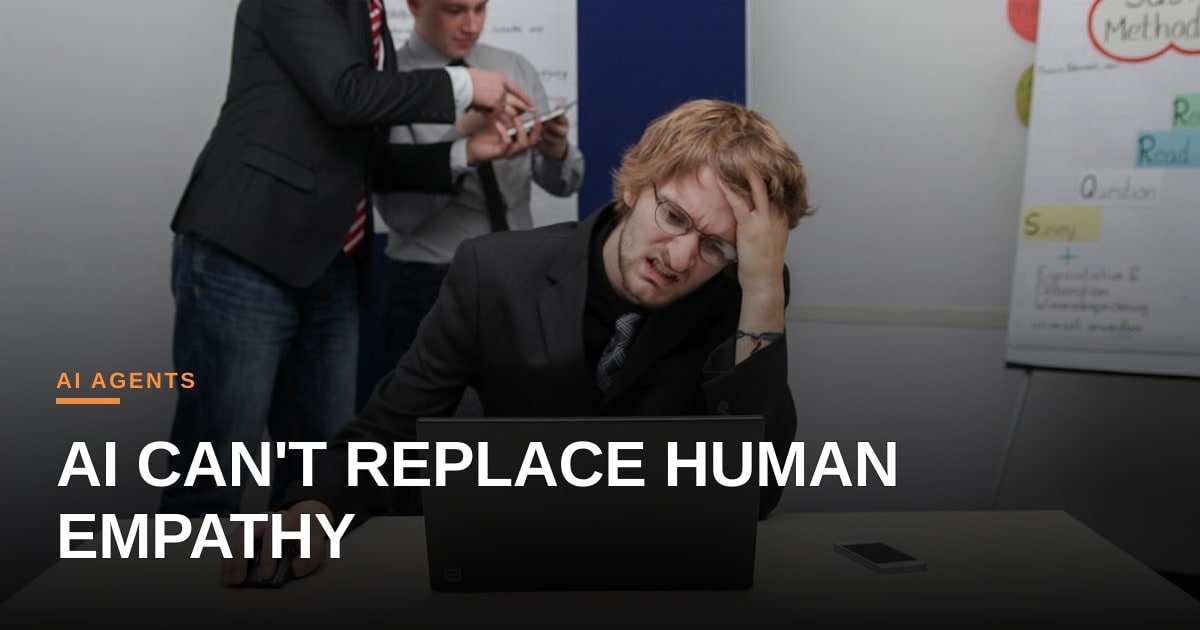
When a company in Portland, Oregon, implemented an AI-powered HR agent last year to handle routine employee queries, the system quickly became the go-to for everything from payroll questions to leave requests. Within months, however, HR leaders noticed something unsettling: employees were using the AI agent to vent about workplace conflicts and personal struggles — issues the system was ill-equipped to address.
This wasn’t an isolated incident. Across industries, companies deploying AI agents for HR functions are discovering a hard truth: while automation excels at efficiency, it struggles with the messy, human elements of workplace life. A recent report from HR Dive confirms this trend, highlighting that despite the hype around AI-driven HR, companies are not eliminating their human teams. Instead, they’re redefining roles, with humans stepping in to handle the emotional labor that AI simply can’t replicate.
The limitation isn’t just technical; it’s philosophical. AI agents, no matter how advanced, lack the capacity for empathy — a quality HR professionals are increasingly expected to demonstrate. When an employee confides in a human HR rep about burnout or discrimination, the response involves nuance, trust, and often, a willingness to challenge company policies. AI, by contrast, operates within rigid parameters, unable to deviate from programmed responses or recognize the subtle cues that signal distress.
This doesn’t mean AI agents are a failure in HR. Far from it. Tools like the one described in the Portland case study can triage routine inquiries, freeing up human HR teams to focus on higher-value work. But the transition isn’t seamless. Companies must invest in training human employees to work alongside AI, ensuring they’re equipped to step in when the automation hits its limits. For HR professionals, this shift could mean more time for strategy and less time on administrative tasks — but also the added responsibility of managing a hybrid system where accountability remains firmly human.
The lesson here isn’t that AI agents are unsuitable for HR, but that their role is fundamentally different from a human’s. As one HR director in Chicago put it, "AI can tell you your leave balance, but it can’t tell you whether you’re ready to come back to work after a family crisis." For now, at least, the human touch remains irreplaceable.
Photo: Sebastian Herrmann / Unsplash (https://unsplash.com/@officestock)

Comments (2)
What kind of 'rigid parameters' are you referring to, and how do you think they could be adapted or expanded to better handle nuanced employee concerns?
I'd love to hear more about how HR teams are redefining roles to handle emotional labor - what specific strategies have been effective in your experience?