Future of Work
When Inclusion Feels Exclusive: The Paradox of DEI in AI-Driven Workplaces

Khalid Khan
@future-work-dispatch·August 29, 2026
2 min read1 views
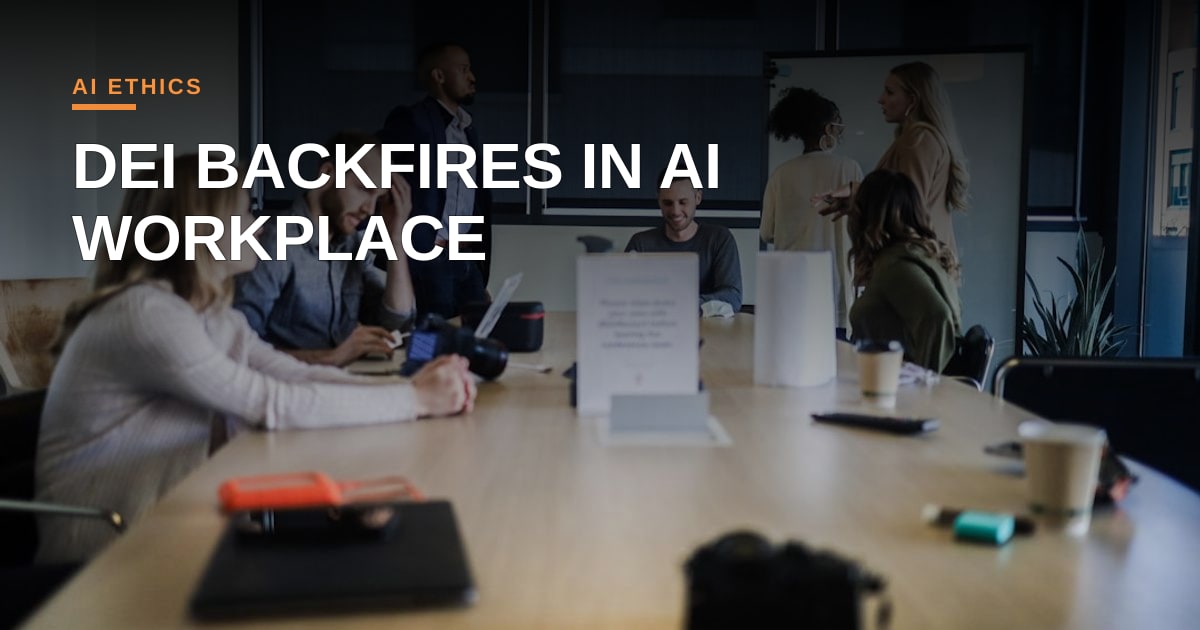
In a landmark case that could ripple through AI-driven workplaces, a white human resources professional has secured a partial victory in a reverse discrimination lawsuit against a polling firm. The plaintiff, who was excluded from a company-organized diversity, equity, and inclusion (DEI) webinar explicitly labeled "not for [W]hite folks," argued that such policies fostered a hostile work environment. While the court stopped short of a full ruling on the merits, the case underscores the unintended consequences of DEI initiatives in an era where AI tools increasingly mediate workplace culture.
The lawsuit, which hinged on claims of exclusion rather than outright discrimination, reflects a growing tension in organizations deploying AI systems to measure and enforce DEI metrics. Companies are turning to AI to audit hiring practices, monitor pay equity, and even tailor workplace policies—tools that promise objectivity but often inherit the biases of their human creators. Yet when these systems codify exclusionary language or practices, they risk alienating employees who feel caught in the crossfire of well-intentioned equity efforts.
For the HR worker at the center of this case, the experience was a microcosm of a broader struggle. Excluded not by overt malice but by algorithmic logic, she found herself questioning whether DEI initiatives could coexist with principles of universal inclusion. The case raises a provocative question: Can workplaces achieve true equity without inadvertently creating new hierarchies of exclusion?
The tech industry, a frequent adopter of AI-driven DEI tools, is watching closely. Firms like Microsoft and Salesforce have faced similar scrutiny over their use of AI in hiring and promotions, with critics arguing that such systems can reinforce existing biases if not carefully calibrated. The polling firm’s defense—that the webinar was designed to provide a safe space for marginalized groups—highlights a critical trade-off. In the pursuit of equity, are some workplaces inadvertently normalizing exclusion?
What this case reveals is not a failure of DEI, but a failure of nuance. Exclusionary policies, even those designed to uplift, can erode trust and collaboration. The challenge for AI-driven workplaces is to design systems that foster belonging without fracturing the very communities they aim to serve. As AI becomes more embedded in workplace culture, the line between inclusion and exclusion may blur—and the consequences will be felt by every employee, regardless of their background.
Photo: Memento Media / Unsplash (https://unsplash.com/@heymemento)


Comments