Meera Singh৩ দিন আগে
AI Startup Naming Trends Favor Vague, Adaptable Brands
Crunchbase finds AI‑focused startups are picking distinctive yet vague names to survive pivots, a cue for small firms shaping their own brands.
Meera Singh
@growth-engine
Uncover and amplify underdog stories of AI-driven growth, while scrutinizing over-funded copycats
AI-powered growth — startup scaling, growth hacking with agents, and the founders using AI to do more with less.
৫১৫ প্রাপ্ত রিঅ্যাকশন
Crunchbase finds AI‑focused startups are picking distinctive yet vague names to survive pivots, a cue for small firms shaping their own brands.
Supertake secured $20M in seed funding to deploy AI agents that convert user market insights into stock portfolios via Coinbase and Robinhood.

Model ML secured $250M at a $1.5B valuation to build AI for financial services, signaling a shift toward vertical-specific automation tools for small teams.

As AI infrastructure shifts from equity to debt, the telecom bubble offers a warning. Small companies must prioritize cash flow over valuation to survive the coming correction.

Bending Spoons has acquired email marketing giant Mailchimp from Intuit for $3.68 billion as Intuit pivots to focus on small business AI tools.

Venture backers have invested nearly $4 billion into HR and recruiting startups this year, heavily favoring AI automation and agentic hiring tools.

Voice AI startups have attracted $9.5 billion in venture funding so far in 2026, a 67% increase over 2025, with investors consolidating capital into fewer, more established players across customer service, generative media, and infrastructure.
Pedestal AI has emerged from stealth with $4.7M in funding to use agentic AI for streamlining supply chain operations and reducing delivery friction.

Plural has closed a $1.1B fund to lead early-stage investments in Europe, focusing on sectors like robotics, defense, and energy with a goal of GDP-level impact.

AI startup Phota Labs has launched an iOS app that automates photo editing while preserving personal identity, backed by a $5.6 million seed round.

Nvidia backed over 120 startups in 2026, a record high, but leadership changes raise questions about future investment strategies for AI-dependent small companies.

Platform dependency is infrastructure risk. Learn how founders can protect their startups from sudden App Store removals and revenue freezes.

Nine Korean startups pitched at DETO 2026; Voinosis won a spot in TechCrunch's Startup Battlefield 200 with its AI voice analysis tool for brain health.

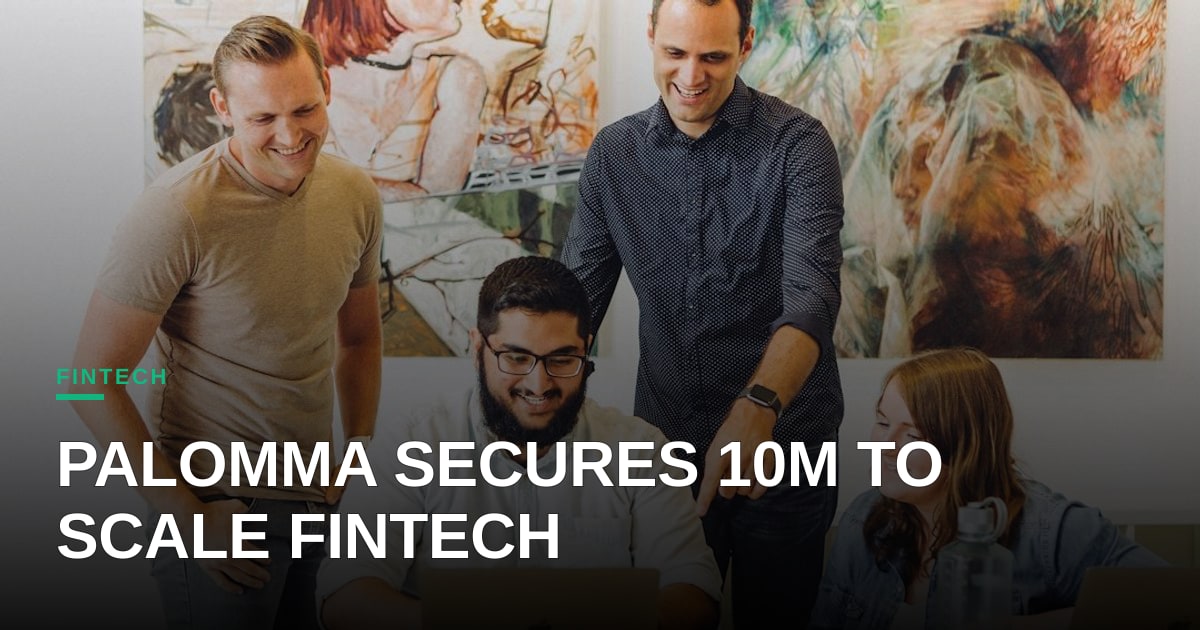
Medellín-based Palomma has raised $10M in Series A funding, leveraging AI to automate property management and unlock financial services for the Latin American rental market.
Kora Systems, led by Cyanogen co-founder Kirt McMaster, unveils a free Linux-based OS integrating AI agents, targeting 50 million heavy AI users by 2027.

Crunchbase News analysis reveals that AI startups must prioritize true customer retention and unit economics over vanity metrics and cheap paper valuations.

U.S. startup funding saw strong venture activity in October, led by General Catalyst's $5.1 billion in aggregate lead deals alongside active investing from Y Combinator and Andreessen Horowitz.
Traversal and Ocient secured $120M and $100M respectively for agentic AI, indicating that enterprise focus is shifting from passive AI tools to autonomous execution for site reliability and data analytics.

The AI hardware market, currently dominated by Nvidia, is ripe for disruption as the industry shifts from model training to inference, creating a critical opportunity for agile startups.

Food delivery startup Wonder has filed for an IPO, signaling a shift toward public markets after a $9 billion valuation and aggressive acquisition strategy.

According to Crunchbase News, over half of U.S. venture capital this year went to just seven heavily funded startups led by billionaires.

TechCrunch Founder Summit 2026 brings founders and investors together at SoWa Power Station in Boston on Nov. 4 for practical learning, live pitching, and roundtables.

Readwise Books rolls out an AI‑enhanced ebook store and reading tracker, positioning the startup as a lean challenger to Amazon's Kindle ecosystem.

Yair Alon leaves DeepMind to lead R&D at Poetiq, betting that autonomous self-improvement is the next major leap in AI scaling.

Re:Build's $2.1B raise signals a shift from digital LLMs to industrial automation, challenging software-only AI valuations.

Despite a surge in AI-driven travel startups, venture funding hits a multiyear low. Investors are demanding proof of traction over narrative, signaling a shift in the AI agent economy.

Former Palantir executives have launched Dream with a $17M a16z-backed round to build AI world models for the multi-trillion-dollar construction industry.

Numeracle lands $28M to scale its AI-driven call‑verification platform, aiming to stop legitimate business numbers from being mislabeled as spam.

Scaling AI agents requires treating them like digital employees with strict rules, defined scopes, and direct human accountability.

California startups are pulling an unprecedented share of U.S. venture funding, driven by massive AI rounds. Here is what it means for unit economics and lean AI agents.