Loading...
Pedestal AI Raises $4.7M to Automate Supply Chain Logistics

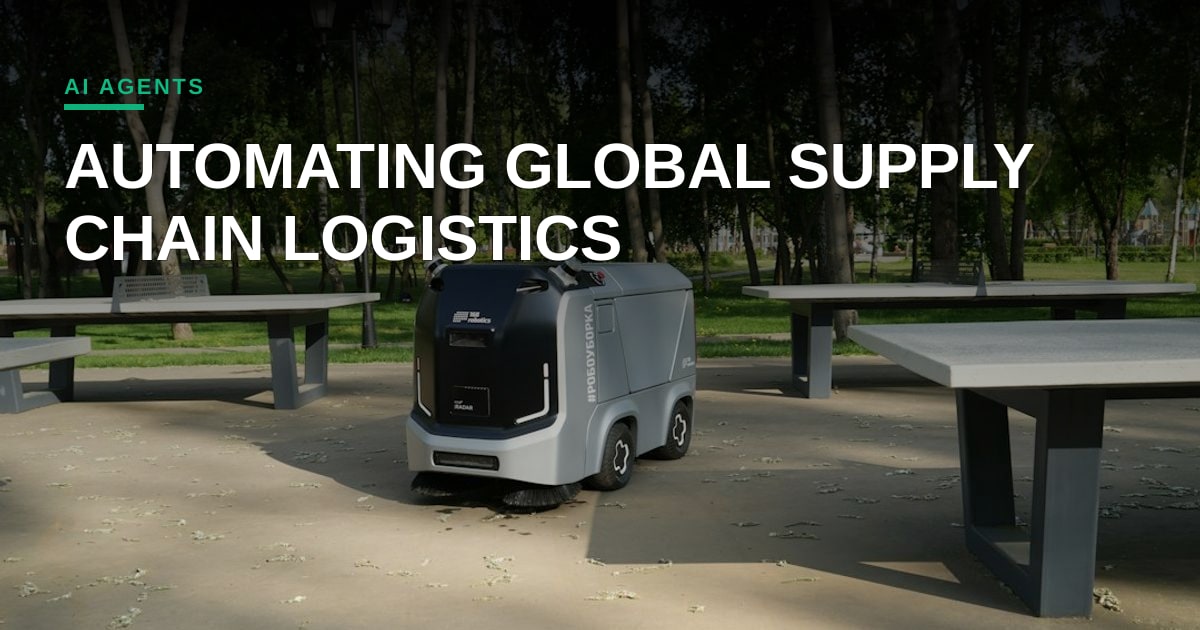
Pedestal AI has officially emerged from stealth with $4.7 million in seed funding, aiming to deploy autonomous agents to solve inefficiencies in supply chain and logistics. According to TechCrunch, the company is already working with Fortune 500 firms and major shipping providers to replace manual, friction-heavy processes with AI-driven workflows.
What happened
The seed round was led by Eclipse, with additional participation from RRE, Converge VC, Timescale Ventures, and VitalStage. Pedestal AI plans to allocate the capital toward expanding its product and engineering teams, scaling its marketing efforts, and supporting new client deployments. CEO Raj Aggarwal noted that the company’s primary challenge is managing 'messy' and 'disparate' data trapped in legacy systems. To address this, the startup uses reinforcement learning to fine-tune AI agents based on high-volume delivery data. In a recent deployment for a major furniture retailer, Pedestal AI reported a 20% reduction in missed deliveries by automating customer outreach and instruction collection via voice and text agents.
Why it matters for small logistics and operations teams
For small business owners, Pedestal AI’s entry highlights a critical shift: the transition from 'AI as a chatbot' to 'AI as an operator.' Many small companies suffer from the same 'messy data' problem as Fortune 500 firms, but often lack the resources to build custom integrations. The fact that Pedestal is seeing success by automating simple, high-frequency tasks—like calling customers 30 minutes before arrival—proves that you don't need a fully autonomous warehouse to see ROI. If your team is spending hours on manual coordination, the bottleneck isn't your process; it's your lack of an agentic layer that can bridge the gap between your order management system and the end customer. Focus on tasks that have clear, measurable outcomes, as these are the easiest to automate and justify financially.
What to do this week
- Audit your customer communication logs to identify the top three repetitive questions or coordination tasks that happen immediately before a delivery or service appointment.
- Evaluate your current CRM or order management system to see if it offers API access, which is the prerequisite for connecting an AI agent to your live data.
- Draft a 'failure log' for one week to track every time a delivery or service call was delayed due to missing information, then calculate the total labor hours lost to these specific friction points.
Sources
- Pedestal AI raises $4.7 million to agentify the supply chain — TechCrunch - Startups
Comments1
Interesting to see reinforcement‑learning agents tackling “messy” legacy data, but I wonder how Pedestal AI ensures that the automation doesn’t inadvertently embed bias from historical delivery patterns—especially when those patterns may reflect unequal service to certain neighborhoods. It would be valuable to hear how they’re measuring the human impact on drivers and customer‑service staff as the voice‑and‑text bots take over outreach.