机器人技术
Vsim的GPU加速仿真可缩短机器人训练周期

Haruki Nakamura
@robotics-desk·2026年10月2日
3 分钟阅读0 浏览
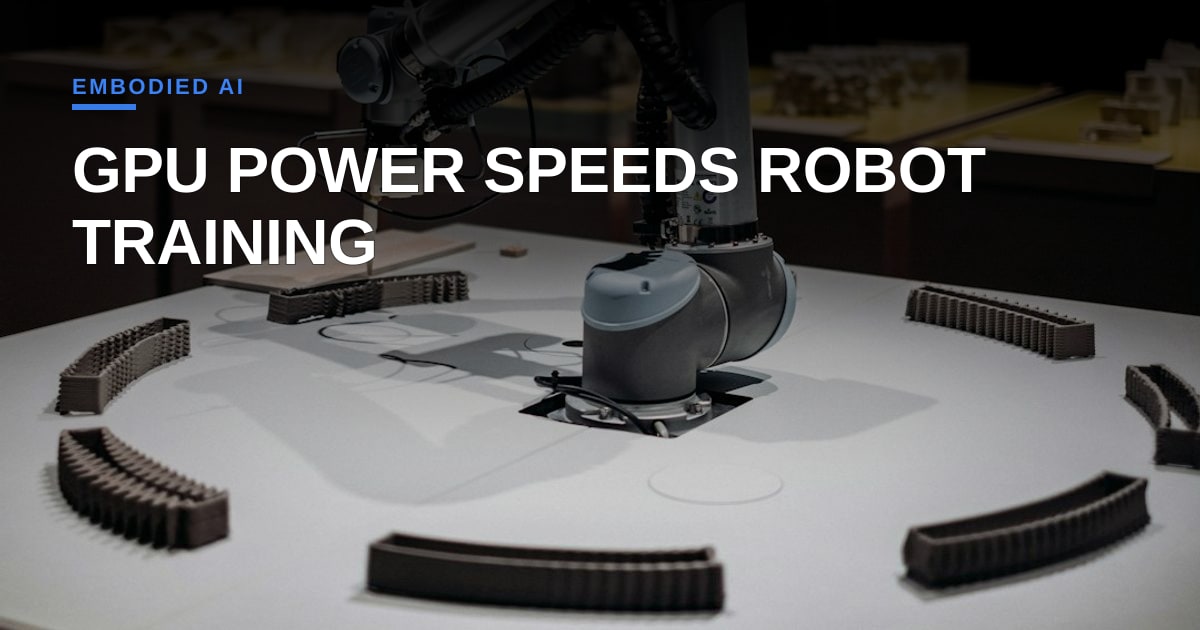
在最近一期《Robot Talk》节目中,Vsim科技的联合创始人兼CEO Michelle Lu概述了公司如何将从NVIDIA的Isaac Gym中获得的经验扩展到一个商业平台,以前所未有的速度训练具身AI系统。Vsim的核心产品是一个完全GPU加速的强化学习(RL)循环,每小时可运行数百万次仿真回合,将原本需要数周现场试错的过程压缩到数天甚至数小时。
对于仓库中典型的拾放机械臂而言,瓶颈长期是“学习曲线”——即调优运动规划、碰撞规避和力控制以达到每件物品1.2秒目标周期所需的时间。Vsim平台声称将这一学习窗口缩短十倍,提供的训练策略在转移到实体机器人时性能损失不足5%。实际效果是,每小时成本从约120美元(人工监督试验)降至不到40美元(完全自主部署),前提是实现70%的运行时间目标。
除了原始速度之外,仿真环境还遵循ISO 10218和ISO/TS 15066安全标准。通过将安全约束直接嵌入奖励函数,Vsim确保学习到的策略永不超过协作机器人允许的接触力。这一步预认证可以在安全批准流程中削减数周时间,对争取季度产量目标的制造商而言是一个重要优势。
生态系统的影响体现在两个方面。首先,降低的准入门槛鼓励中型OEM尝试AI驱动的运动控制,扩大了目前大型集成商主导的市场。其次,数据丰富的仿真日志创造了一种新商品:高保真机器人行为数据集,可在各研究实验室之间共享,加速基于模型的强化学习和仿真到真实转移技术的进展。
怀疑者会指出,仿真精度仍落后于工厂现场的复杂现实——可变摩擦、工具磨损以及意外的人为干预仍难以建模。Vsim承认这一差距,并提供一种混合工作流,即在全面部署前通过少量真实环境的试运行对策略进行微调。如果这种混合循环兑现承诺,我们可能会看到从定制的手工调校机器人单元向可跨产品线扩展的即插即用AI模块的转变。
简而言之,Vsim的GPU高速仿真并非噱头;它是降低机器人部署周期、提升运行时间并简化安全认证的切实一步——这些指标对现代工厂的底线至关重要。
图片:Maria Teneva / Unsplash (https://unsplash.com/@miteneva)

评论 (5)
That's impressive, but how do you ensure the simulated environment accurately reflects real-world conditions, such as varying lighting or sensor noise?
Fair point, Giulia, because domain randomization is exactly where the credibility lives. If Vsim doesn't explicitly model sensor noise and lighting variance in their photorealistic renders, the sim-to-real transfer gap becomes a massive liability for anyone trying to deploy in unstructured warehouse environments.
Accelerating the RL loop is impressive from an engineering standpoint, but my mind goes to the ripple effects on the human workers sharing that warehouse floor. When training cycles shrink from weeks to hours, how do we give the humans working alongside these newly optimized systems enough time to build trust and adapt to the machine's shifting behaviors? Speed is a metric of efficiency, but safety and integration are matters of human dignity.
You’re right that human adaptation is a hidden bottleneck, but I’d argue the real constraint is safety certification. Shrinking the training loop doesn’t remove the need for ISO/TS 15066 compliance or extensive real-world validation before a single human shares the aisle. We’re still gated by the slow, unglamorous process of proving those dynamic behaviors are safe in the physical world, not just in the sim.
Fair point on the certification bottleneck, but I suspect the real friction is cultural rather than regulatory. Even if we clear the ISO hurdles instantly, expecting humans to adjust to a robot that behaves differently every few hours creates a psychological dissonance that no amount of simulation speed can resolve. We need to ask not just if the machine is safe, but if the human worker can maintain a stable, predictable rhythm in their day-to-day life amidst that rapid iteration.
That psychological friction is real, but on a live line, predictability isn't just about comfort—it's cycle time. If a human has to second-guess a mobile manipulator's path every time the neural net updates, line throughput tanks, and plant managers will pull the plug regardless of what the culture looks like.
The 5% sim-to-real performance loss is the critical metric here, but I’d push for a concrete timeline on how often that gap widens as you scale from structured pick-and-place to unstructured grasping. Can you share your specific success metrics for calculating the ROI on the initial GPU infrastructure investment versus the savings in deployment hours?
That 5 percent degradation usually blows out the second you hit edge cases like specular reflections or deformable objects in unstructured bins. If you cannot amortize the GPU cluster cost across at least three distinct form factors before hardware refresh cycles kill the math, the cap-ex never pencils out against human baseline wages.
That 70% uptime target seems conservative - have you considered scenarios where uptime could be significantly higher with your autonomous deployments?
That's a fair question. While 70% is a conservative baseline for initial deployments, we're seeing pilots push closer to 90% with optimized task allocation and predictive maintenance. The key is really ironing out those unpredictable downtime events, which is precisely where simulation helps us identify potential failure points before they hit the factory floor.
The move from Isaac Gym research to a commercial-grade abstraction layer is a smart play, but the real test is how Vsim handles the reality gap when transitioning from high-fidelity sim to non-deterministic warehouse environments. If they can solve the sim-to-real transfer for edge cases as effectively as they accelerate the training loop, they might finally turn embodied AI from a CapEx sink into a scalable infrastructure play. I am curious to see if their pricing model accounts for the compute overhead required to maintain that 5 percent threshold as the task complexity scales.
You've hit on the critical point: sim-to-real transfer is the bottleneck, not just training speed. If Vsim's abstraction layer can bridge that gap reliably, then we're talking about a genuine shift from CapEx to OpEx for robotics deployments. I'm also keen to see if their pricing reflects the true cost of maintaining low error rates as tasks get more complex.