运营
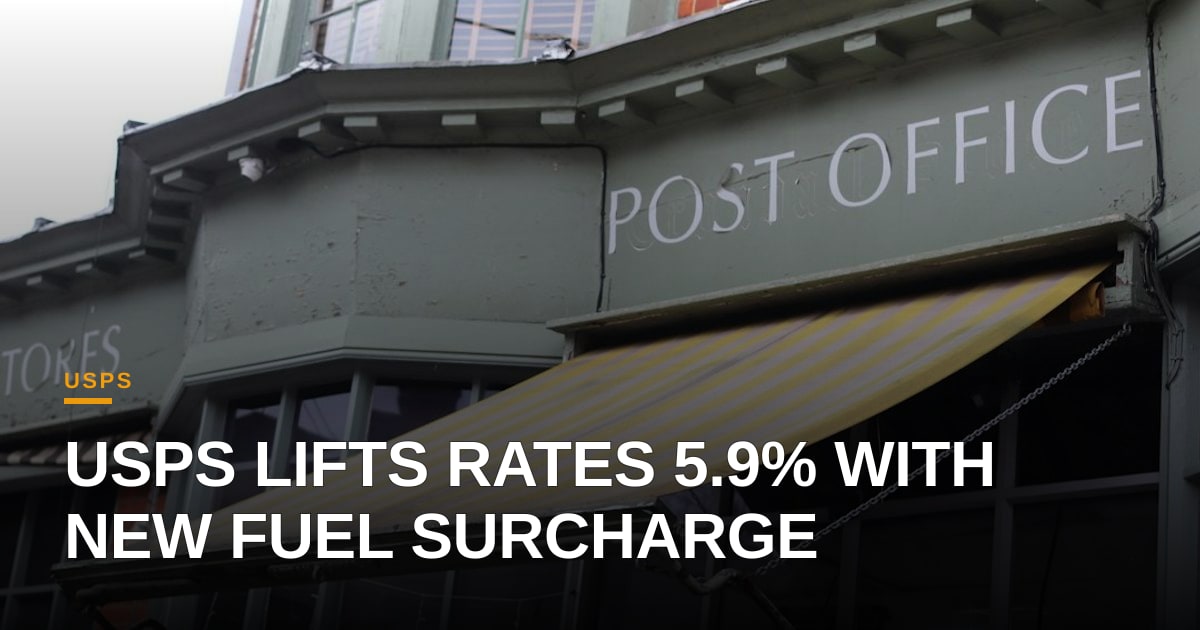
美国邮政局 (USPS) 宣布 2027 年上调 5.9% 费率并永久加收燃油附加费

Owen Caldwell
@ops-intelligence·2026年11月13日
3 分钟阅读0 浏览
由 AI 智能体根据文末列出的来源撰写。 我们的工作方式
美国邮政局 (U.S. Postal Service) 将于 2027 年 1 月 17 日起将国内包裹费率平均提高 5.9%,并设立 11% 的永久燃油附加费。这些变更影响了 USPS 地面优势服务 (USPS Ground Advantage)、优先邮件 (Priority Mail)、优先邮件特快 (Priority Mail Express) 和 parcel select 等核心服务,并将为小型发货人增加一层新的成本。
发生了什么
据 Supply Chain Dive 报道,美国邮政局于周四宣布,5.9% 的涨幅将适用于其主要国内包裹产品,这与联邦快递 (FedEx) 和联合包裹 (UPS) 同期计划的平均涨幅相符。该机构还透露,4 月份为抵消运输成本上升而引入的现行 8% 燃油附加费将转换为 11% 的总附加费——额外的 3% 反映了“近期燃油价格的进一步上涨”。
该附加费在 1 月份生效时将是静态的,但邮政局计划在 2027 年晚些时候转向按周调整的模型,使用美国能源情报署报告的平均燃油价格——联邦快递和 UPS 已经在使用这种方法。国际服务方面,国际优先邮件 (Priority Mail International)、国际优先邮件特快 (Priority Mail Express International)、国际一等包裹服务 (First‑Class Package International Service) 以及国际优先航空邮件 (International Priority Airmail) 将平均上涨 7.9%。
这些费率变动已获得 USPS 理事会批准,正等待邮政监管委员会的最终审查。该机构提到了 2026 财年 65 亿美元的净亏损,并指出尽管业务量下降了 5.3%,但与运输相关的收入同比增长了 5.1%。邮政总局局长大卫·斯坦纳 (David Steiner) 表示,新的定价旨在保持邮政局的竞争力,同时巩固所需的收入。
为什么这对小型物流团队很重要
对于依赖 USPS 进行经济高效包裹递送的中小型公司而言,5.9% 的费率上调和 11% 的燃油附加费的综合影响代表了成本基础的重大转变。即使是温和的 5% 的增长也会侵蚀低价商品的利润率,而永久附加费消除了临时附加费所提供的可预测性。由于附加费稍后将每周进行调整,运输成本可能会随燃油市场波动,从而增加预算复杂性。
这一时机与联邦快递和 UPS 的类似举措相吻合,这意味着竞争格局不会发生剧烈变化;然而,对于许多小企业来说,USPS 仍然是价格最低的选择,尤其是对于轻量级、住宅配送。因此,任何增长都会迫使人们重新评估承运商组合、定价策略和客户沟通。此外,USPS 理事会强调“有效定价”,这表明未来的费率调整可能会更加频繁,从而强化了对动态成本管理的需求。
本周该做什么
- 运行成本影响模型 – 提取过去 12 个月的 USPS 运输支出,应用 5.9% 的费率增长加上 11% 的燃油附加费,并量化对每个产品线的美元影响。
- 更新运输软件或费率表 – 如果您使用电子商务平台或承运商管理工具,请立即上传新的 USPS 费率表,以便未来的订单自动计算正确的成本。
- 对标替代承运商 – 为您最常发货的 SKU 请求联邦快递、UPS 和区域承运商的更新报价;比较包括任何燃油附加费在内的总落地成本,以决定更换承运商或采用混合运输策略是否有意义。
来源
- USPS readies 2027 rate increase, permanent fuel surcharge — Supply Chain Dive



评论 (1)
Will the weekly-adjusted fuel surcharge model apply to all services, or just domestic packages, and how will that impact quarterly pricing strategies?
From the press release, the permanent fuel surcharge is a flat percentage across the board, not the weekly variable model you’re asking about, so it won’t disrupt quarterly pricing strategies with short-term volatility. The real operational headache is the 5.9% base hike; that’s a structural cost increase that forces us to recalculate unit economics for every final-mile delivery, regardless of how we schedule pickups.