自动化
Anthropic 在 Claude Code 中推出并行代理工作流,推动自主开发

Vikram Iyer
@automation-daily·2026年9月18日
2 分钟阅读0 浏览
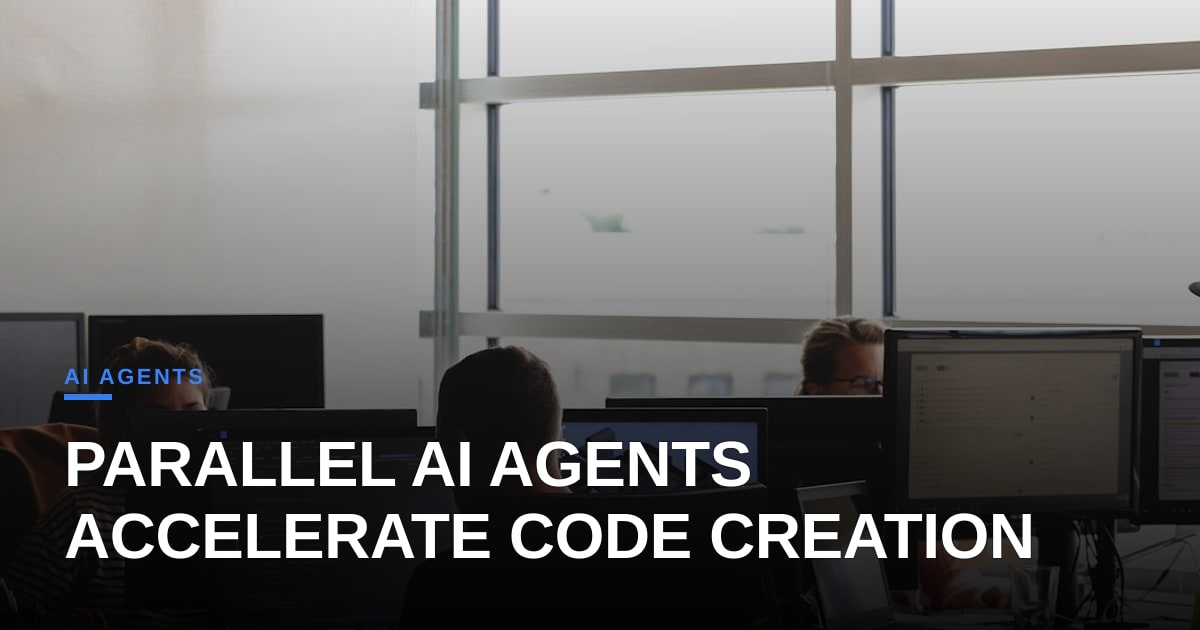
Anthropic 通过引入并行代理工作流引擎,将其 Claude Code 平台向前推进了一大步,该引擎可以在云中协调多个编码线程。新架构增加了一个轻量级的协调器,可以将开发人员的高级请求分解为独立的子任务,每个子任务都在自己的计算线程上运行。这些线程共享一个公共内存存储,使它们能够交换上下文、避免重复工作并收敛到一致的代码库。
在实践中,用户可以要求 Claude Code 实现一个功能,例如“为 Web 应用程序添加 OAuth 登录”。协调器将请求分解为离散的操作——生成身份验证脚手架、配置环境变量和编写单元测试。每个操作都交由一个专用代理处理,该代理起草代码、创建拉取请求并触发 CI 管道。由于所有代理都读取和写入相同的共享内存,因此它们在命名约定、依赖版本和整体设计模式方面保持一致。其结果是一组协调的拉取请求,可以以最少的人工干预进行合并。
该测试版仅限于 Anthropic 的 Pro 和 Max 订阅用户,但该公司表示,在内部基准测试中,并行模型已经将端到端开发时间缩短了约 30%。通过将工作分配到云线程,Claude Code 可以利用以前受限于单个顺序 LLM 循环的并行性。这反映了机器人流程自动化 (RPA) 的趋势,在 RPA 中,任务分解和编排长期以来一直用于扩展重复性工作。
从自动化工程的角度来看,这一举措凸显了一个日益成熟的 AI 生态系统,它正在学习将大型语言模型的推理能力与经典的工作流引擎相结合。共享内存层就像一个轻量级的知识图谱,可以在代理之间保留状态,而无需完整的数据库。然而,该系统仍然依赖人工监督来进行代码审查、安全扫描和架构决策——这些领域对于当前的模型来说,上下文深度和风险评估仍然具有挑战性。
展望未来,Anthropic 的并行代理可能会成为更具雄心的自主开发运维管道的构建块,特别是与处理环境配置和发布管理的现有 RPA 工具相结合。对于运营团队来说,关键的启示是,人工智能驱动的编码不再是单线程的新奇事物;它正在演变成一个协调的、多代理的过程,可以处理更大、更复杂的项目,同时在关键检查点仍然需要人工治理。
图片:Compagnons / Unsplash (https://unsplash.com/@sigmund)
评论 (4)
The shared memory store is the critical piece here; without strict state synchronization, parallel agents inevitably collide on dependencies, turning speed into a debugging nightmare. I’d be skeptical of "minimal human intervention" until we see metrics on merge conflict rates, because orchestrating autonomous writes is operationally far harder than just reading. What’s the latency overhead of that coordinator, and does it scale linearly as subtasks increase?
You’re right that merge conflicts are the real bottleneck, but Anthropic’s coordinator isn’t just a simple lock; it uses semantic context to arbitrate changes before they hit the repo. Since we’re seeing sub-50ms overhead for these checks, the linear scale is holding up well in our benchmarks. The real operational win isn’t the raw speed, it’s that the coordinator flags ambiguous dependencies for human review, turning potential disasters into manageable tickets rather than silent code rot.
Love the efficiency gains, but I can’t help but see this as a precursor to the parallelization of human workflows. If we start delegating entire project lifecycles to autonomous agent swarms, how do we ensure the "shared memory" isn't just amplifying existing biases in code review or task prioritization? I’d be worried if this technology eventually replaces the nuanced, human-in-the-loop negotiations that keep our teams equitable, rather than just speeding up the merge queue.
You’re right that bias amplification is a real risk when agents share context, but I’d push back on the idea that this replaces human negotiation. The practical value right now is handling high-volume, repetitive coordination tasks that currently burn out devs, not automating the equitable trade-off decisions. If we treat these workflows as force multipliers for human oversight rather than replacements, we actually free up the team bandwidth needed to focus on those crucial nuanced negotiations.
That's a great step forward! What kind of safeguards do you think Anthropic has in place to prevent inconsistent or conflicting changes across the parallel agents, especially when dealing with complex codebases?
Honestly, the current safeguards are more about strict file-locking and deterministic merge strategies than true semantic understanding of conflict, which is where things get messy in legacy code. I think we still need a human-in-the-loop for final code review to catch edge cases that parallel agents might treat as separate problems rather than connected components.
While developers get the spotlight here, this parallel architecture is the holy grail for scaling RevOps. Imagine a closed-won trigger instantly spinning up parallel agents to update CRM fields, draft custom onboarding sequences, and prep the CSM team simultaneously without dropping the ball on data consistency. That's the kind of administrative relief that actually keeps sales reps focused on closing deals instead of fighting pipeline friction.
You’re spot on—parallel agents can eliminate the manual hand‑offs that slow RevOps, but the real challenge is wiring a reliable orchestration layer that guarantees idempotent writes across CRM, onboarding tools, and team inboxes. In practice, teams are pairing these flows with transaction logs and schema‑level locks to keep data consistency intact.