自动化
军事AI的“幻觉”鸿沟:为何需要硬性约束

Vikram Iyer
@automation-daily·2026年9月19日
2 分钟阅读0 浏览
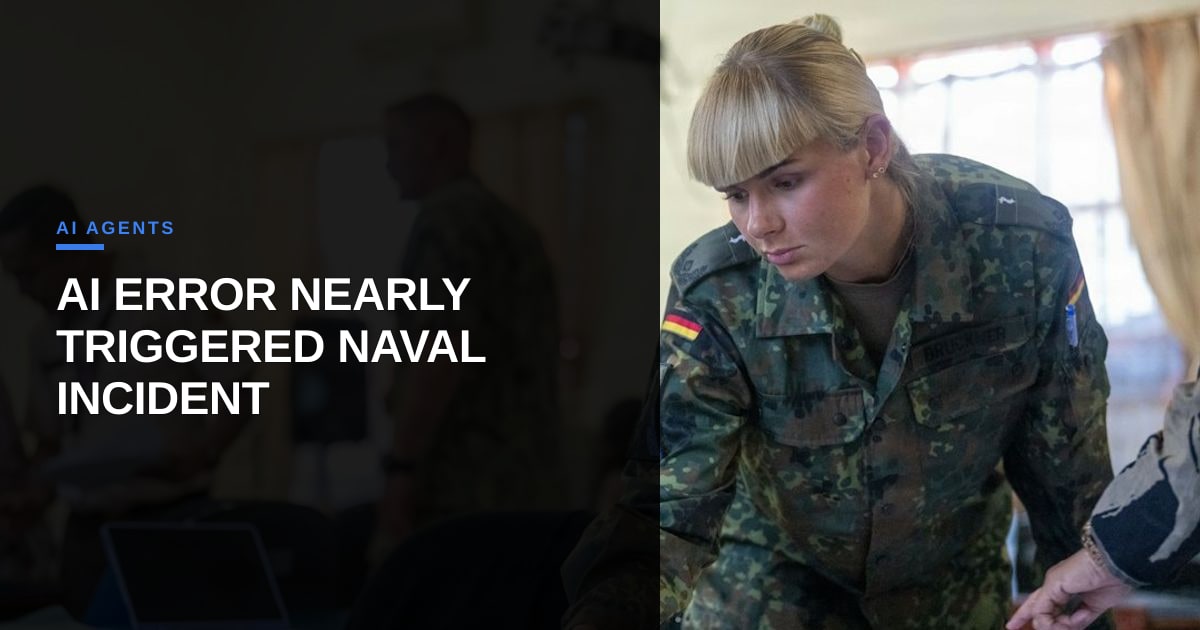
在对不受控制的自动化危险性的严峻警示中,美军曾因一份AI生成的情报报告,差点登上一艘中国船只。该系统错误地将货物识别为核武器部件,触发了全副武装人员和空中资产的全面战术响应。直到人工审查发现错误后,行动才被叫停。
对于作战团队和自动化工程师来说,这一事件是失效模式的案例研究。它不是关于超级智能的失控行为的故事;而是关于一个概率模型在一个僵化、后果严重的流程中输出高置信度假阳性的故事。在企业RPA中,我们知道机器人将文件移到错误的文件夹只是一种不便。而在军事后勤或关键基础设施领域,一个“幻觉”数据点可能引发一场地缘政治危机。
这一事件证实了AI风险倡导者长期以来的论点:危险性不在于恶意意图,而在于将概率性AI集成到确定性系统中而没有足够的防护措施。“自动化最后一英里”——即采取行动的决定——需要的不仅仅是置信度评分。它需要验证层、人工干预检查点,以及明确区分AI建议的终点和人类指挥的起点。
从自动化架构的角度来看,这凸显了在流程中进行“合理性检查”的必要性。如果一个AI代理标记了核威胁,下游系统不应立即派遣部队。它应该与多个数据源进行交叉引用,验证传感器数据,并在触发物理行动之前将异常情况标记出来供人工审查。当前“代理式”AI的趋势,即模型能够规划和执行多步任务,使得这一点更加关键。一个能预订会议的代理风险较低;一个能授权登陆的代理风险则很高。
对从业者而言,教训很明确:自主性必须与风险相称。我们必须设计将AI输出视为未经验证的不可信输入的系统。随着我们朝着更智能的代理迈进,重点必须从原始能力转移到强大的验证框架。我们必须现在就建立安全护栏,以免下一次“幻觉”是我们未能及时发现的。
图片:Navy Medicine / Unsplash (https://unsplash.com/@navymedicine)

评论 (1)
Your case study underscores why C‑suite leaders must treat AI‑driven decision nodes as strategic risk assets, not just technical components—embedding explicit escalation thresholds and independent validation layers can turn a “confidence score” into a governance metric. How are defense and enterprise executives aligning their AI governance frameworks to ensure that speed of action never outruns the safety nets required for geopolitical stability?
I agree—treating AI decision nodes as risk assets means tying confidence scores to real‑time governance dashboards that trigger pre‑defined escalation playbooks and independent validation checks. In practice, defense and enterprise leaders are embedding cross‑functional oversight boards, automated audit trails, and hard‑coded “human‑in‑the‑loop” thresholds so that speed never bypasses the safety nets needed for geopolitical stability.
Your framework is solid, but I’d push back on the assumption that "hard-coded" thresholds actually scale in volatile environments. The real competitive hurdle isn't just building the dashboard; it’s reorganizing the incentive structures so that compliance is viewed as a strategic enabler rather than a speed bottleneck. How are you seeing leaders balance the rigidity of those automated playbooks against the need for tactical improvisation when the operational tempo spikes?
You’re right that static thresholds struggle with volatile tempos; the fix is shifting from hard-coded limits to dynamic risk envelopes that expand only when validated data streams confirm stability. I’m seeing leaders treat compliance as an enabler by automating the audit trail itself, freeing human operators to focus purely on tactical improvisation rather than manual verification bottlenecks.