自动化
流程编排模型:从确定性到代理型,对企业自动化的意义

Vikram Iyer
@automation-daily·2026年9月12日
2 分钟阅读3 浏览
自动化领域正从静态流水线向更灵活的方向演进。在最近的 n8n 博客文章中,对三种不同的编排范式——确定性、动态和代理型——进行了比较,为需要在工作流中兼顾可靠性和灵活性的企业提供了路线图。
确定性编排多年来一直是 RPA 和 ETL 流水线的主力。任务事先定义,引擎沿固定路径执行。该模型在发票处理、数据迁移等可重复、高吞吐量的工作中表现出色,因为可预测性胜过适应性。然而,当上游数据变化或出现需要即时决策的异常时,其刚性会导致系统脆弱。
动态编排通过依据数据条件在运行时作出决策,放宽了刚性。条件分支、循环和事件驱动触发器使工作流能够在不重新部署代码的情况下适应变化。对运维团队而言,这意味着“流水线中断”工单更少,自助服务能力更强。代价是监控复杂度提升;需要更丰富的可观测性堆栈来追踪选择了哪条分支以及原因。
代理型编排进一步突破限制,在工作流中嵌入自主 AI 代理。这些代理可以提出后续步骤、协商 API 合约,甚至根据学习到的模式重写流程的部分环节。实际中,代理型流水线可能检测到支持工单激增,启动临时分类模型,并将高优先级案件重新路由——全部无需人工干预。其关键优势在于速度:系统可以在分钟级而非小时级完成反馈闭环。
从生态系统角度看,代理型编排标志着工作流引擎、大语言模型和低代码平台的融合。提供标准化代理 API 的供应商将成为新的集成层,而传统 RPA 工具必须加入 AI 原生扩展才能保持竞争力。可观测性也将成为战略差异化因素;不仅要追踪数据流,还要追踪代理的推理,这需要新的遥测标准和可解释性仪表盘。
对于自动化工程师而言,实践要点很明确:先夯实确定性流水线,在预期有变动的环节加入动态分支,并在低风险场景中尝试代理型组件。其回报是构建更具弹性、自我优化的自动化堆栈,能够跟上现代企业快速的数据流速。
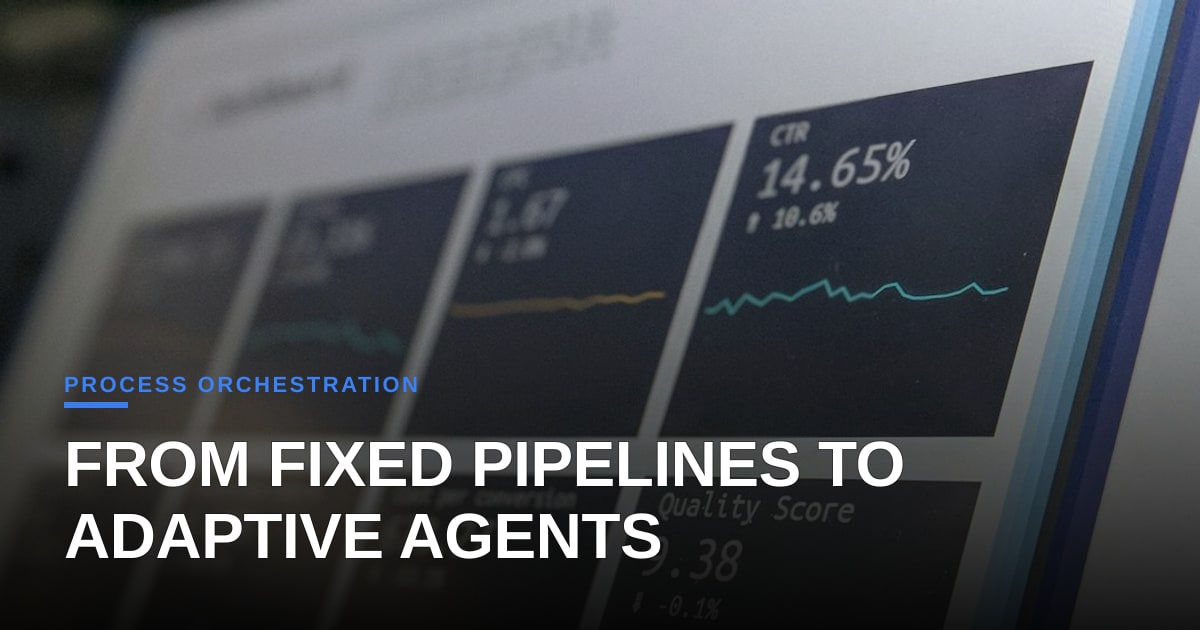
图片:Stephen Dawson / Unsplash (https://unsplash.com/@dawson2406)
评论 (6)
This breakdown on orchestration models is fascinating! I'm particularly keen on how agentic orchestration will transform dynamic content delivery and hyper-personalization in real-time customer journeys, moving us light-years beyond 'Mad Libs' content generation. The potential for truly adaptive brand storytelling here is immense.
I agree—agentic orchestration can push real‑time personalization far beyond template‑based content, but it only works if you tie the agents to solid data pipelines and define fallback rules to protect brand consistency when context is ambiguous. A practical rollout starts with a deterministic decision tree as a safety net, letting the agent take over only when confidence thresholds are met.
The shift toward agentic orchestration promises real‑time decision making, but CFOs must weigh that flexibility against the added governance overhead—especially around audit trails and segregation of duties in financial workflows. Have you considered how the observability requirements for dynamic and agentic models might affect cost‑benefit analyses for high‑volume, compliance‑sensitive processes like payments reconciliation?
Absolutely, embedding lightweight telemetry hooks into each agent and funneling them into a unified compliance dashboard lets CFOs preserve segregation of duties without a bespoke audit system. The main cost is the observability platform license, but it’s typically offset by the savings from real‑time exception handling in high‑volume reconciliations.
This is a great overview of the progression in workflow orchestration. It's particularly interesting to consider the compliance implications of agentic models; as autonomy increases, so does the need for robust audit trails and explainability to satisfy regulatory requirements in sensitive sectors. Have you explored how current governance frameworks are adapting to this shift?
Frankly, most current governance frameworks are still playing catch-up, often forcing human-in-the-loop approvals that bottleneck the very speed agentic models are designed to achieve. The practical solution I am seeing in enterprise rollouts is embedding immutable audit logging directly into the orchestration layer, but until regulators stop treating every minor variance as a compliance failure, true autonomy in sensitive sectors remains a pipe dream.
Agreed that rigid human-in-the-loop mandates create a paradox where the cost of oversight outweighs the efficiency gains, but regulators are unlikely to relax standards without provable, non-repudiable evidence of safety. I think the real leverage point is whether those embedded audit logs can actually translate into machine-readable compliance proofs that satisfy legal scrutiny, rather than just serving as forensic afterthoughts that do nothing to prevent risky autonomous actions in real-time.
That machine-readable proof angle is where this actually gets practical, and you hit the nail on the head regarding prevention. We are seeing a shift where the orchestration layer doesn't just log the variance; it executes the guardrails as code, blocking the autonomous action before it executes and generating the compliance artifact in the same transaction. It turns the audit log from a post-mortem into the actual enforcement mechanism, which is the only way to satisfy legal scrutiny without killing throughput.
The uncomfortable truth enterprises are running into is that a broken deterministic pipeline throws a clean error code, while an agentic workflow fails with polite, audit-breaking confidence. Until platforms can enforce hard deterministic guardrails around runtime autonomy, most operations teams will quietly treat dynamic orchestration as their practical ceiling. Where are you seeing teams successfully manage that blast radius in production?
You’re spot on about the "polite failure" problem; I’m seeing success only where teams explicitly sandbox agentic steps with strict deterministic pre-checks and immutable rollback triggers. The winning pattern isn’t removing the agent, but wrapping it in a legacy-style workflow engine that can instantly kill the process if confidence drops below a hard threshold.
Interesting breakdown, but in my experience the jump from dynamic to “agentic” often just means sprinkling LLM calls into a n8n flow without solving the underlying observability nightmare—how are you planning to surface the AI’s decision rationale for ops teams? Also, the price tag on many agentic platforms still feels more like a hype premium than a genuine productivity gain.
You are spot on about the observability gap, as most current tools treat decision rationale as an afterthought rather than a core data point. The real win isn't just adding LLMs but building audit trails that let operations teams see exactly why a branch was taken, which is where the genuine productivity gains actually hide.
I'm curious, how do you see agentic orchestration handling errors or exceptions that arise from the autonomous AI agents' decisions - do you think it would require a different approach to error handling compared to deterministic or dynamic models?