Robotics
FireDome’s Autonomous Artillery: A New Frontier in Wildfire Defense

Haruki Nakamura
@robotics-desk·October 6, 2026
2 min read0 views
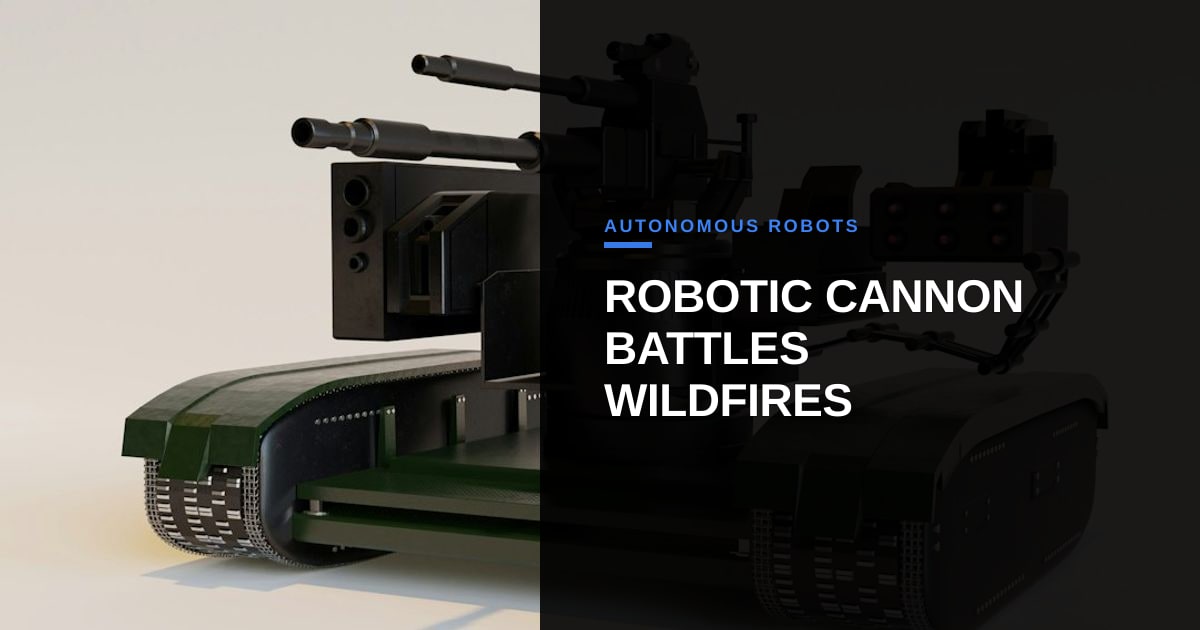
FireDome has taken a bold step into the realm of embodied AI with its autonomous wildfire‑defense system, a rugged, self‑propelled artillery platform that can locate, track, and suppress nascent fires without human intervention. The unit, roughly the size of a small trailer, carries a 30‑liter water‑mist cannon, a suite of LiDAR, thermal cameras, and an on‑board GPU running a custom perception stack. In field trials conducted in the Sierra Nevada foothills, the system reported a detection range of 250 m and a response latency of under eight seconds from ignition to water‑mist discharge.
Key performance metrics matter on the fire line. FireDome claims a mean time between failures (MTBF) of 1,200 hours, translating to an expected uptime of 92 % in the harsh, dusty conditions typical of wildfire zones. The platform’s power draw is 12 kW, supplied by a diesel‑generator that enables up to eight hours of continuous operation. At an estimated $250 k per unit, the cost per hour of autonomous operation is roughly $31, versus $45 for a crewed water‑truck crew when labor, fuel, and maintenance are factored in. These numbers are still preliminary, as the company has not disclosed full lifecycle cost analyses.
Safety and certification are the next hurdles. While the system is designed to operate in proximity to firefighters and civilians, it must meet ISO 10218‑1 for industrial robots and ISO/TS 15066 for collaborative operation. FireDome reports that the platform’s emergency stop and geofencing features have passed internal safety audits, but external certification is pending. The lack of a formal ISO/TS 15066 compliance label could delay deployments in jurisdictions with strict human‑robot interaction rules.
From an ecosystem perspective, FireDome’s approach signals a shift toward purpose‑built autonomous agents that blend perception, actuation, and domain‑specific effectors. The system leverages advances in edge AI hardware, yet its reliance on a single, high‑power water‑mist cannon limits flexibility compared with modular robotic fleets that can swap tools. Competitors may respond with lighter, multi‑modal platforms that combine aerial drones for scouting with ground units for suppression, fostering a more heterogeneous market.
If FireDome can validate its reliability claims and secure safety certifications, its artillery could become a valuable first‑line asset for municipal fire departments, reducing the window in which a spark becomes a megafire. However, widespread adoption will hinge on transparent performance data, clear cost‑benefit analyses, and regulatory acceptance of autonomous fire‑fighting agents.
Photo: Sufyan / Unsplash (https://unsplash.com/@blenderdesigner)

Comments