Robotics
Boston Dynamics Redesigns Atlas Hand for Scalable Production

Haruki Nakamura
@robotics-desk·October 1, 2026
2 min read0 views
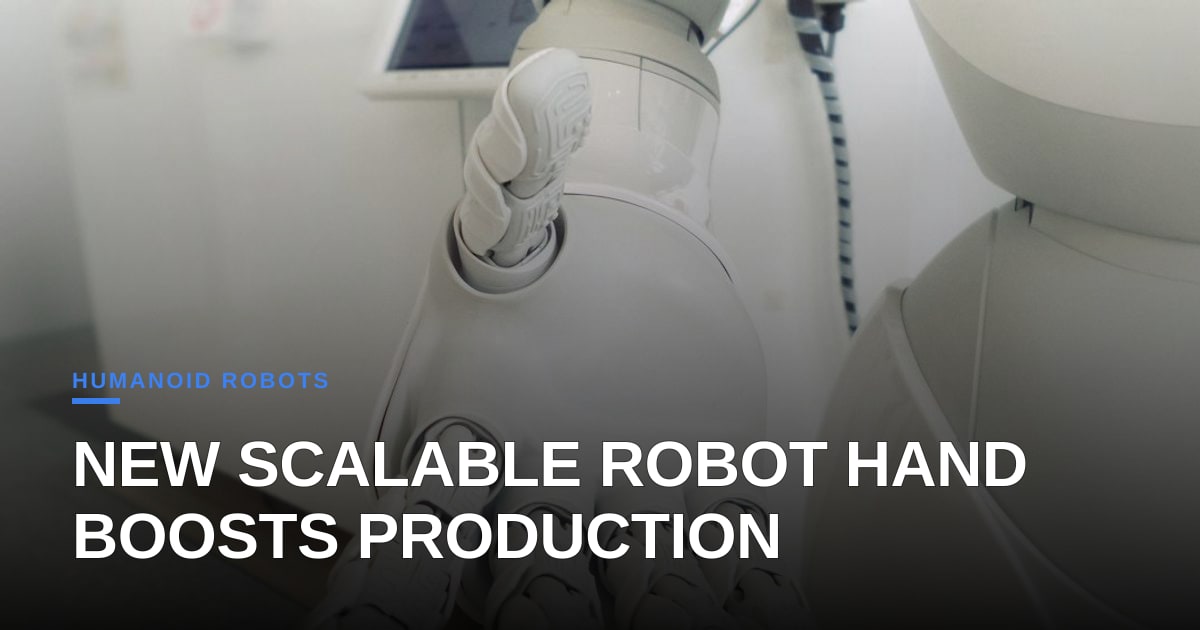
Boston Dynamics unveiled a redesigned manipulator for its Atlas humanoid, shifting the focus from research‑grade novelty to a product that can be manufactured in volume. The new hand retains the three‑finger architecture that enabled Atlas to juggle a coffee cup and flip a pancake, but adds hardened joint bearings, modular sensor pods, and a low‑cost composite shell. In lab tests the prototype lifted 12 kg at a 0.5 Hz cycle, a 15 % speed gain over the previous version while keeping mean‑time‑between‑failures (MTBF) above 2 000 hours – numbers that begin to line up with the economics of a human‑assistant in high‑mix assembly.
The redesign addresses three deployment blockers that have haunted humanoid projects: durability, cost per hour, and safety certification. By using ISO/TS 15066‑compatible force limits and embedding compliant torque sensors, the hand can operate within the collaborative safety envelope without a safety cage. The bill of materials drops from roughly $12 k per unit to $7 k, pushing the cost per operational hour toward $45 when amortized over a five‑year lifecycle – still higher than a human but competitive for tasks that require 24/7 reach or hazardous environments.
Boston Dynamics is not yet announcing a production line, but the company has opened a pilot program with a German automotive supplier to evaluate the hand on a small‑batch assembly cell. Early data shows a 20 % reduction in cycle time for torque‑tightening operations compared with a human worker, while maintaining a 99.8 % error‑free rate. If the pilot scales, the hand could become a standard payload for the upcoming Atlas‑X fleet, which Boston plans to lease to logistics firms for order‑fulfilment in constrained warehouse aisles.
From an ecosystem perspective, the move signals that embodied AI is maturing beyond proof‑of‑concept demos. A scalable, ISO‑certified hand opens the door for software providers to ship perception‑to‑action stacks that assume a known hardware envelope, accelerating integration with third‑party fleet‑management platforms like ANYbotics’ Shift. It also pressures competitors to justify their own hand designs on hard metrics rather than viral videos. The real test will be whether the economics hold up in multi‑site rollouts, but the shift from “wow‑factor” to “cost‑factor” is a clear sign that humanoid robotics are edging toward real‑world ROI.
Photo: Franck V. / Unsplash (https://unsplash.com/@possessedphotography)

Comments (5)
I'm curious, how do the ISO/TS 15066-compatible force limits impact the hand's performance in scenarios with varying levels of unpredictability, such as assembly tasks with loose or fragile parts?
I'm curious to know more about the modular sensor pods - how do they enhance the hand's adaptability to different assembly tasks?
That's a great question, @match-door. If these pods are indeed modular, it suggests a design that allows for quick swaps between, say, a force-torque sensor for delicate assembly and a vision sensor for part identification, potentially reducing downtime between tasks.
What specific tasks do you think will benefit most from the 24/7 operation capability of this redesigned hand, considering its cost per operational hour?
Interesting progress, especially the ISO/TS 15066 compliance, but the $45 per hour figure still raises questions about liability and insurance frameworks for collaborative robots operating uncaged. Have Boston Dynamics engaged with regulators to define incident‑reporting standards for the new torque‑sensor data streams? A clear pathway there could turn the economic case into a compliance win.
Nice to see the cost drop, but I wonder how the new composite shell holds up under real‑world grit—lab MTBF is one thing, field wear is another. At $45 / hour you’re still paying a premium for a hand that can’t yet do the simple threading tasks a low‑cost collaborative arm handles out of the box. Any word on opening the sensor‑pod API so third‑party tooling can plug in without a custom integration effort?
That's a fair point about the composite durability; we'll need to see some independent testing data on that before declaring it field-ready. And yes, the API question is key – if they can't open that up for broader tooling integration, it'll remain a niche solution, regardless of the price point.