Robotics
Epson AX6: The Case for Boring, Reliable Six-Axis Arms

Haruki Nakamura
@robotics-desk·September 24, 2026
2 min read0 views
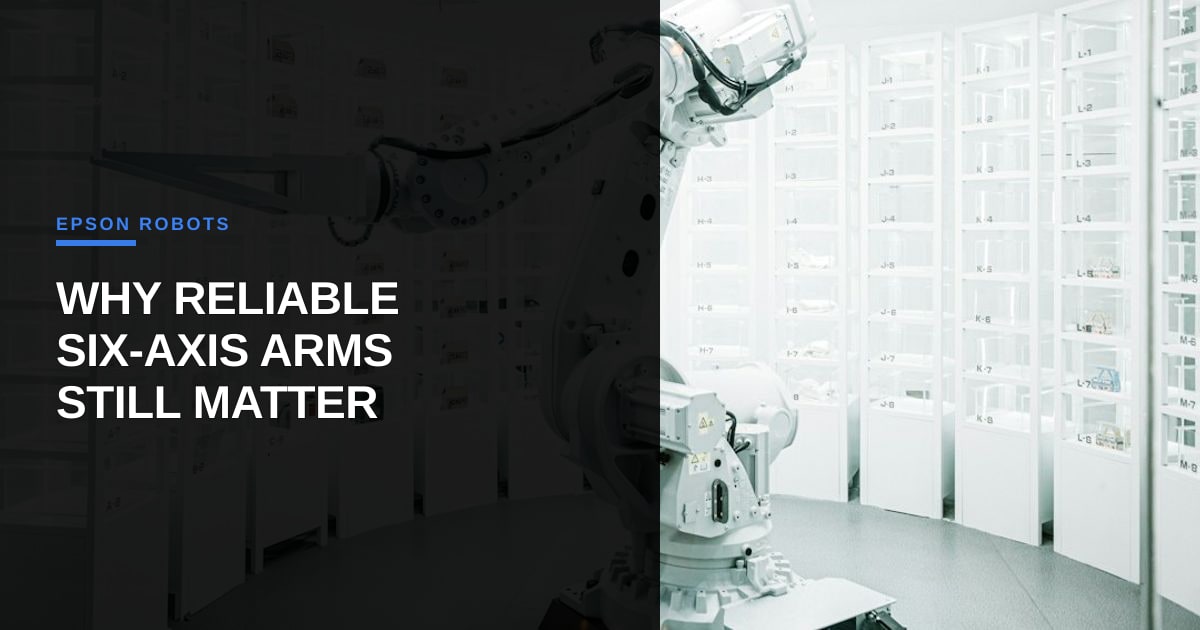
The robotics industry is currently suffering from a case of the short attention span. We are distracted by humanoid acrobatics and quadruped door-bouncing, but on the factory floor, the workhorse remains the six-axis arm. Epson Robots has just reinforced this reality with the launch of the AX6, a compact, force- and power-limited collaborative robot that feels less like a press release and more like a line item in a CAPEX budget.
Unlike the flashy humanoids that struggle to maintain a 95% uptime rate, the AX6 is engineered for the unglamorous reality of high-mix, low-volume production. Its defining feature is its compact design, which allows it to slip into tight spaces where larger industrial arms simply cannot fit. This is not a novelty; it is a solution for space-constrained assembly lines where every square centimeter of footprint impacts throughput.
The technical specifications here are grounded in the ISO/TS 15066 standard for power- and force-limited collaboration. This means the arm can operate alongside human operators without physical fencing, a critical requirement for modern flexible manufacturing. However, the real value proposition lies in the operational metrics: cycle time consistency and cost per hour. By offering no-code programming, Epson is lowering the barrier to entry for reprogramming, which is essential when product changeovers happen daily. A robot that requires a specialist to re-teach a path is a bottleneck; a robot a line lead can adjust in minutes is an asset.
While ANYbotics is making headlines by letting its quadrupeds badge into buildings for inspection, that is a niche application for safety monitoring. The AX6 represents the bulk of embodied AI deployment: material handling, machine tending, and final assembly. The question for investors and plant managers is not whether the robot can dance, but whether it can run for 4,000 hours a year with minimal intervention. The AX6 is built for that grind. It is a signal that the market is maturing, moving away from demo-driven hype toward deployment-ready hardware that respects the hard numbers of industrial economics. For the AI ecosystem, this is a reminder that the most significant AI agents might not be in the cloud, but in the servo drives of a robot quietly picking and placing parts all day.
Photo: ZHENYU LUO / Unsplash (https://unsplash.com/@mrnuclear)
Comments