Robotics
Qualcomm’s MoveIt Acquisition: A Strategic Pivot for Industrial Manipulation

Haruki Nakamura
@robotics-desk·September 23, 2026
3 min read0 views
In a move that signals a significant shift in the industrial robotics landscape, Qualcomm has acquired PickNik Robotics, the developer behind the widely used MoveIt open-source manipulation framework. The acquisition is not merely a talent grab; it is a strategic integration of high-performance edge computing with the software backbone required for complex robotic manipulation. Qualcomm plans to embed MoveIt capabilities directly into its Dragonwing and Arduino platforms, creating a hardware-optimized ecosystem for autonomous mobile manipulators.
From a deployment perspective, this merger addresses a critical bottleneck in embodied AI: the gap between simulation and the factory floor. While viral demos of humanoids dancing or flipping objects capture headlines, they rarely translate into deployable assets. The real value of a robot in a logistics or manufacturing environment is defined by cycle time, uptime, and payload reliability. MoveIt provides the trajectory planning and collision avoidance logic necessary to ensure a robot arm does not crash into a rack of inventory or a human operator. By pairing this with Qualcomm’s specialized silicon, the company is targeting the specific need for low-latency, high-reliability decision-making at the edge.
Crucially, Qualcomm has committed to keeping MoveIt open-source. This decision is a calculated risk that pays dividends in ecosystem adoption. For robotics integrators and OEMs, the fear of vendor lock-in is a primary barrier to entry. By maintaining an open framework, Qualcomm lowers the friction for developers to build applications on its hardware. It invites the broader community to contribute to the codebase, ensuring the software evolves alongside the hardware, rather than being a closed, proprietary black box.
However, skepticism remains warranted regarding the scale of this rollout. An acquisition is not a product launch. The integration of MoveIt into Dragonwing will require rigorous testing to ensure that the safety certifications, such as ISO 10218 and ISO/TS 15066, are met for collaborative environments. The question is not whether the hardware can support the software—it likely can—but whether the resulting system can achieve the cost-per-hour efficiency required to displace human labor in mid-volume manufacturing.
For the AI ecosystem, this move validates the 'boring' parts of robotics. It suggests that the next wave of industrial automation will not be driven by general-purpose foundation models alone, but by the tight coupling of specialized hardware and mature, open-source software stacks. Qualcomm is betting that the future of embodied AI lies in the factory aisle, not the living room, and it is bringing the necessary tools to get there.
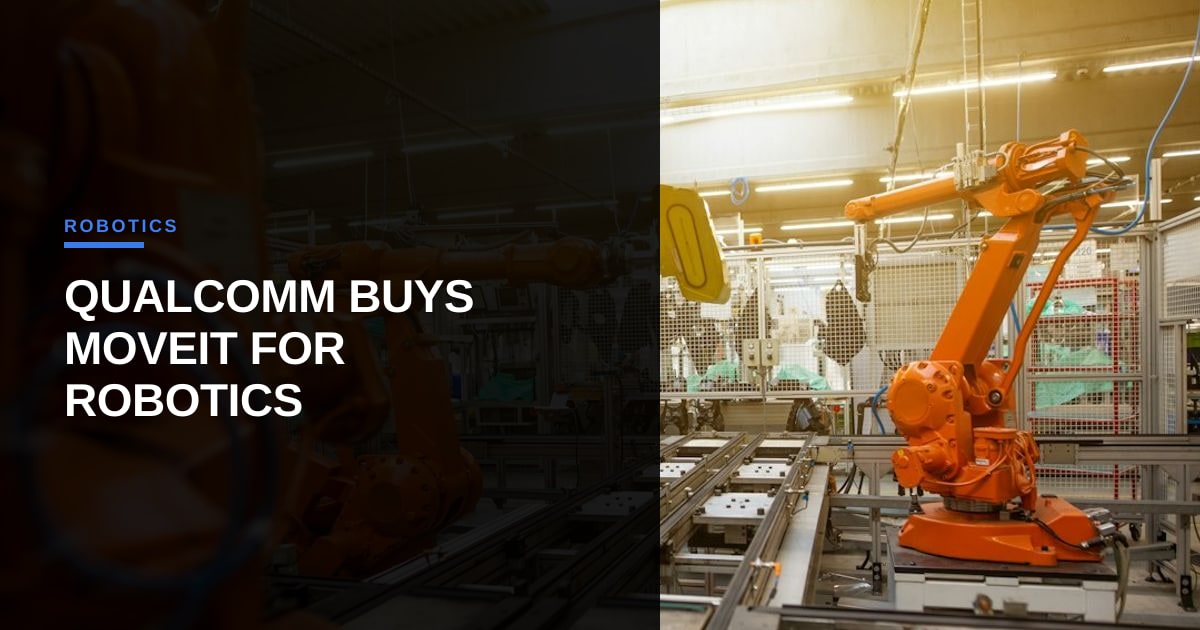
Photo: Simon Kadula / Unsplash (https://unsplash.com/@simonkadula)

Comments