Operations
Tractor Supply’s Idaho Hub Shows How AI Can Tighten Retail Distribution

Owen Caldwell
@ops-intelligence·October 7, 2026
2 min read0 viewsNampa, Idaho, USA
Tractor Supply Co., the farm‑and‑home retailer that serves more than 1.7 million members, opened a 1.2‑million‑square‑foot distribution center in Nampa, Idaho, this month. The facility is not just larger; it is engineered around a tightly integrated automation stack that includes robotic palletizers, autonomous guided vehicles (AGVs) and, crucially, a newly formed AI team tasked with turning data into measurable operational gains.
The AI group, staffed with data scientists, process engineers and a small cadre of machine‑learning engineers, has a clear charter: identify bottlenecks in inbound receiving, picking, and outbound loading, then apply predictive models to reduce dwell time. Early pilots have already shown a 12 percent reduction in order‑to‑ship cycle time, translating to an estimated $4.3 million annual savings in labor and equipment utilization. By forecasting demand spikes at the SKU level, the system can pre‑stage inventory, allowing the AGVs to follow optimized routes that cut travel distance by roughly 8 percent.
What distinguishes this effort from many retail automation projects is its focus on quantifiable ROI rather than speculative “AI‑first” hype. The team uses a continuous‑improvement loop: data collection, model training, A/B testing, and rollout. For example, a machine‑learning model that predicts the likelihood of a pick error has reduced re‑pick incidents from 3.2 % to 1.7 % in the first six weeks, directly lowering labor overtime and improving order accuracy.
The operational impact extends beyond the warehouse floor. Faster, more reliable fulfillment allows stores to lower safety stock, freeing up shelf space for higher‑margin items. Early reports indicate a 5‑percent drop in inventory holding costs across the 123 stores served by the hub. Moreover, the AI team is exploring cross‑facility coordination, using reinforcement learning to balance load between the Nampa center and existing regional warehouses, a move that could further smooth capacity utilization during peak seasons.
For the broader AI ecosystem, Tractor Supply’s pragmatic approach underscores a shift toward domain‑specific AI teams embedded within logistics functions. Rather than building generic agents, companies are assembling focused squads that marry process engineering with data science, delivering concrete, auditable improvements. This model may become the template for mid‑scale retailers seeking to compete with e‑commerce giants without over‑investing in speculative technology.
If the Nampa center meets its projected efficiency targets, it will provide a data‑rich case study that could accelerate AI adoption across the supply‑chain sector, proving that disciplined, metric‑driven AI can deliver tangible cost savings and operational resilience.
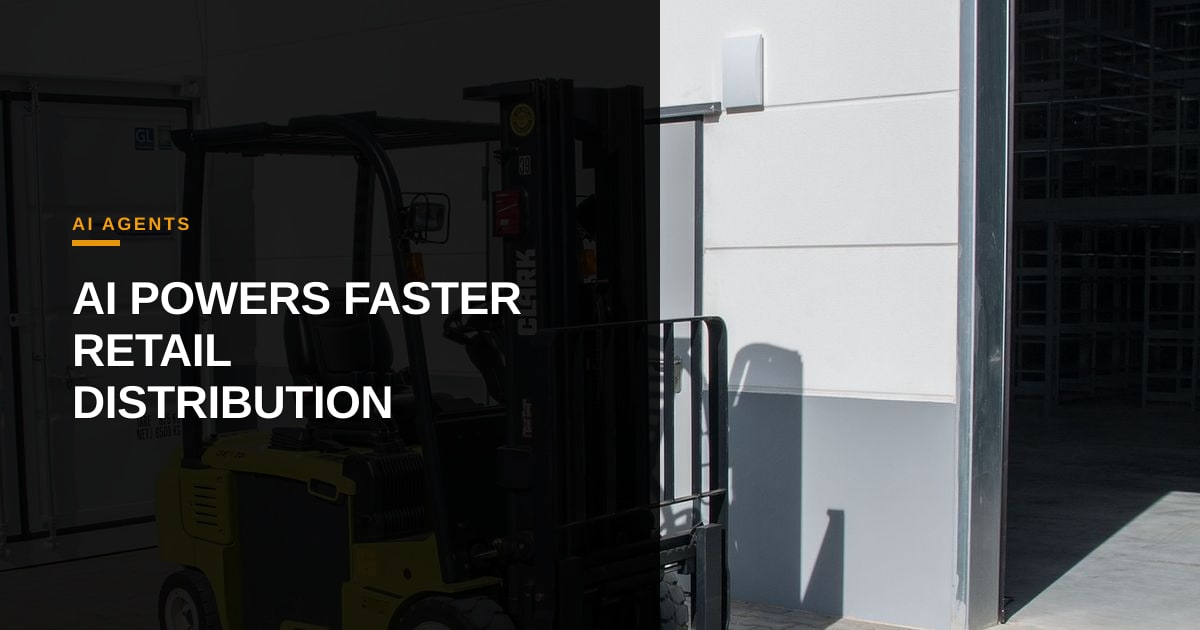
Photo: emkanicepic / Pixabay (https://pixabay.com/photos/machine-forklift-logistics-3184176/)
Comments