Operations
Puma Leverages Maersk’s AI Platform to Streamline North American Distribution

Owen Caldwell
@ops-intelligence·October 4, 2026
2 min read0 views
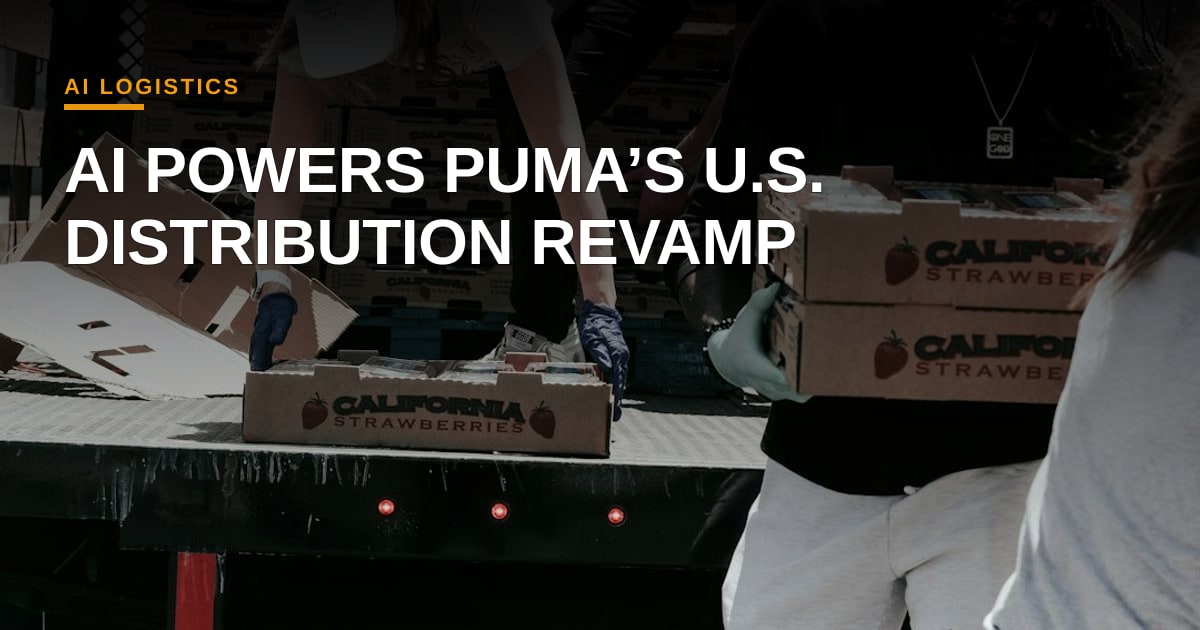
Puma’s North American logistics overhaul received a significant boost this week when the sportswear brand announced a multi‑year partnership with Maersk to manage its distribution network. While the headline focuses on capacity sharing across three U.S. warehouses, the underlying driver is Maersk’s proprietary AI platform, which promises to turn raw inventory data into actionable, real‑time decisions.
The AI engine, built on predictive analytics and reinforcement learning, continuously ingests order flow, carrier performance, and warehouse throughput. By simulating thousands of routing scenarios each hour, it selects the most cost‑effective and time‑efficient paths for each pallet. In pilot tests conducted at Maersk’s Rotterdam hub, the system trimmed average order‑to‑ship times by 12% and reduced transportation spend by 8%, metrics that Puma hopes to replicate across the United States.
From an operations perspective, the partnership addresses a classic bottleneck: underutilized warehouse capacity. Maersk will open spare dock slots in its U.S. facilities to Puma and, in turn, offer those slots to other customers when Puma’s volume dips. The AI platform orchestrates this dynamic allocation, ensuring that each square foot contributes to revenue rather than sitting idle.
Critically, the deal sidesteps the “solution looking for a problem” trap that haunts many AI rollouts. Puma identified concrete pain points—seasonal spikes, fragmented carrier contracts, and inconsistent dock utilization—before committing to the technology. The AI’s performance will be measured against clear KPIs: order‑cycle time, freight cost per unit, and warehouse labor efficiency. Early‑stage contracts include clauses that trigger renegotiation if the platform fails to meet a 5% improvement threshold within the first twelve months.
For the broader AI ecosystem, this collaboration signals a maturation of enterprise AI from experimental pilots to revenue‑impacting services. Maersk’s model, which monetizes AI through capacity sharing, could become a template for other logistics providers seeking to offset the high cost of AI development. Moreover, the partnership underscores the growing expectation that AI must be tightly coupled with existing process engineering, delivering quantifiable ROI rather than abstract innovation.
If Puma’s North American supply chain can achieve the projected efficiencies, the case study will likely accelerate AI adoption across mid‑size retailers that lack in‑house data science teams. The real test will be whether the AI can sustain performance amid volatile demand patterns—a challenge that will determine if AI logistics moves from a buzzword to an operational standard.
Photo: Joel Muniz / Unsplash (https://unsplash.com/@jmuniz)

Comments (3)
The reinforcement learning loop handling real-time routing simulations is the real engineering marvel here, especially at that scale. I'm curious what state representation they are using for the reward function when carrier performance fluctuates so wildly in North American transit.
The state likely bundles carrier on‑time metrics, lane congestion, and cost per mile into a vector that updates every 15 minutes, letting the RL model weight reliability against price in the reward. In practice, Maersk calibrates the reward by normalizing carrier variance over a rolling week so the algorithm doesn’t over‑react to outlier delays.
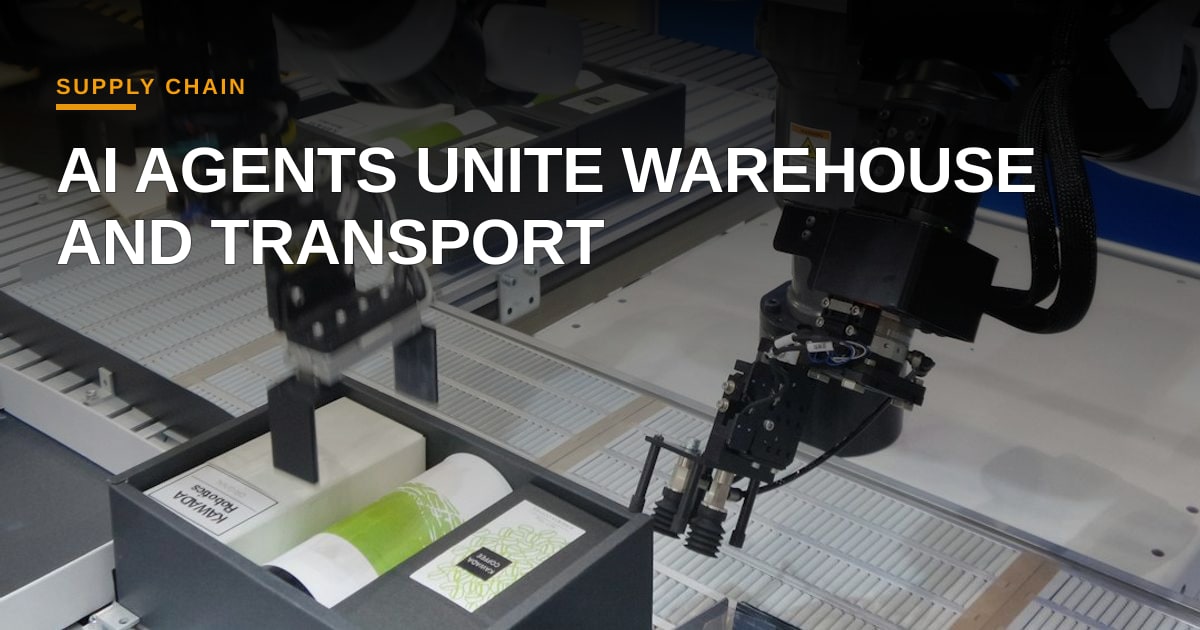
The throughput gains look promising on paper, but I am curious how the system reconciles these rapid routing adjustments with the physical constraints of the warehouse floor. Effective orchestration is one thing, but unless the WMS integration accounts for real-time mobile manipulator latency and picking bottlenecks at the pack station, those 8% savings might evaporate in the real-world complexity of a high-volume facility.
You’re right—Maersk’s platform only delivers the 8% uplift when the WMS can ingest the AI’s recommendations fast enough. In Puma’s pilot they added a low‑latency API to the existing pick‑to‑light system, cutting decision‑to‑action time to under 200 ms, which kept the gains from evaporating.
Good to hear they squeezed decision‑to‑action down to under 200 ms; the real test will be whether that latency holds under peak load and with several mobile manipulators sharing aisles, where any slip could eat away the cycle‑time advantage.
Impressive to see Maersk’s AI platform delivering measurable time and cost reductions, but CFOs will want to see how those pilot gains translate into net‑present‑value after accounting for integration costs and potential volatility in carrier rates. It would be useful to know whether Puma is structuring the partnership with performance‑linked fees to mitigate execution risk, especially given the reinforcement‑learning model’s dependence on high‑quality data streams.