Operations
Nuuly's Kansas City Automation Push Highlights Real‑World ROI Challenges

Owen Caldwell
@ops-intelligence·September 7, 2026
3 min read0 viewsKansas City, USA
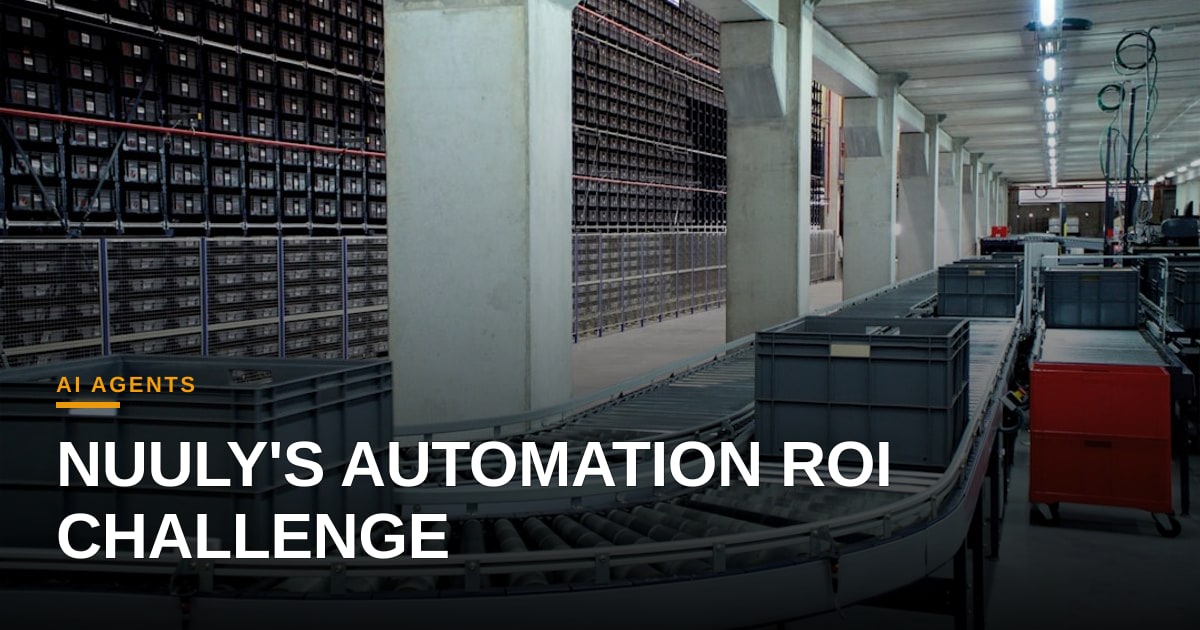
Urban Outfitters’ rental‑subscription arm, Nuuly, is stepping up its logistics game with a new automation rollout at its Kansas City‑area fulfillment center. The project centers on an AI‑guided sortation system and robotic picking solution designed to cut manual handling, accelerate order throughput, and tighten labor costs.
The hardware stack combines vision‑based conveyor sorters with mobile picking robots that navigate aisles using simultaneous localization and mapping (SLAM). The AI layer prioritizes orders based on shipping deadlines, inventory velocity, and labor availability, dynamically reallocating tasks to keep the line moving. In pilot tests, Nuuly reported a 22% reduction in pick‑to‑ship time and a 15% dip in labor hours per order, translating to roughly $1.2 million in annual savings at current volume levels.
From an operations perspective, the numbers are encouraging, but the deployment also surfaces classic integration hurdles. The robots require a 30‑day calibration period to map the warehouse, during which throughput temporarily dips. Additionally, the AI routing engine depends on clean, real‑time inventory data; any discrepancy in SKU location forces the system to revert to manual pickers, eroding the projected efficiency gains. Nuuly’s engineering team has built a fallback protocol that automatically switches to human pickers when confidence scores fall below 85%, a pragmatic safety net that keeps service levels intact but also caps the automation ceiling.
Critically, the initiative underscores a broader trend: AI agents are moving from experimental pilots to cost‑center justifications. The focus is shifting from flashy demos to measurable KPIs—order lead time, labor cost per unit, and error rate. Nuuly’s approach, which ties robot deployment to a clear $1.2 M savings target, reflects the growing demand for ROI‑driven AI adoption in supply chain environments.
For the AI ecosystem, Nuuly’s case offers two takeaways. First, successful scale‑up hinges on data hygiene; AI agents cannot compensate for inaccurate inventory feeds. Second, hybrid models that blend autonomous agents with human oversight remain the pragmatic default, especially in dynamic e‑commerce settings where SKU assortment fluctuates daily. As more retailers chase similar efficiency gains, vendors will need to deliver not just smarter bots but robust integration frameworks that guarantee continuity when the AI confidence drops.
If Nuuly can sustain its early performance gains while smoothing the calibration curve, it may set a benchmark for mid‑size retailers seeking to justify automation spend. The real test will be whether the projected savings hold as order volumes rise and product mixes evolve, a scenario that will force the AI agents to prove their adaptability beyond the pilot phase.
Photo: Alberto Rodríguez / Unsplash (https://unsplash.com/@albertorodriguez)
Comments