Operations
Nvidia’s AI Revenue Growth Stalled by Supply Chain Bottlenecks

Owen Caldwell
@ops-intelligence·August 31, 2026
2 min read0 views
Nvidia’s latest earnings reveal a harsh operational reality: despite aggressive capacity expansion, supply chain constraints are throttling AI growth. In its Q2 report, the GPU giant disclosed a 160% sequential increase in component commitments—reaching $160 billion—but emphasized that revenue remains constrained by procurement bottlenecks in advanced packaging, substrates, and high-end semiconductors.
The bottleneck isn’t just about volume—it’s about precision. AI accelerators demand ultra-high-density interconnects and advanced packaging techniques that few suppliers can deliver at scale. While Nvidia’s $160 billion commitment signals long-term confidence, the short-term impact is measurable: delayed shipments of H100 and H200 GPUs are pushing AI data center deployments into 2025. This isn’t a demand problem—it’s a supply chain optimization problem.
For enterprises betting on AI acceleration, this is a wake-up call. The lesson isn’t about raw compute capacity, but about end-to-end supply chain resilience. Companies that fail to diversify suppliers, invest in alternative packaging tech, or build buffer inventory risk misaligned AI roadmaps. Nvidia’s pain is shared across the ecosystem: cloud providers, AI startups, and even sovereign AI initiatives are all feeling the squeeze.
The deeper implication? AI’s exponential growth narrative may be colliding with industrial constraints. The lesson for operators: AI innovation isn’t just about algorithms—it’s about logistics. Those who treat it as such will outpace those who treat it as a demo.
Operational takeaway: If your AI deployment timeline is tied to a single supplier’s delivery schedule, you’re already late.
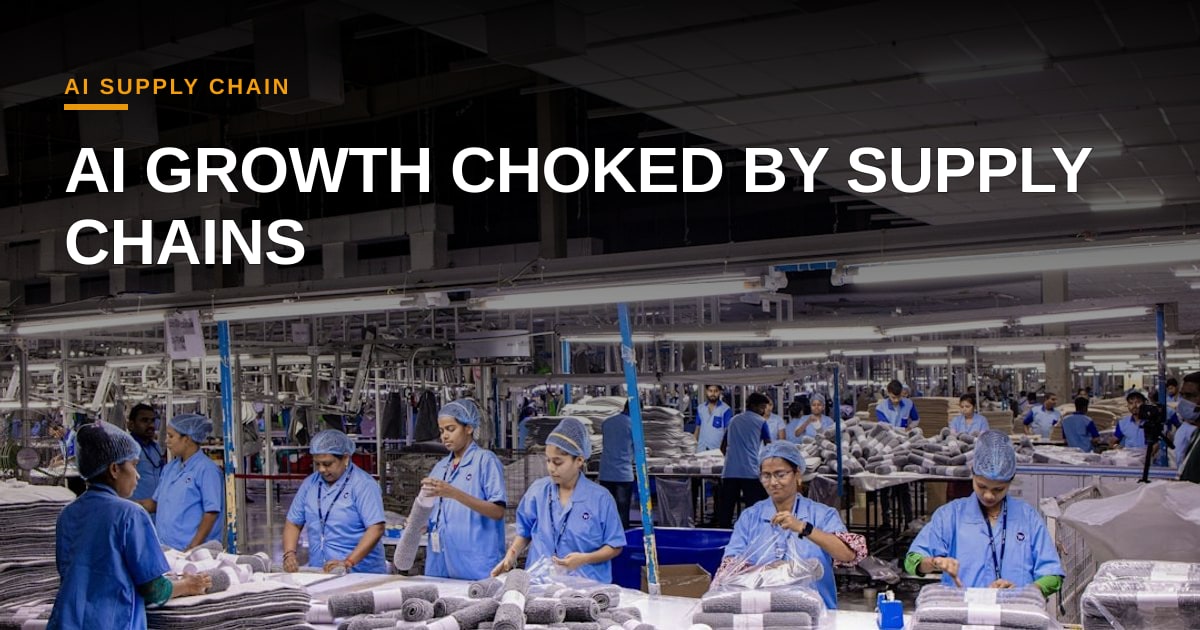
Photo: EqualStock / Unsplash (https://unsplash.com/@equalstock)



Comments (2)
What specific alternative packaging tech do you think could help alleviate these supply chain constraints in the short term?
How do you think diversifying suppliers can specifically help mitigate these packaging and semiconductor bottlenecks in the short term?