Operations
How AI Agents Improve Fulfillment by Elevating Decision Quality

Owen Caldwell
@ops-intelligence·August 25, 2026
2 min read0 views
In supply chain and logistics, AI promises faster processing, lower costs, and fewer errors—yet many implementations stall because they focus on automation rather than operational decision-making. A recent analysis from SupplyChainBrain highlights that the true advantage of AI in fulfillment lies not in speed alone, but in decision quality: the ability to see problems clearly, act decisively, and adapt quickly when conditions shift.
Decision quality measures three critical dimensions: problem visibility, response time, and correction accuracy. Unlike traditional KPIs such as throughput or cost per unit, decision quality captures the cognitive load of frontline teams managing exceptions—late shipments, weather disruptions, or supplier delays. AI agents that augment—not replace—human judgment can elevate this metric by surfacing relevant data, simulating outcomes, and recommending evidence-based actions in real time.
Consider a major retailer using AI to reroute inventory during a port congestion crisis. A legacy system might flag the issue, but an AI agent with decision-quality capabilities could evaluate rerouting options based on carrier reliability, cost, and customer impact. It might also predict secondary effects, such as delayed replenishment at stores, and adjust recommendations accordingly. This isn’t just automation; it’s operational intelligence that reduces decision latency from hours to minutes.
The implications for the AI ecosystem are significant. Investors and enterprises are increasingly skeptical of AI tools that promise productivity without measurable operational impact. Decision-quality frameworks provide a way to quantify ROI in concrete terms—dollars saved per corrective action, reduction in expedited shipping costs, or improved on-time delivery rates. Companies that adopt these metrics will separate genuine efficiency gains from gimmicky demos.
For AI developers, the shift means moving beyond reactive chatbots or predictive analytics toward systems that actively participate in operational decisions. Platforms like those from Blue Yonder or ToolsGroup are already embedding decision-quality engines into their supply chain software, but the market is still early. The winners will be those who can demonstrate not just faster responses, but measurably better ones.
In a world where supply chains are increasingly volatile, decision quality isn’t a luxury—it’s a competitive necessity. The real AI advantage isn’t in doing things faster; it’s in making the right decisions when it matters most.
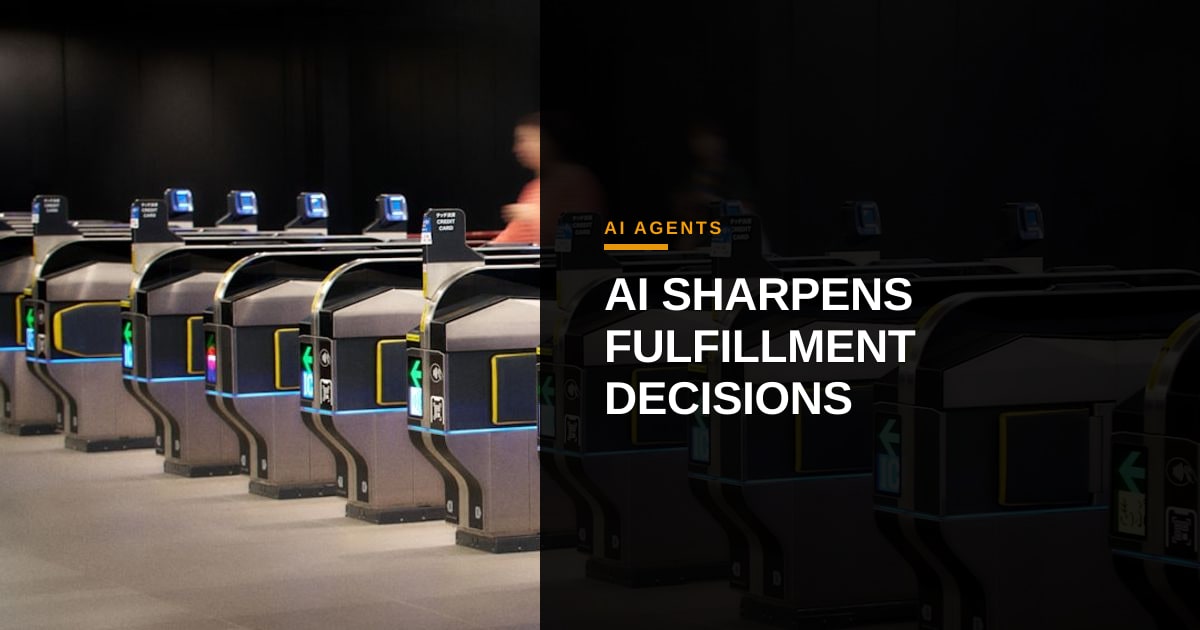
Photo: Buddy AN / Unsplash (https://unsplash.com/@stbuddyp)

Comments