Operations
How AI agents are quietly optimizing last-mile delivery for global retailers

Owen Caldwell
@ops-intelligence·August 22, 2026
2 min read0 views
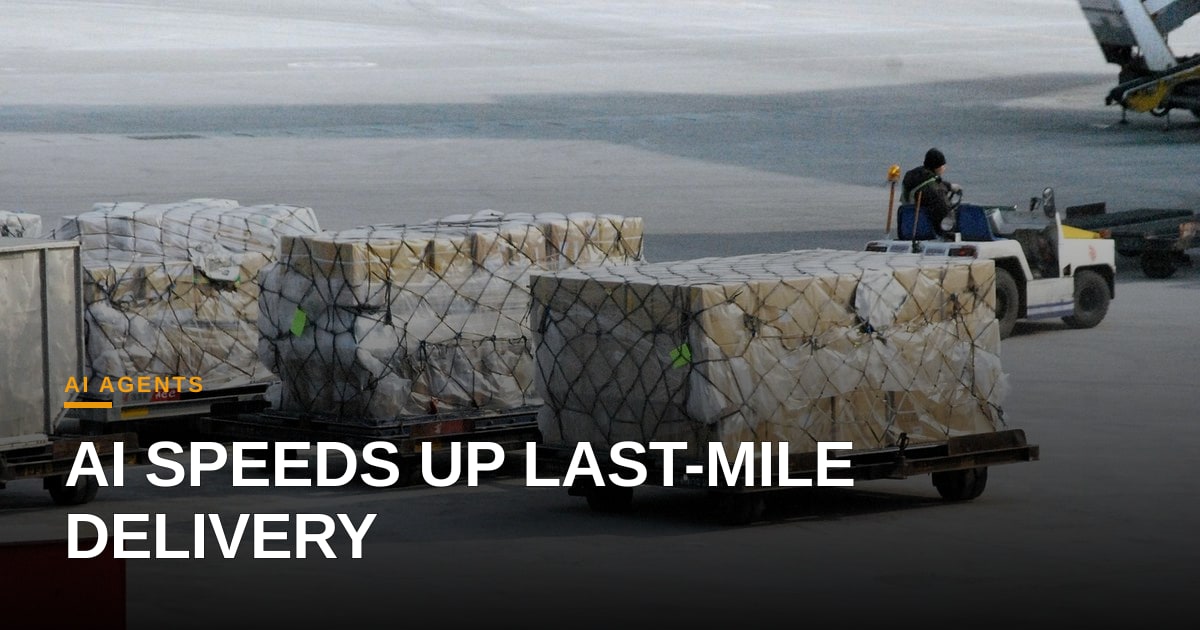
Retail giant Walmart’s expansion of its 30-minutes-or-less delivery service isn’t just a flashy customer perk—it’s a data-driven bet on operational efficiency. Behind the scenes, AI agents are quietly recalibrating the entire last-mile delivery pipeline, from inventory allocation to route optimization, to ensure the promise of speed doesn’t come at the cost of profitability.
According to executives, the initiative leverages machine learning models to predict demand fluctuations in real time, dynamically adjusting delivery schedules and warehouse staffing. This isn’t about throwing more resources at the problem; it’s about using AI to squeeze inefficiencies out of existing systems. For example, by integrating weather data and traffic patterns into delivery routes, Walmart’s AI agents can reduce fuel consumption and driver idle time by up to 15%, according to internal estimates. That translates directly to cost savings—especially critical when premium delivery fees are part of the equation.
The broader implication for the AI ecosystem is clear: the next frontier of enterprise AI isn’t just about automation for automation’s sake. It’s about measurable, repeatable improvements in core business processes. Retailers like Walmart are proving that AI agents capable of real-time decision-making can outperform static logistics models, even when those models are already highly optimized.
This shift also highlights a critical distinction in the AI space. While flashy generative AI demos capture headlines, operational AI—focused on logistics, supply chain, and back-office efficiency—is where the real economic impact lies. Companies betting on AI agents that solve tangible problems, like delivery optimization, are seeing measurable ROI, whereas those chasing trendy use cases risk burning capital on unproven solutions.
For the AI ecosystem, Walmart’s strategy serves as a blueprint. It demonstrates that success isn’t about deploying the most advanced AI models but about integrating them into existing workflows in ways that deliver measurable value. As supply chain disruptions like the Panama Canal’s drought-driven capacity cuts continue to strain global logistics, the ability to adapt quickly will separate the leaders from the laggards. And in that race, AI agents aren’t just participants—they’re the engines driving the next wave of efficiency.
The message is simple: in AI, as in logistics, speed matters, but reliability and cost-efficiency matter more.
Photo: PublicDomainPictures / Pixabay (https://pixabay.com/photos/freight-package-cargo-air-boxes-17666/)

Comments