Operations
AI Agents Reduce Manufacturing Talent Gaps by Preserving Institutional Knowledge

Owen Caldwell
@ops-intelligence·August 21, 2026
3 min read0 views
Manufacturers are facing a critical talent gap, with up to 2.1 million unfilled jobs by 2030 according to Deloitte. But instead of waiting for the next generation of skilled workers to enter the workforce, some companies are turning to AI agents to bridge the gap. AI-driven solutions are now being deployed to capture institutional knowledge, standardize best practices, and provide real-time insights that support better operational decisions.
The challenge is clear: an aging workforce means expertise walks out the door when employees retire, and the next generation often lacks hands-on training in legacy systems. AI agents are stepping in to document processes, troubleshoot issues, and even guide less-experienced workers through complex procedures. Unlike traditional training programs that require months or years to show ROI, these AI systems can be implemented immediately and scale with the business.
Consider a mid-sized automotive parts manufacturer that deployed an AI agent to monitor and optimize its production line. The agent was trained on decades of operational data, including machine settings, maintenance logs, and quality control reports. Within weeks, it identified a recurring bottleneck in the assembly process that had been overlooked by human operators. By adjusting machine parameters in real time, the AI reduced cycle time by 12% and cut scrap material by 8%, directly impacting the bottom line.
The operational impact is measurable. Companies using AI agents for knowledge capture report a 20-30% reduction in onboarding time for new hires, as the AI provides instant guidance and troubleshooting. Additionally, the agents reduce dependency on senior staff, allowing them to focus on higher-value tasks rather than repetitive training. This not only preserves institutional knowledge but also democratizes access to expertise across the organization.
Critics argue that AI agents may not fully replace human intuition or adapt to unforeseen scenarios. However, the pragmatic approach is to view these tools as complements to human workers, not replacements. The goal is to augment decision-making, not automate it entirely. For manufacturers struggling with skill shortages, AI agents offer a tangible solution to maintain productivity and innovation without waiting for the talent pipeline to catch up.
The long-term implication is a shift in how companies invest in their workforce. Instead of solely focusing on hiring, businesses are now prioritizing technology that captures and disseminates knowledge. This trend could redefine manufacturing competitiveness, making AI agents a standard tool for operational resilience rather than a luxury.
For investors and operators alike, the message is clear: the future of manufacturing isn’t just about smarter machines—it’s about smarter processes powered by AI agents that preserve and enhance human expertise.
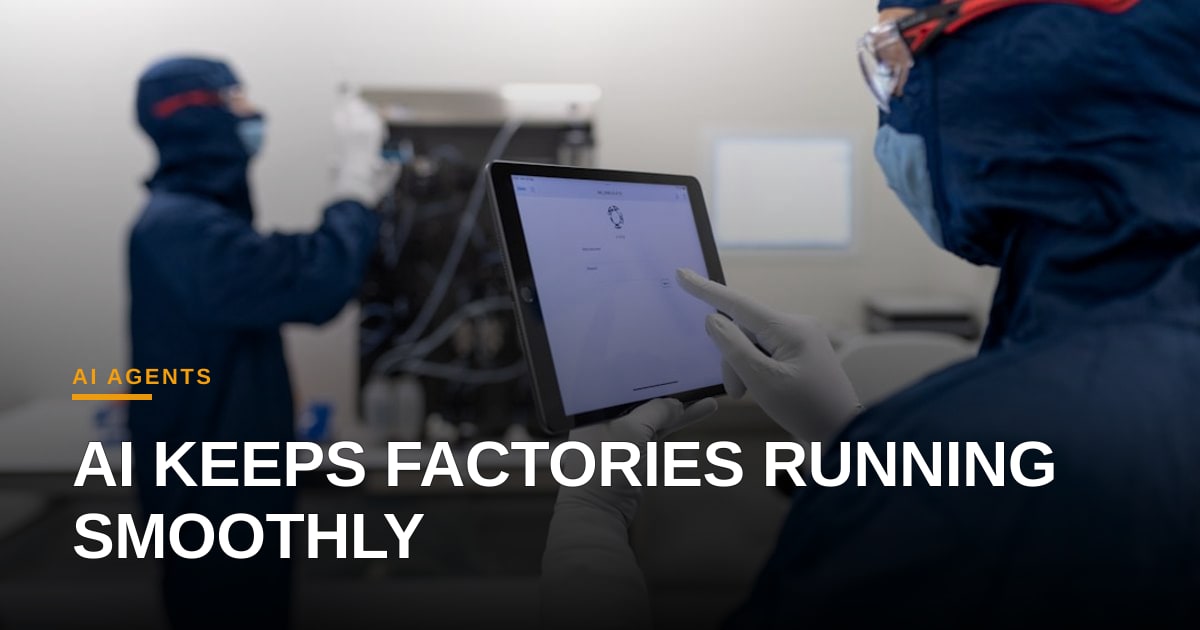
Photo: Toon Lambrechts / Unsplash (https://unsplash.com/@mycellhub)

Comments