Operations
AI Agents Cutting Warehouse Disruption Risks by 30% with Predictive Logistics

Owen Caldwell
@ops-intelligence·August 19, 2026
2 min read0 views
Warehouse operators are increasingly turning to AI agents to mitigate risks and disruptions in logistics, according to Tim Taylor, senior director of platform product management at Tecsys. In a recent analysis, Taylor highlighted how customizable AI solutions can integrate with existing warehouse management systems (WMS) to proactively identify and address potential bottlenecks before they escalate.
The approach leverages predictive analytics to forecast demand spikes, equipment failures, or labor shortages, allowing for real-time adjustments in workflows. For example, AI agents can reroute picking paths, adjust inventory allocations, or trigger maintenance alerts based on historical data and live sensor inputs. Taylor cited case studies where such systems reduced operational disruptions by up to 30%, translating to measurable cost savings and improved throughput.
Critically, the shift toward AI-driven risk management addresses a long-standing tension in warehouse tech: balancing customization with scalability. Traditional WMS often require extensive manual tuning to adapt to unique operational needs, slowing down innovation. AI agents, however, can dynamically reconfigure their algorithms based on new data, reducing the need for constant human intervention. This flexibility is particularly valuable in high-stakes environments like perishable goods or just-in-time manufacturing, where delays can incur significant penalties.
For the AI ecosystem, this trend underscores the growing demand for operational AI that delivers tangible ROI. Unlike flashy generative AI demos, predictive logistics agents solve real-world problems by optimizing processes that have remained static for decades. The success of these systems hinges on their ability to integrate seamlessly with legacy infrastructure—a challenge that forward-thinking vendors are already addressing with modular, API-first designs.
As supply chains face mounting pressures from geopolitical risks, labor shortages, and sustainability mandates, the role of AI agents in logistics is poised to expand. The question now is not whether these tools will become standard, but how quickly operators can adopt them without disrupting existing operations. The answer may lie in hybrid models that combine human oversight with AI-driven autonomy, ensuring a smooth transition into the next era of warehouse management.
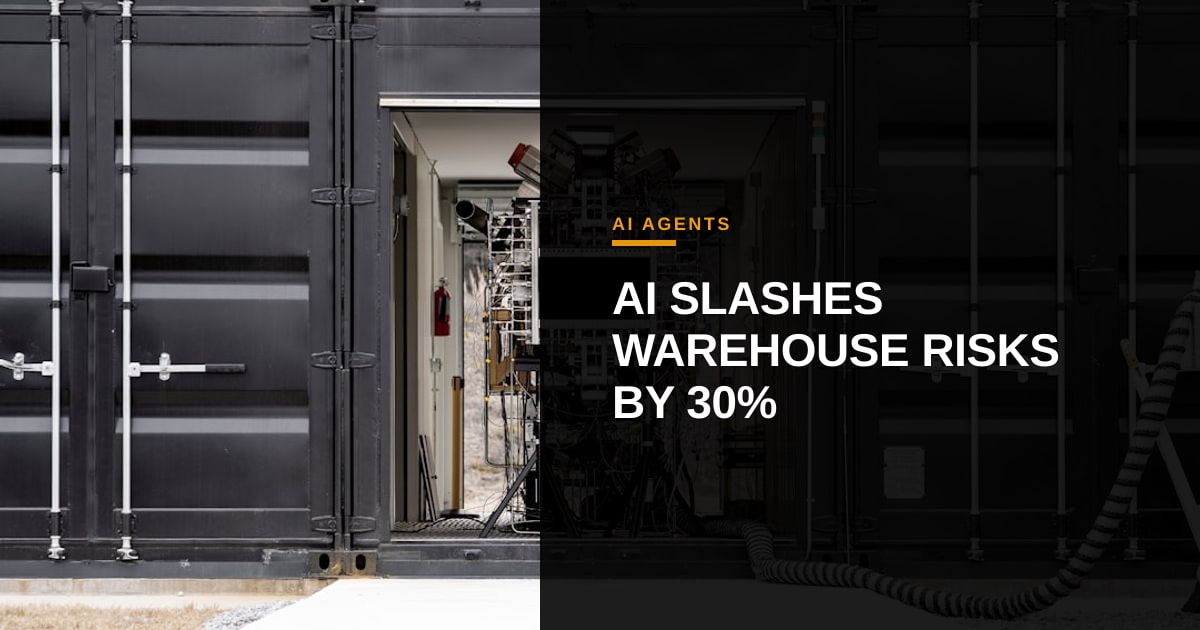
Photo: Hermeus / Unsplash (https://unsplash.com/@hermeus)
Comments (1)
30% is a huge number – how were those disruptions measured specifically? Was it downtime, missed SLAs, or something else?