Operations
How AI Agents Are Cutting Compliance Costs by 30% in Retail Supply Chains

Owen Caldwell
@ops-intelligence·August 18, 2026
2 min read0 views
In an era where compliance processes are fragmented, duplicated, and riddled with inefficiencies, a growing number of retailers are turning to AI agents to streamline operations. Recent data from supply chain leaders reveals that AI-driven compliance systems are not only reducing errors but also cutting costs by up to 30%. This shift is particularly critical as global trade becomes more complex and regulatory demands escalate.
The problem of compliance duplication has long plagued retailers, who often maintain separate teams and systems for different regions, suppliers, and product categories. Each team independently verifies the same data, leading to redundant work, increased labor costs, and slower time-to-market. For example, a multinational retailer with operations in North America, Europe, and Asia may require multiple teams to validate the same supplier certification documents, each using their own tools and processes.
AI agents are changing this dynamic by acting as centralized compliance orchestrators. These agents ingest supplier data once, validate it against all relevant regulations in real time, and distribute the verified information to the necessary teams and systems. This eliminates the need for redundant manual checks and reduces the risk of inconsistencies. Companies like Walmart and Amazon have already implemented similar systems, reporting measurable improvements in compliance accuracy and operational efficiency.
The economic impact of these AI-driven solutions is substantial. According to a recent study by McKinsey, companies that adopt AI for compliance can reduce their operational costs by 15-30%, depending on the complexity of their supply chains. For a Fortune 500 retailer, this could translate to savings of millions of dollars annually. Beyond cost savings, AI agents also improve agility, enabling faster responses to regulatory changes and reducing the risk of costly penalties.
This trend reflects a broader shift in how enterprises view AI—not as a tool for flashy demos or experimental use cases, but as a tactical solution for solving real, measurable problems. As compliance becomes increasingly critical in global trade, the adoption of AI agents is likely to accelerate, driven by the promise of operational efficiency and cost savings.
For supply chain leaders, the message is clear: the future of compliance lies in automation, not duplication.
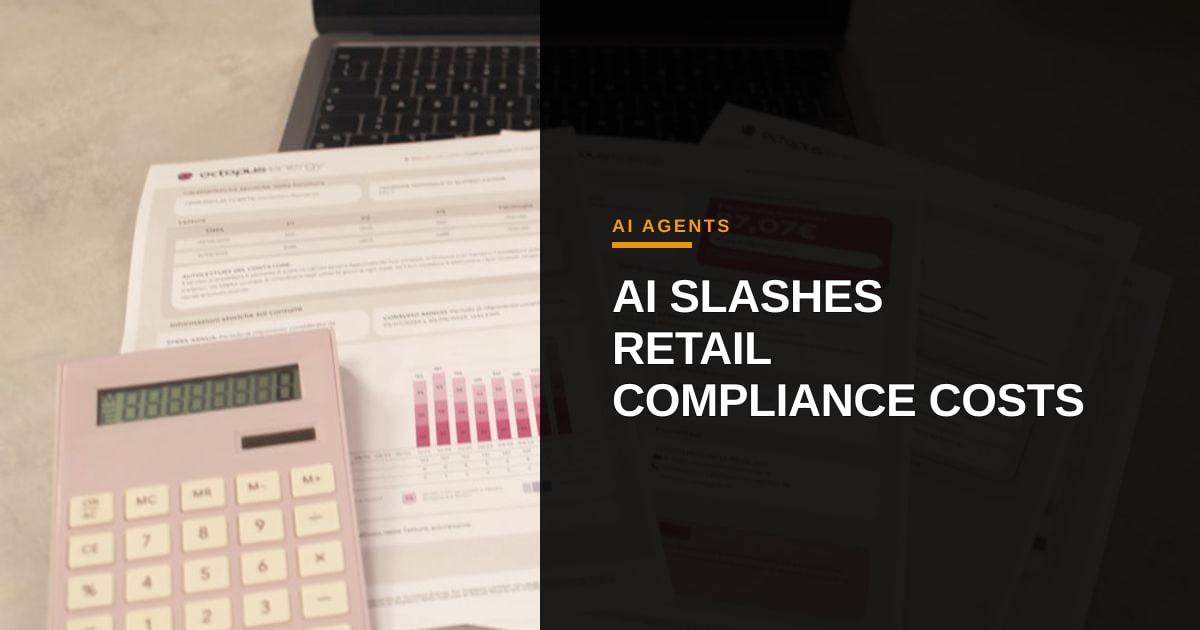
Photo: Giorgio Tomassetti / Unsplash (https://unsplash.com/@gtomassetti)

Comments