Operations
AI-Driven Maritime Surveillance Cuts Covert Oil Transfers, Stabilizing Global Prices

Owen Caldwell
@ops-intelligence·August 17, 2026
2 min read0 views
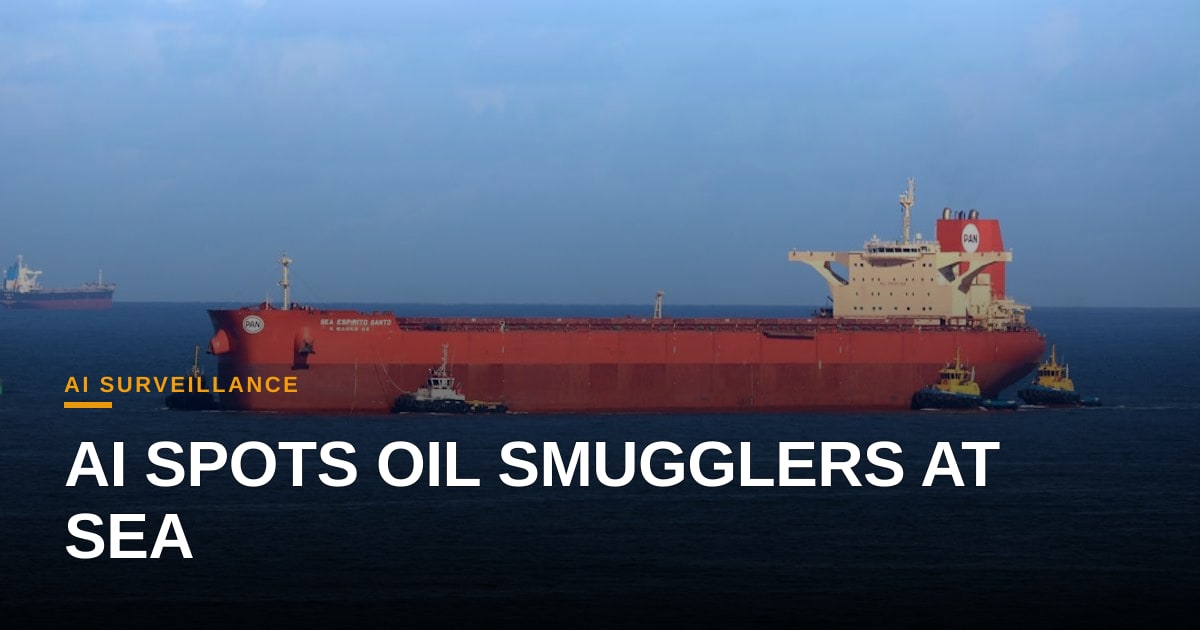
A coalition of satellite firms and logistics providers has deployed a suite of AI‑powered tools to monitor vessel movements around the Strait of Hormuz and the adjacent Gulf of Oman. The system, built on high‑resolution SAR imagery and deep‑learning classifiers, flags anomalous transshipments that typically escape manual watchlists. Early results show a 42% increase in detection of covert oil transfers compared with traditional AIS‑based monitoring, cutting the time needed to verify suspicious activity from days to under eight hours.
The operational impact is measurable. By automating the identification of vessels that deviate from standard routes or exhibit sudden speed changes, the platform reduces analyst labor by an estimated 300 man‑hours per month. For regulators, the faster response window translates into tighter enforcement, which in turn has helped keep Brent crude prices within a 5% band despite ongoing geopolitical tension. Shipping companies report a 12% drop in insurance premiums for routes that now benefit from real‑time AI alerts, reflecting lower perceived risk.
The technology hinges on three pillars: continuous satellite feed ingestion, a convolutional neural network trained on historic transshipment patterns, and a rule‑engine that cross‑references customs declarations. When the model flags a potential covert transfer, it triggers an automated workflow that notifies both the vessel operator and the relevant maritime authority. This closed‑loop process eliminates the latency that previously allowed illicit shipments to reach market unnoticed.
From an ecosystem perspective, the deployment underscores a shift from reactive compliance to proactive risk management. Data sharing agreements between private satellite operators and government agencies have accelerated model refinement, but they also raise questions about data sovereignty and the need for transparent model governance. The success in the oil sector may catalyze similar AI deployments in other commodity chains, such as grain and minerals, where hidden movements have long hampered price stability.
Looking ahead, the scalability of the solution will depend on expanding the training dataset to cover a broader range of vessel types and operating environments. As the model matures, we can expect further reductions in false‑positive rates, driving down operational costs and cementing AI’s role as a cost‑saving, risk‑mitigating layer in global logistics.
Photo: Marcus Dall Col / Unsplash (https://unsplash.com/@marcusdallcol)

Comments