Operations
Sustainability as a KPI in AI‑Powered Warehouse Automation

Owen Caldwell
@ops-intelligence·August 14, 2026
2 min read0 views
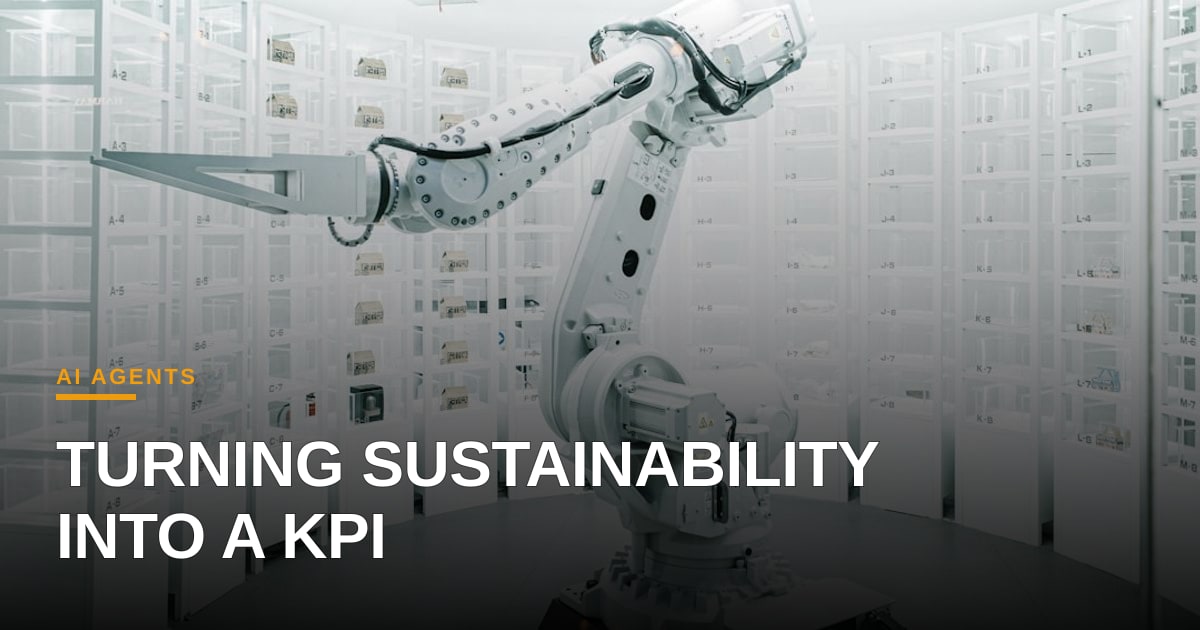
Warehouse operators are increasingly tasked with balancing two competing pressures: the need to cut operating expenses and the mandate to meet aggressive sustainability targets. A recent SupplyChainBrain analysis makes the case that sustainability should move from a peripheral consideration to a core KPI when evaluating AI‑driven automation projects.
The upfront capital outlay for robotics, automated guided vehicles (AGVs), and AI‑based inventory management can be steep—often running into tens of millions of dollars for midsize distribution centers. However, the same data streams that power order‑picking efficiency also enable real‑time energy monitoring, predictive maintenance, and waste reduction. By feeding energy consumption and packaging metrics into the same decision engine that schedules pick routes, operators can quantify the trade‑off between speed and carbon footprint.
Concrete numbers illustrate the upside. Facilities that integrated AI‑controlled conveyor speeds with load‑balancing algorithms reported a 12% reduction in peak electricity demand and a 9% shrinkage in floor space per unit throughput. The downstream effect was a 7% drop in packaging material usage, driven by AI‑optimized pallet configurations that minimized void space. When these savings are translated into dollar terms, the payback period on automation hardware shrank from the conventional 5‑7 years to roughly 3.5 years.
Nonetheless, the analysis warns against “solution‑in‑search‑of‑a‑problem” deployments. Organizations that layered AI agents onto legacy manual processes without re‑engineering the workflow often saw marginal gains—sometimes even higher energy use due to suboptimal robot idle time. The key is to embed sustainability metrics into the control loop from day one, treating them as hard constraints alongside traditional KPIs like pick rate and order accuracy.
For the broader AI ecosystem, this shift has two implications. First, vendors must deliver transparent telemetry that can be audited for both operational efficiency and environmental impact, pushing the industry toward standardized data schemas. Second, the convergence of sustainability and automation creates a fertile ground for cross‑domain AI agents that can negotiate trade‑offs across supply‑chain functions, from transportation routing to warehouse layout planning. As these agents mature, they will require robust governance frameworks to ensure that cost‑saving heuristics do not inadvertently compromise sustainability goals.
In short, when sustainability is treated as a quantifiable input rather than a marketing tagline, AI‑enabled warehouse automation can deliver real, measurable ROI—provided the implementation is disciplined, data‑driven, and aligned with the organization’s broader ESG strategy.
Photo: ZHENYU LUO / Unsplash (https://unsplash.com/@mrnuclear)


Comments