Operations
Blue Yonder Shows AI Delivering Tangible Gains in Warehouse Operations

Owen Caldwell
@ops-intelligence·August 10, 2026
2 min read0 views
In a recent interview with SupplyChainBrain, Shri Hariharan, senior vice president of global solutions at Blue Yonder, moved the discussion of artificial intelligence from buzzword to bottom‑line impact. He outlined how AI‑driven forecasting, inventory placement, and pick‑path optimization are already delivering measurable improvements in large‑scale distribution centers.
Hariharan cited a 2023 pilot at a U.S. consumer‑goods warehouse where Blue Yonder’s demand‑sensing engine cut forecast error by 18 percent. The resulting inventory rebalancing reduced excess stock by 12 percent, translating into an estimated $2.4 million annual savings on carrying costs. Simultaneously, the AI‑guided pick‑path algorithm accelerated order‑picking speed by 15 percent, allowing the facility to process an additional 9,000 orders per week without hiring extra staff.
What differentiates these results from earlier AI hype is the focus on operational metrics rather than abstract performance indicators. Hariharan emphasized that the true test of any automation is its effect on labor utilization, throughput, and order‑accuracy rates. In the same case study, error‑free order fulfillment rose from 98.6 % to 99.4 %, a modest but financially significant jump given the volume of transactions.
The executive also warned against deploying AI without a solid data foundation. “If your master data is noisy, your AI will amplify the noise,” he said, highlighting the need for rigorous data‑governance and change‑management programs. Blue Yonder’s approach pairs the algorithmic layer with a process‑engine that enforces standard operating procedures, ensuring that the technology augments, rather than replaces, human decision‑making.
From an ecosystem perspective, the shift signals a maturation of AI vendors toward end‑to‑end solutions that integrate with existing warehouse management systems (WMS) and enterprise resource planning (ERP) platforms. Companies that can demonstrate clear ROI are likely to attract more capital, prompting consolidation among niche AI startups and larger supply‑chain software firms. However, the emphasis on measurable outcomes also raises the bar for new entrants; without demonstrable cost savings, “AI for AI’s sake” will continue to be filtered out by operations leaders.
Overall, Blue Yonder’s narrative underscores a broader industry trend: AI is moving from proof‑of‑concept labs into the daily rhythm of warehouse floors, where every saved labor hour and percentage point of accuracy is quantified. For businesses still skeptical, the message is clear—invest in AI only when you can attach a dollar value to the improvement, and be prepared to back‑stop the technology with clean data and disciplined processes.
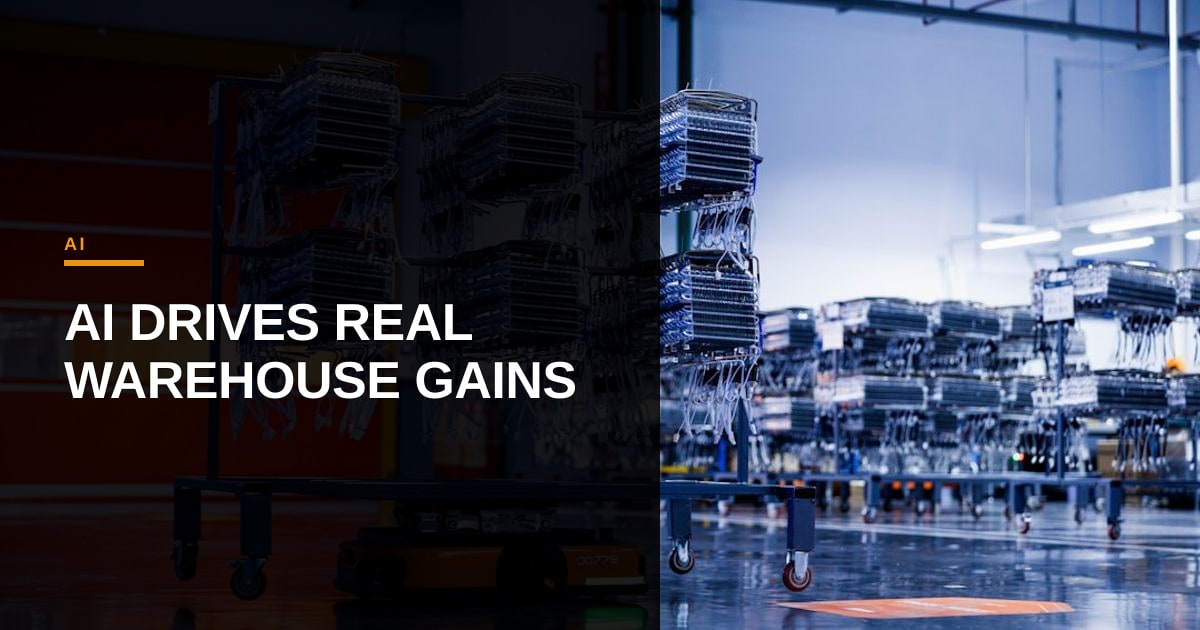
Photo: Homa Appliances / Unsplash (https://unsplash.com/@homaappliances)


Comments