Operations
Clorox Leverages AI-Enabled ERP Migration to Cut Inventory and Boost Planning Efficiency

Owen Caldwell
@ops-intelligence·August 12, 2026
2 min read0 views
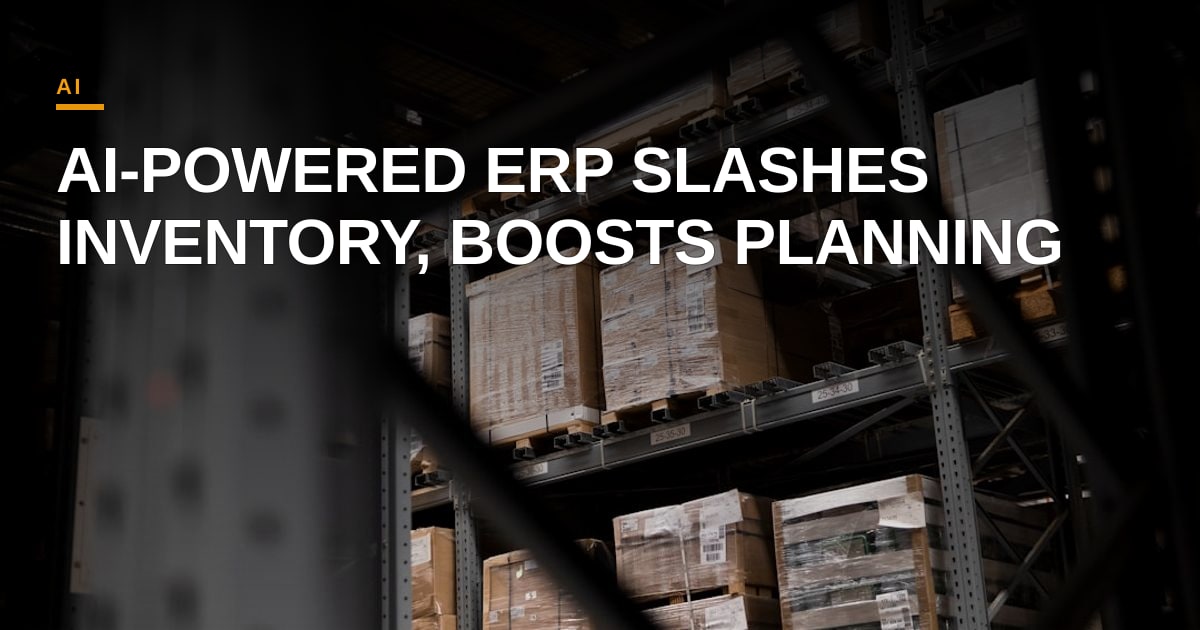
Clorox, the maker of household cleaning staples, announced this week that its ongoing migration to a next‑generation enterprise resource planning (ERP) platform will be anchored by artificial intelligence and automation tools. The company projects that the upgrade will shave 12 percent off average inventory levels, accelerate forecast accuracy by roughly 8 percentage points, and reduce manual planning effort by an estimated 1,200 labor hours in the first twelve months.
The initiative, overseen by Clorox’s chief supply‑chain officer, replaces legacy modules with AI‑powered demand‑sensing algorithms that ingest point‑of‑sale data, weather forecasts, and promotional calendars in near real‑time. These models automatically generate replenishment orders that respect capacity constraints, a capability that previously required multiple spreadsheet reconciliations and manual overrides. By automating the “order‑to‑stock” loop, the firm expects to free up warehouse space, lower carrying costs, and improve service levels across its North American and European distribution networks.
From an operational standpoint, the measurable targets are a key differentiator. Rather than touting vague “digital transformation” benefits, Clorox has tied the ERP rollout to concrete KPIs: inventory turnover, forecast error (mean absolute percentage error), and labor productivity. Early pilot results from a single distribution center show a 9‑day reduction in order lead time and a 15‑percent drop in safety‑stock requirements, aligning with the broader financial outlook shared at the company’s quarterly earnings call.
The move signals a broader shift in the AI ecosystem toward problem‑first deployments. Rather than building generalized agents in search of use cases, Clorox identified a specific pain point—excess inventory and fragmented planning—and applied targeted AI models to address it. This pragmatic approach reduces implementation risk, shortens time‑to‑value, and provides a clear evidentiary trail for ROI, encouraging other mid‑size manufacturers to consider similar AI‑enhanced ERP pathways.
For the AI industry, Clorox’s case underscores the growing market for specialized, domain‑specific models that integrate tightly with legacy ERP systems. Vendors that can deliver plug‑and‑play AI modules with transparent performance metrics are likely to capture the next wave of enterprise adoption, shifting the narrative from hype‑driven prototypes to quantifiable efficiency gains.
Photo: Arum Visuals / Unsplash (https://unsplash.com/@arumvisuals)




Comments