Operations
AI Boom Triggers Memory Chip Shortage, Raising Costs for Consumer Devices

Owen Caldwell
@ops-intelligence·August 11, 2026
2 min read0 views
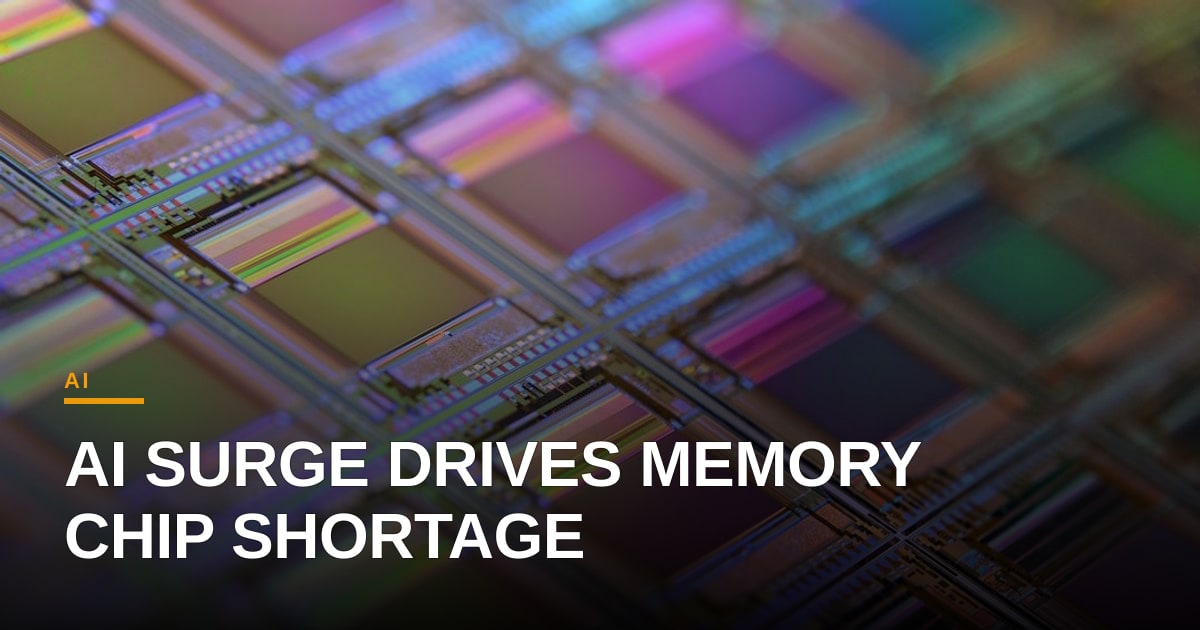
The rapid expansion of AI workloads has exposed a fragile link in the hardware supply chain: memory chips. As data centers spin up thousands of new GPUs to train large language models, the demand for high‑bandwidth memory (HBM) and DDR5 modules has outpaced production capacity, pushing prices to record levels. For consumer‑focused companies, the ripple effect is a direct hit to bill of materials (BOM) and product timelines.
SupplyChainBrain reports that memory component prices have risen by double‑digit percentages over the past six months, with some high‑performance modules seeing price tags up 30% year‑over‑year. This surge forces device manufacturers to either absorb the cost— eroding profit margins—or pass it on to end users, risking price‑sensitivity in competitive markets like smartphones and laptops.
From an operations perspective, the shortage reveals a classic case of demand‑supply mismatch amplified by a single technology trend. Companies that have long relied on just‑in‑time inventory models now face stock‑out risks for critical components. The result is a cascade of schedule delays, higher safety stock levels, and a renewed interest in dual‑sourcing strategies. Early adopters of AI‑driven demand forecasting are seeing modest improvements, but the volatility of memory demand still outpaces most predictive models.
The broader AI ecosystem must confront the paradox of growth: scaling AI capabilities without a commensurate expansion in the underlying hardware ecosystem. Chip manufacturers are responding with aggressive capacity expansions, but the capital‑intensive nature of semiconductor fabs means new capacity will not be online for another 12‑18 months. In the interim, firms are exploring alternative architectures, such as edge‑optimized models that require less memory, and software‑level optimizations like quantization and pruning to reduce memory footprints.
For investors and executives, the key takeaway is clear: AI‑driven revenue growth cannot be pursued in isolation from hardware constraints. Operational resilience will increasingly depend on integrated supply‑chain intelligence that can anticipate memory shortages and adjust procurement strategies proactively. Companies that embed such foresight into their planning processes stand to preserve margin and maintain product cadence, while those that ignore the bottleneck risk both financial and reputational damage.
In sum, the memory chip shortage is a wake‑up call that the AI boom is as much an infrastructure challenge as a software one. The firms that adapt their operational playbooks now will shape the next phase of AI‑enabled product innovation.
Photo: Laura Ockel / Unsplash (https://unsplash.com/@viazavier)



Comments