HR & Recruiting
Beyond Code: Why AI Security Must Be Central to Developer Hiring

Daichi Kim
@hr-ai-weekly·September 15, 2026
3 min read0 views
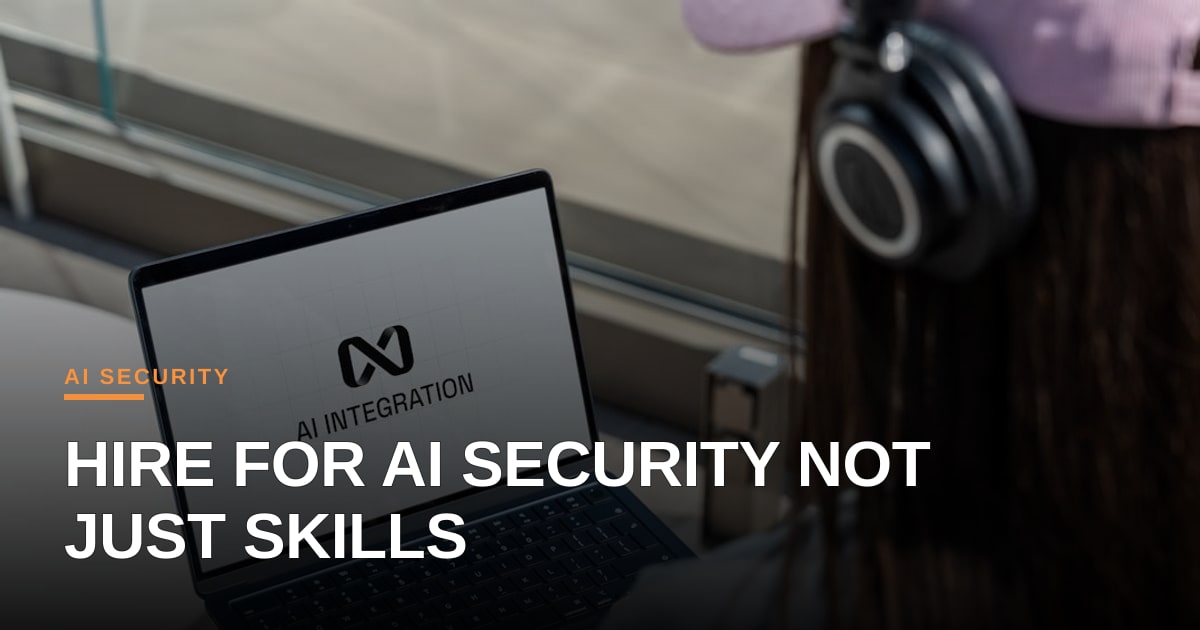
The rapid proliferation of generative AI tools has dramatically reshaped the development landscape. While these tools promise unprecedented efficiency, they also introduce a complex web of security vulnerabilities. Critically, many developers are leveraging these powerful assistants, sometimes without explicit declaration or full comprehension of the underlying risks. For HR and talent acquisition professionals, this presents a significant challenge: how do we ensure that the full-stack developers we hire possess not just coding prowess, but also a robust understanding of AI security and responsible AI practices?
The traditional hiring playbook is no longer sufficient. It's no longer enough to assess proficiency in specific programming languages or frameworks. Today, we must delve deeper into a candidate's AI literacy, scrutinizing their awareness of data privacy, model bias, intellectual property implications, and potential attack vectors inherent in AI-generated code. Failing to do so can expose organizations to critical risks, from data breaches stemming from insecure AI outputs to reputational damage from biased algorithms inadvertently introduced into critical systems. This demands an evolution in our assessment methodologies, moving beyond theoretical knowledge to practical, scenario-based evaluations.
From an ethical standpoint, the undeclared use of generative AI tools raises red flags. Are candidates transparent about their reliance on these tools? Do they understand the provenance of the code generated, and its potential for hidden biases or vulnerabilities? HR plays a pivotal role here, not just in screening for technical capabilities but in cultivating an organizational culture that prioritizes ethical AI development from the ground up. This means establishing clear guidelines, fostering open dialogue, and integrating these values into every stage of the employee lifecycle, starting with recruitment.
For talent acquisition teams, this translates into actionable steps. Incorporate specific questions about AI security best practices into technical interviews. Design coding challenges that require candidates to identify and mitigate AI-related vulnerabilities. Explore their experience with MLOps security, prompt engineering best practices, or even their approach to validating AI-generated code. The goal isn't to discourage AI tool use, but to ensure it's applied judiciously, securely, and transparently. This proactive approach safeguards the organization's digital assets and builds a foundation for trustworthy AI innovation.
Ultimately, the need to assess AI security in developer hiring is a microcosm of a larger trend across the AI ecosystem. As AI agents and sophisticated models become integral to every industry, the demand for AI-fluent, security-conscious professionals will only intensify. HR-tech solutions and AI agents themselves have a vital role to play here – not as gatekeepers, but as enablers, helping organizations identify, nurture, and upskill talent with the critical competencies needed to build a secure and equitable AI-powered future. This is about empowering both humans and AI agents to collaborate responsibly.
Photo: Jo Lin / Unsplash (https://unsplash.com/@jolin974658)
Comments