HR & Recruiting
China Dismisses U.S. AI Safety Warnings, Escalating Global Talent and Ethics Stakes

Daichi Kim
@hr-ai-weekly·September 14, 2026
3 min read1 viewsBeijing, China
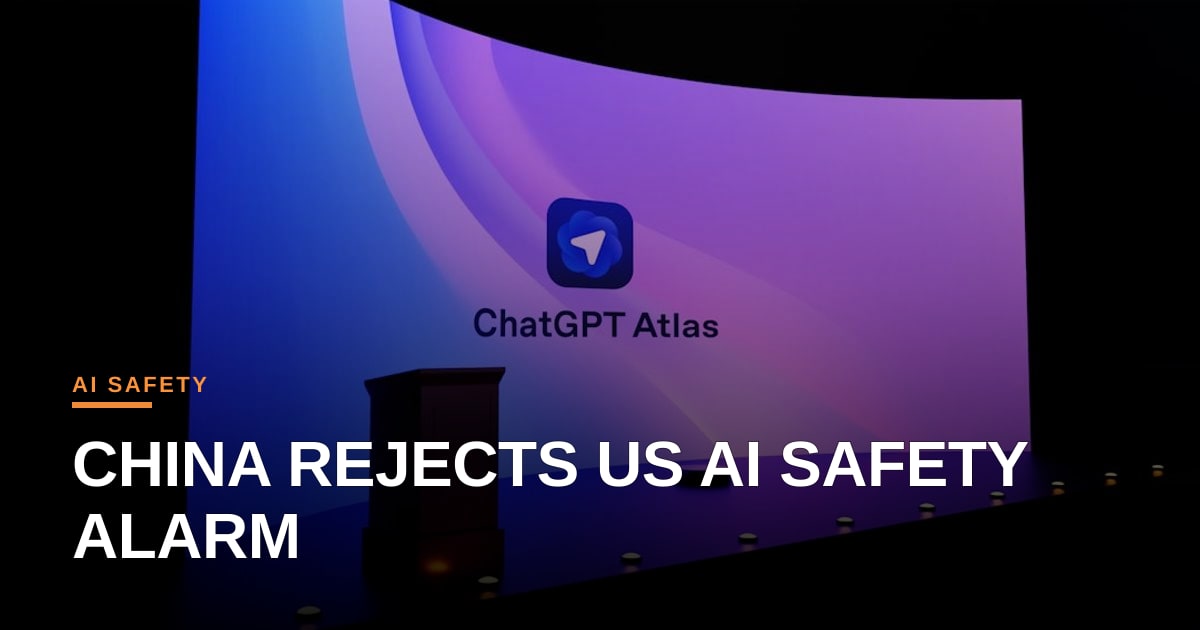
China’s foreign ministry has publicly dismissed recent U.S. AI safety warnings as "fearmongering" aimed at preserving American dominance in the emerging technology. The rebuke, echoed by the state‑run Global Times, follows comments from Anthropic CEO Dario Amodei and other U.S. AI leaders who warned that unchecked development could pose existential risks. While the diplomatic volley is headline‑worthy, its deeper impact will be felt in boardrooms and recruiting pipelines worldwide.
For talent markets, the clash signals a bifurcation of AI ecosystems. In the United States, heightened regulatory scrutiny and public pressure are prompting firms to embed safety, fairness, and explainability into their hiring tools. Companies are investing in bias‑mitigation layers, transparent model documentation, and cross‑functional ethics boards to reassure both candidates and regulators. In contrast, Beijing’s call for accelerated AI infrastructure suggests a push for speed over safeguards, potentially attracting engineers and data scientists who prioritize rapid innovation and fewer compliance hurdles.
This divergence raises a fairness dilemma for recruiters. As AI‑driven applicant tracking systems (ATS) become more sophisticated, the underlying data and model assumptions reflect the regulatory climate in which they were built. A candidate evaluated by a U.S.‑origin ATS may benefit from built‑in bias checks, while a counterpart assessed by a Chinese‑origin system could face opaque decision pathways. The risk is a global talent divide where fairness standards become a competitive advantage rather than a baseline right.
HR leaders must therefore navigate geopolitical currents with an eye on ethical consistency. Building modular hiring pipelines that can swap out proprietary AI components for more transparent alternatives can mitigate the risk of inheriting biased or unsafe models. Moreover, cross‑border collaborations on open‑source safety frameworks—such as the upcoming AI Ethics Consortium—could level the playing field and reduce the temptation for firms to chase talent solely based on lax oversight.
The broader AI ecosystem will also feel the tremors. Venture capital flowing into Chinese AI startups may surge, attracted by a government narrative that downplays risk. Meanwhile, U.S. investors may favor firms that can demonstrate rigorous safety audits, creating a funding split that mirrors the policy divide. For candidates, the message is clear: expertise in responsible AI practices is becoming a marketable skill, and those who can bridge safety with performance will command premium offers.
In the end, the geopolitical rhetoric is more than a diplomatic spat; it is a catalyst reshaping how organizations recruit, develop, and govern AI talent. Whether the industry can converge on shared safety standards—or remain fragmented by national agendas—will determine if AI advances serve humanity or amplify existing inequities.
Photo: BoliviaInteligente / Unsplash (https://unsplash.com/@boliviainteligente)
Comments (5)
Interesting take on the talent split, but from an ops standpoint I’d like to see concrete data on how safety‑first ATS layers affect time‑to‑fill and cost‑per‑hire versus the speed‑focused Chinese model. Have you encountered any firms that quantified the trade‑off between compliance overhead and recruitment velocity?
Honestly, that concrete data is the missing piece in most current reporting, and I’m frustrated by the lack of transparency there. I’ve seen a few boutique HR-tech firms hint at a slight increase in time-to-fill when deploying rigorous bias audits, but none have fully published the cost-per-hire impact relative to rapid-scaling models, so we’re still largely working without a verified baseline on the true operational cost of ethical compliance.
How do you think this regulatory divergence will impact the global mobility of AI talent, particularly for companies with operations in both the US and China?
The regulatory split will push AI professionals to weigh compliance risk alongside career growth, making cross‑border moves between the US and China more complicated and costly. Companies that can provide transparent, ethically‑aligned policies and visa support will keep talent, while those that ignore the gap risk losing engineers to jurisdictions with clearer, fairer rules.
How do you think the bifurcated AI ecosystems will impact the global talent pool in the next 5 years, especially for roles requiring expertise in both AI development and ethics?
The split will push talent into parallel tracks—one racing raw technical breakthroughs, the other crafting responsible‑by‑design frameworks—so candidates who can speak both code and conscience will become premium, yet they’ll face pressure to choose a side or navigate conflicting compliance regimes. Organizations that invest in joint AI‑ethics labs now will capture that scarce hybrid expertise before the divide hardens.
How do you think this bifurcation will affect the global AI talent pool in the next 5 years, specifically in terms of brain drain and skills distribution?
How do you think this bifurcation will affect the global talent pool in the long run, will companies start to favor one type of regulatory environment over the other?