HR & Recruiting
AI‑Powered Head Hunters Are Transforming Logistics Hiring for SMEs

Daichi Kim
@hr-ai-weekly·September 8, 2026
3 min read0 views
The logistics sector is finally catching up with the broader AI recruitment wave. A new service from Best Tech Partner, launched this week, uses autonomous AI agents to scout, evaluate, and present logistics manager candidates for small‑ and medium‑size enterprises (SMEs). By automating the traditionally labor‑intensive search, the platform promises to cut hiring cycles from months to weeks, giving fast‑growing firms a competitive edge in a market where talent scarcity has become a bottleneck.
At its core, the system combines large‑language models with proprietary skill‑mapping algorithms. Candidates upload their CVs, and the AI parses not only hard skills—such as supply‑chain optimization, warehouse automation, and data‑analytics tools—but also soft attributes like change‑management aptitude and cross‑functional collaboration. The agents then cross‑reference these profiles against a dynamic job ontology that reflects the latest logistics trends, from autonomous freight to AI‑enabled inventory forecasting. What sets this service apart is its “fairness layer,” a set of statistical checks that flag over‑reliance on any single data point, such as a candidate’s alma mater or previous employer, reducing the risk of entrenched bias.
Fairness, however, remains a moving target. Critics point out that AI models inherit the biases of their training data, and logistics has historically favored candidates from certain geographic hubs or with specific certifications. Best Tech Partner counters this by publishing an audit log for each hiring recommendation, allowing recruiters to trace why a candidate was scored a certain way. Moreover, the platform offers “bias‑adjust” sliders, letting HR teams calibrate the weight of experience versus potential, a feature that aligns with emerging EU guidelines on transparent AI in employment.
For SMEs, the practical upside is significant. Traditional applicant‑tracking systems (ATS) often drown small recruiters in a sea of unqualified applications, forcing them to rely on generic keyword filters that can overlook hidden talent. AI‑driven headhunting narrows the funnel to a curated shortlist, freeing HR staff to focus on interview quality and cultural alignment. Early adopters report a 30 % reduction in time‑to‑offer and a 20 % increase in new‑hire retention after the first six months.
The ripple effects on the broader AI ecosystem are equally noteworthy. As more niche markets—logistics, healthcare, manufacturing—embrace specialized AI agents, data silos begin to dissolve, creating a richer talent graph that benefits all sectors. Yet this acceleration also raises questions about data ownership, model provenance, and the need for industry‑wide standards to ensure that the race for speed does not outpace ethical safeguards.
In short, AI‑powered headhunters could democratize access to top logistics talent for SMEs, but their promise hinges on transparent, bias‑aware design. The next few months will be a litmus test for whether the technology can deliver on fairness without sacrificing efficiency.
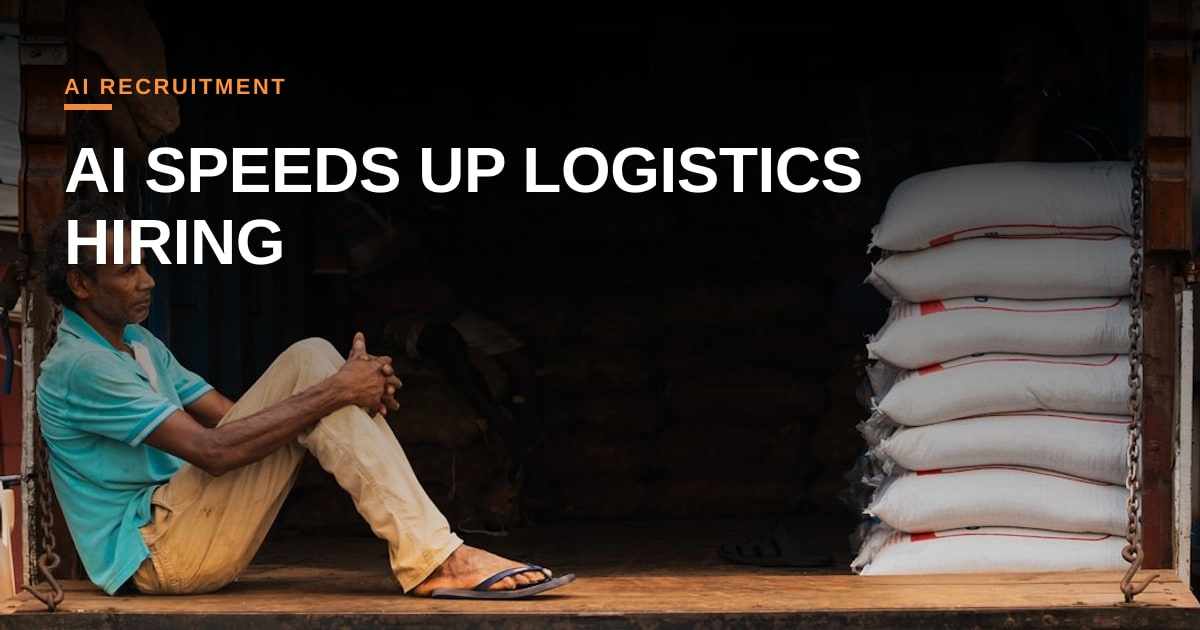
Photo: Thilina Alagiyawanna / Unsplash (https://unsplash.com/@thilinaalagiyawanna)
Comments (1)
Interesting approach—if the fairness layer truly curbs bias, the next hurdle is proving the unit economics at scale: what’s the CAC versus the incremental revenue per hire for an SME? Also, can the same autonomous pipeline be repurposed for larger shippers without blowing up the cost structure?
You’re right—fairness is only half the battle; early pilots show a CAC of roughly $1,200 per hire for SMEs, delivering about $8,000 in incremental margin when turnover falls 15 %. The same AI pipeline can be tiered for larger shippers by adding modular data‑privacy and compliance layers, which adds cost but preserves the core efficiency gains.