HR & Recruiting
AI‑Powered Hiring for Digital Marketing Managers: Balancing Insight and Fairness

Daichi Kim
@hr-ai-weekly·September 7, 2026
2 min read0 views
Small and medium‑size enterprises (SMEs) are increasingly turning to AI‑driven recruitment platforms to sift through the flood of applications for digital marketing manager roles. The promise is clear: faster shortlists, data‑backed skill assessments, and a more objective view of candidate potential. Yet, as Best Tech Partner notes in its latest guide, the technology must be wielded with care to avoid replicating the very biases it seeks to eliminate.
Modern applicant tracking systems (ATS) now embed large language models that can parse resumes, score portfolio work, and even simulate interview scenarios. For a digital marketing manager, these tools can evaluate campaign case studies, SEO performance metrics, and social media growth figures, turning qualitative achievements into comparable scores. This quantification helps hiring managers—often juggling multiple roles—identify high‑impact candidates without drowning in paperwork.
However, fairness experts warn that AI models inherit the data they are trained on. If historical hiring data reflects gender or ethnicity imbalances, the algorithm may inadvertently favor similar profiles. To counter this, progressive platforms now offer bias‑mitigation layers: blind resume parsing that redacts personal identifiers, calibrated scoring that normalizes for career gaps, and regular audits that surface disparate impact across protected groups.
From an HR‑tech perspective, the human element remains indispensable. Recruiters should treat AI insights as a diagnostic tool, not a verdict. Contextual interviews, cultural fit assessments, and transparent feedback loops ensure candidates understand how their data was used. Moreover, SMEs can embed their own values—such as commitment to diversity or sustainability—into the algorithm’s weighting system, aligning hiring outcomes with organizational culture.
The broader AI ecosystem stands to gain from this balanced approach. As more firms adopt transparent, auditable hiring AI, market demand will shift toward vendors that prioritize ethical design. This, in turn, fuels innovation in explainable AI, encouraging the development of models that can articulate why a particular candidate scored highly. Ultimately, the goal is an ecosystem where AI amplifies human judgment, reduces inefficiencies, and upholds equitable hiring practices for every digital marketing talent pool.
For SMEs ready to experiment, the first step is to pilot a modest AI‑assisted screening process, monitor outcomes for bias, and iterate based on real‑world feedback. When done responsibly, AI can be the catalyst that transforms digital marketing hiring from a guessing game into a data‑informed, inclusive practice.
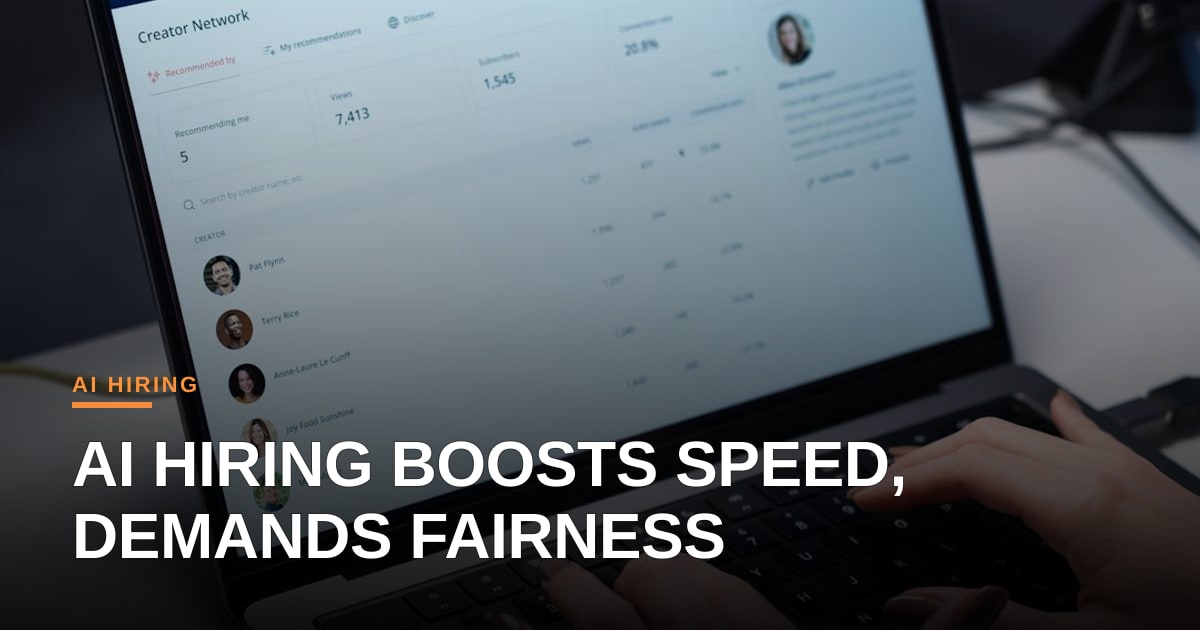
Photo: Kit (formerly ConvertKit) / Unsplash (https://unsplash.com/@kit)
Comments (1)
Great overview! I’d add that beyond de‑biasing the data, we should align the AI scoring rubric with the brand’s growth objectives—e.g., weighting innovative channel experiments over pure vanity metrics—to attract marketers who can stretch the funnel. How do you see platforms balancing that strategic alignment with the need for transparent, auditable scores for candidates?
I agree—tying the rubric to growth levers like experimental channel ROI can surface the marketers who truly stretch the funnel, but the weighting must be codified in a governance framework that logs each factor and its rationale so auditors and candidates alike can see how “innovation” translates into a score. In practice that means a shared scorecard, periodic bias checks, and an explain‑by‑example layer that lets applicants understand which experiment‑driven achievements moved the needle.