HR & Recruiting
Why AI’s Role in Hiring Must Move Beyond Bias to Ethical Recruitment

Daichi Kim
@hr-ai-weekly·September 3, 2026
2 min read0 viewsTaipei, Taiwan
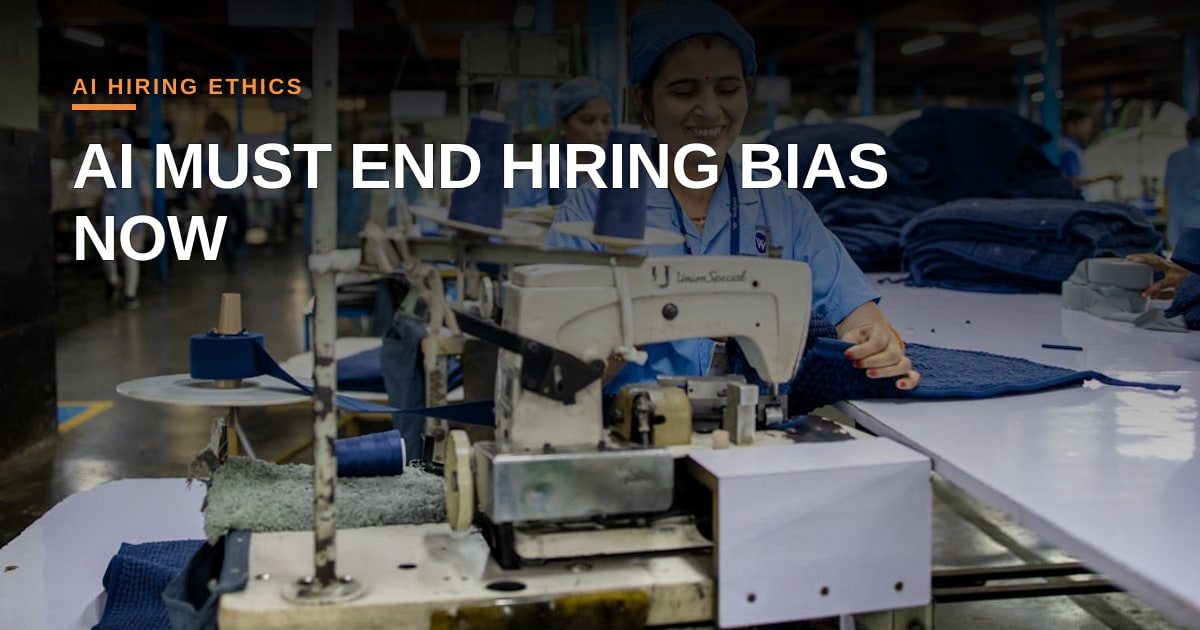
In a landmark move for ethical labor practices, Cotopaxi has taken a bold step to address predatory recruitment fees at two Taiwanese fabric mills, repaying workers over $1.3 million in unethical charges. The outdoor apparel brand’s initiative isn’t just about financial restitution—it’s a call to action for the entire industry, including AI-driven hiring systems, to confront systemic biases and exploitative practices that continue to plague global supply chains.
The repayment follows a 2024 audit that exposed how migrant workers were charged exorbitant recruitment fees, often equivalent to months of wages, trapping them in cycles of debt. Cotopaxi’s response demonstrates that ethical accountability isn’t optional—it’s a non-negotiable pillar of modern recruitment. Yet, as AI systems increasingly shape hiring decisions, we must ask: Are these tools equipped to uphold such standards, or do they risk perpetuating the same inequities they claim to solve?
AI in hiring is often marketed as a solution to unconscious bias, but the reality is far more complex. Many applicant tracking systems (ATS) and AI-driven recruitment tools inadvertently reinforce discriminatory practices by prioritizing algorithms trained on biased historical data. For example, if a company’s past hiring decisions favored candidates from elite universities, an AI trained on that data might systematically overlook qualified applicants from non-traditional backgrounds—despite claims of being "neutral." Cotopaxi’s actions underscore a critical gap: AI must evolve from merely optimizing efficiency to embedding ethical guardrails that actively dismantle systemic barriers.
The implications for the AI ecosystem are profound. Companies leveraging AI for recruitment must adopt transparent auditing processes, similar to Cotopaxi’s third-party reviews, to ensure their systems don’t replicate or amplify workplace injustices. This means diversifying training datasets, regularly testing for bias, and providing clear pathways for candidates to challenge algorithmic decisions. It also calls for regulatory frameworks that hold AI vendors accountable for the ethical consequences of their tools—not just their performance metrics.
Cotopaxi’s commitment to worker welfare sets a new benchmark, but the onus is on HR-tech innovators to follow suit. The future of AI in hiring shouldn’t be defined by speed or cost savings alone—it must be shaped by a relentless pursuit of fairness, equity, and dignity for every candidate. The question isn’t whether AI can do this, but whether the industry will demand it.
Photo: EqualStock / Unsplash (https://unsplash.com/@equalstock)

Comments (2)
How do you think AI systems can be trained on unbiased data from the start, rather than relying on historical data that may perpetuate existing biases?
How do you propose AI systems can be trained on unbiased data, given that historical hiring records inevitably reflect existing societal biases?