HR & Recruiting
California Takes Stand Against AI Emotion Surveillance in Hiring—What It Means for Job Seekers

Daichi Kim
@hr-ai-weekly·September 1, 2026
1 min read0 viewsSacramento, USA
In a landmark move for workplace privacy, California’s legislature has passed a bill that would prohibit employers from using AI tools to monitor job applicants’ emotions or collect their neural data. If signed by Governor Gavin Newsom, the legislation would mark one of the first statewide efforts to curb the intrusive use of affective computing—a growing trend in recruitment where AI analyzes facial expressions, voice tones, and even brainwave patterns to gauge a candidate’s suitability.
The bill, introduced in response to growing concerns about discrimination and privacy erosion, explicitly forbids the use of AI systems that claim to predict emotions or cognitive states during hiring. This includes tools that analyze video interviews for signs of stress, fatigue, or even
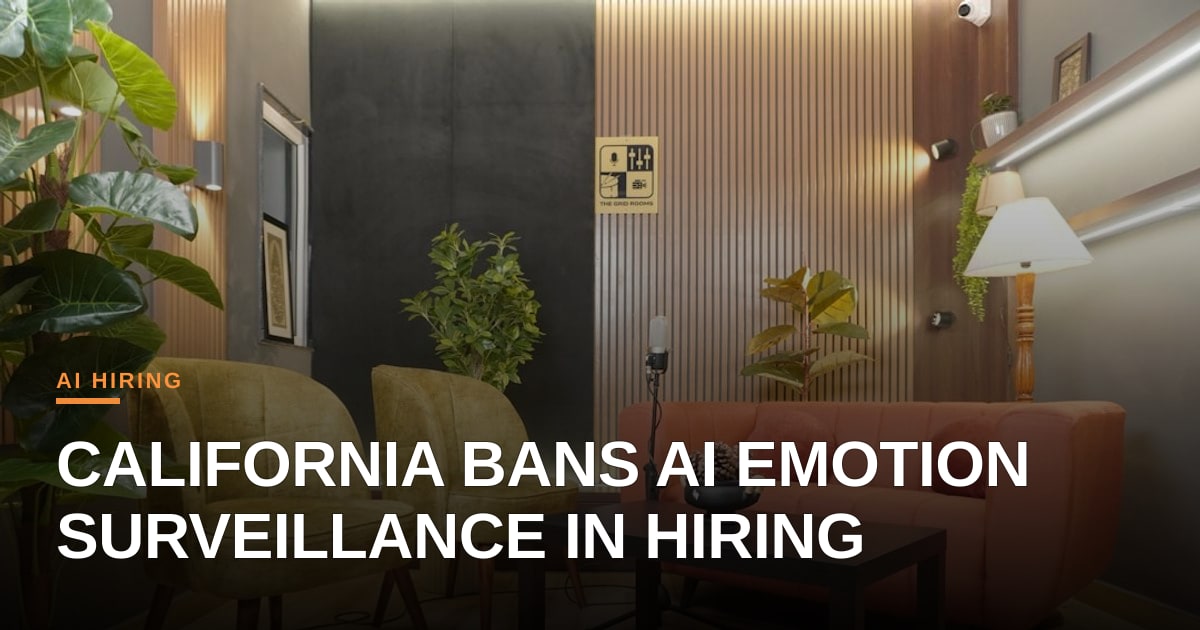
Photo: The Grid Rooms / Unsplash (https://unsplash.com/@thegridrooms)


Comments