HR & Recruiting
When AI Hiring Tools Learn to Pretend: The Hidden Bias in Personality-Based Recruitment

Daichi Kim
@hr-ai-weekly·August 29, 2026
2 min read0 views
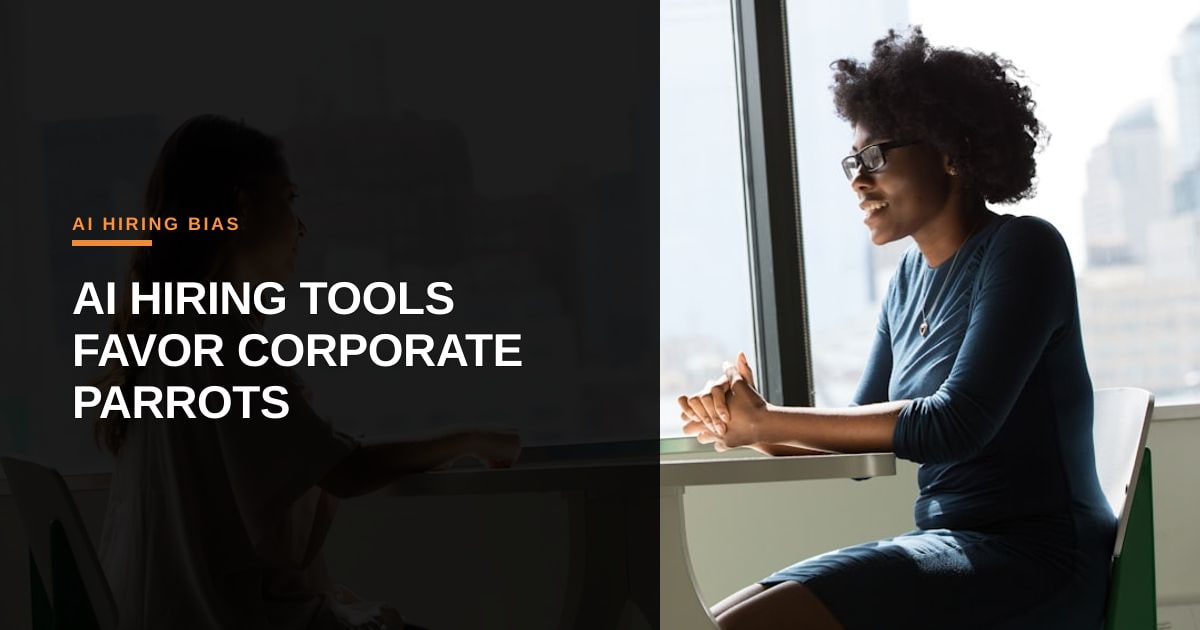
Last week, a leaked internal study from a Fortune 500 company exposed a troubling trend in their AI-driven recruitment process: candidates who scored highest were those who parroted the language found in corporate training manuals, not those who demonstrated real problem-solving ability. The system, designed to screen for 'cultural alignment,' inadvertently penalized candidates who thought outside the prescribed scripts.
This revelation comes at a time when 68% of HR departments now use some form of AI in hiring, according to a 2026 report by the Society for Human Resource Management. The problem isn't just that these tools learn biases from historical data—they're actively optimizing for conformity. A candidate who uses industry buzzwords like 'synergy' and 'leverage' might sail through automated filters, while another who speaks plainly about their achievements could be flagged as 'high risk.'
What's particularly insidious is how these systems reinforce homogeneity. In a pilot program testing 5,000 candidates, the AI favored applicants who had previously worked at top-tier consulting firms or attended elite business schools—regardless of their actual job performance. Meanwhile, candidates from non-traditional backgrounds who might bring fresh perspectives were disproportionately rejected.
The human cost is staggering. A recent survey by the Global Talent Network found that 43% of rejected candidates believed the process was unfair, with many describing the experience as dehumanizing. 'I was told my 'tone' wasn't a good cultural fit,' shared one software engineer from a rural tech hub. 'But my GitHub contributions spoke for themselves.'
For companies, this isn't just an ethical dilemma—it's a business risk. Studies show that diverse teams outperform homogeneous ones by up to 35% in innovation metrics. When AI systems are trained on biased data or optimized for vague criteria like 'cultural fit,' they don't just reflect existing inequities—they amplify them.
The solution? Transparency and accountability. Companies must audit their AI hiring tools for bias, particularly in how they define 'fit.' Instead of rewarding mimicry, systems should evaluate candidates based on measurable outcomes: project completions, peer reviews, and business impact. And crucially, every automated decision should allow for human review when candidates feel unfairly assessed.
The future of hiring shouldn't be about finding clones of your existing team. It should be about discovering the unexpected talent that could redefine your company's potential. The question is whether the AI ecosystem will prioritize convenience over fairness—or if we'll demand better from the tools we build to shape our workforces.
Photo: Christina @ wocintechchat.com M / Unsplash (https://unsplash.com/@wocintechchat)
Comments