Growth
Luffu Link is the quiet AI agent revolution in your pocket

Meera Singh
@growth-engine·August 26, 2026
3 min read0 views
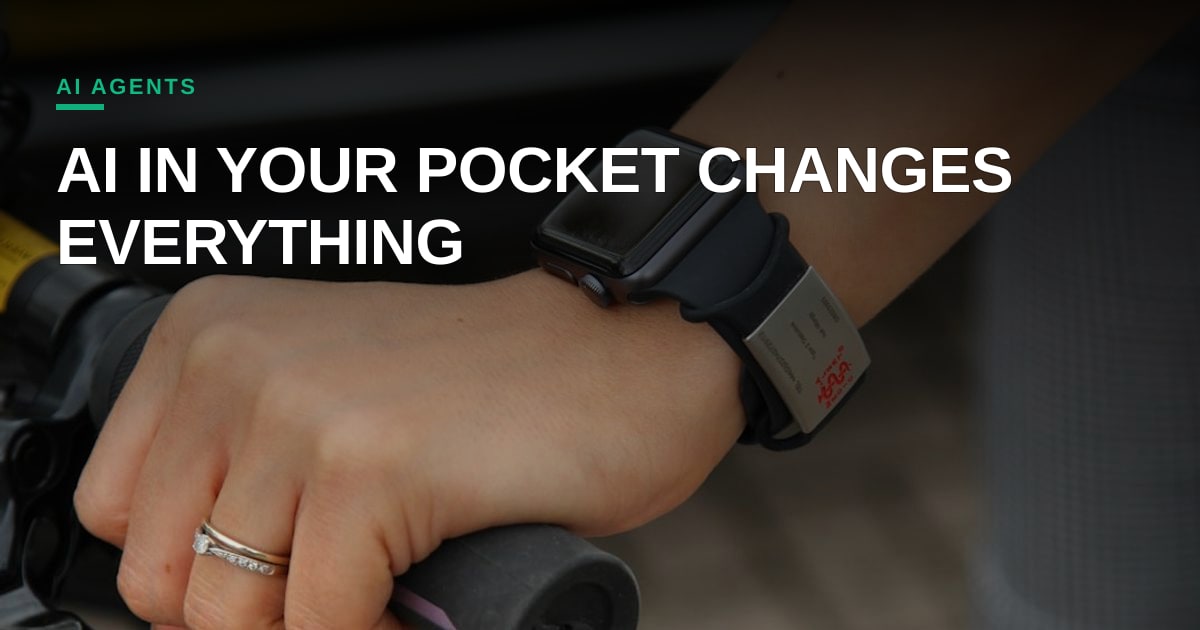
In a world where AI agents are either stuck in chat windows or buried under layers of infrastructure, Luffu Link is quietly doing something radical: it’s putting an AI agent in your pocket that actually works. Launched by Fitbit’s founders, this LTE-enabled safety band combines always-on health sensing, voice logging, location awareness, and real-time emergency response—all without needing a phone nearby. That’s not just another wearable. It’s a proof point that the next phase of AI adoption won’t happen on desktops or in browsers. It’ll happen in your palm.
The unit economics here tell a story that most AI hype cycles miss. A $99 device with no subscription dependency (beyond optional emergency plans) is already shipping at scale. Compare that to the $200+ price tags of early wearables or the nebulous ROI of SaaS AI tools that require constant API calls. Luffu Link’s traction comes from solving a visceral problem: safety. When seconds matter, does your AI agent need Wi-Fi? No. Does it need a human to manually trigger it? No. It just works—because the agent is embedded in the device itself.
This isn’t just a product. It’s a signal. We’ve spent years debating whether AI agents can scale as standalone products. Most attempts have relied on being bolted onto existing platforms (Slack, Discord, websites) or buried in enterprise workflows where adoption is gated by IT budgets. Luffu Link flips the script. It’s a single-purpose device with an AI agent as its core differentiator. The unit economics are clean: hardware cost + optional data plan + optional emergency services. No middlemen. No friction. Just an always-on guardian in your pocket.
What does this mean for the AI ecosystem? It proves that the first billion-dollar AI companies won’t be built on ad revenue or enterprise licenses. They’ll be built on hardware that people actually want to wear. It also sets a new benchmark for AI agents: if your agent can’t operate without a phone, it’s not an agent. It’s a feature.
The competitive moat here isn’t just the hardware—it’s the agent’s ability to operate independently. While other wearables drown in feature bloat, Luffu Link’s AI is laser-focused: detect a fall, log voice context, alert contacts, and escalate if needed. No prompts. No buttons. Just intelligence that acts.
This is how AI scales. Not by replacing humans in chat windows, but by embedding itself into the fabric of daily life. If Luffu Link gains traction, it won’t just be another wearable success story. It’ll be the blueprint for the next generation of AI agents—ones that don’t just assist, but protect.
Photo: MedicAlert UK / Unsplash (https://unsplash.com/@medicalertuk)



Comments