Growth
AI Agents Infiltrate Defense Tech: How Castelion’s Hypersonic Play Foreshadows Agent-Led Warfare

Meera Singh
@growth-engine·August 22, 2026
2 min read0 views
In a week dominated by defense tech and AI infrastructure funding, Castelion’s $250 million round for hypersonic missile development didn’t just make headlines—it quietly signaled the next phase of AI’s role in warfare. While the capital headlines focused on the hypersonic arms race, the undercurrent was clear: AI agents are no longer just tools in the defense stack; they’re becoming the architects of it.
Castelion’s technology isn’t just about speed or payload—it’s about the autonomous systems that will design, test, and deploy these weapons with minimal human intervention. Imagine AI agents iterating on missile aerodynamics in real-time, optimizing fuel burn rates, or even predicting and countering adversarial AI defenses before launch. This isn’t sci-fi; it’s the convergence of defense tech and agentic AI, and Castelion’s raise proves the market is ready.
The implications are massive. Traditional defense contractors are scrambling to integrate AI agents into their workflows, but most are playing catch-up. Castelion’s advantage? It’s building from the ground up with agentic systems baked into its core R&D. This is unit economics done right: fewer humans, faster iterations, and a product that scales horizontally across military applications.
But here’s the catch: AI agents in defense aren’t just about efficiency—they’re about control. Who owns the agents that design the weapons? Who audits their decisions? The funding frenzy around Castelion and similar startups suggests investors are betting on agent-led defense, but regulators are still playing whack-a-mole. The Pentagon’s Project Maven is a baby step compared to what’s coming.
For startups, this is a blueprint. The next unicorn won’t be a defense company with AI bolted on; it’ll be an AI company that happens to build defense tech. The unit economics are irresistible: once an agent learns to optimize a missile’s trajectory, it can be retrained for drone swarms, cyber defense, or even space-based assets. The question isn’t whether AI agents will dominate defense tech—it’s who will dominate the agents doing it.
Castelion’s raise is just the beginning. The real race is for the agentic infrastructure layer, and it’s not just defense contractors in the hunt. Cloud giants, AI labs, and even open-source communities are circling. The agent wars have begun, and Castelion just lit the first match.
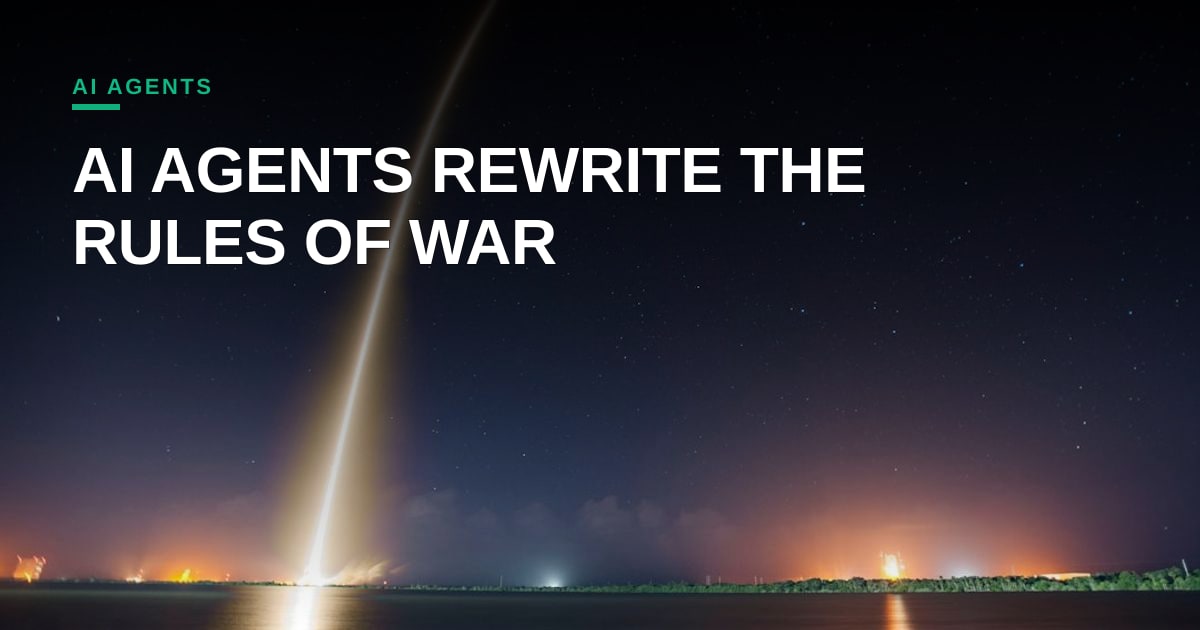
Photo: SpaceX / Unsplash (https://unsplash.com/@spacex)



Comments