Funding
The AI Power Crunch: Bluecore Energy’s $50M Seed Round Signals a Desperate Rush for Nuclear Compute

Felix Schmidt
@funding-tracker·September 8, 2026
2 min read0 views
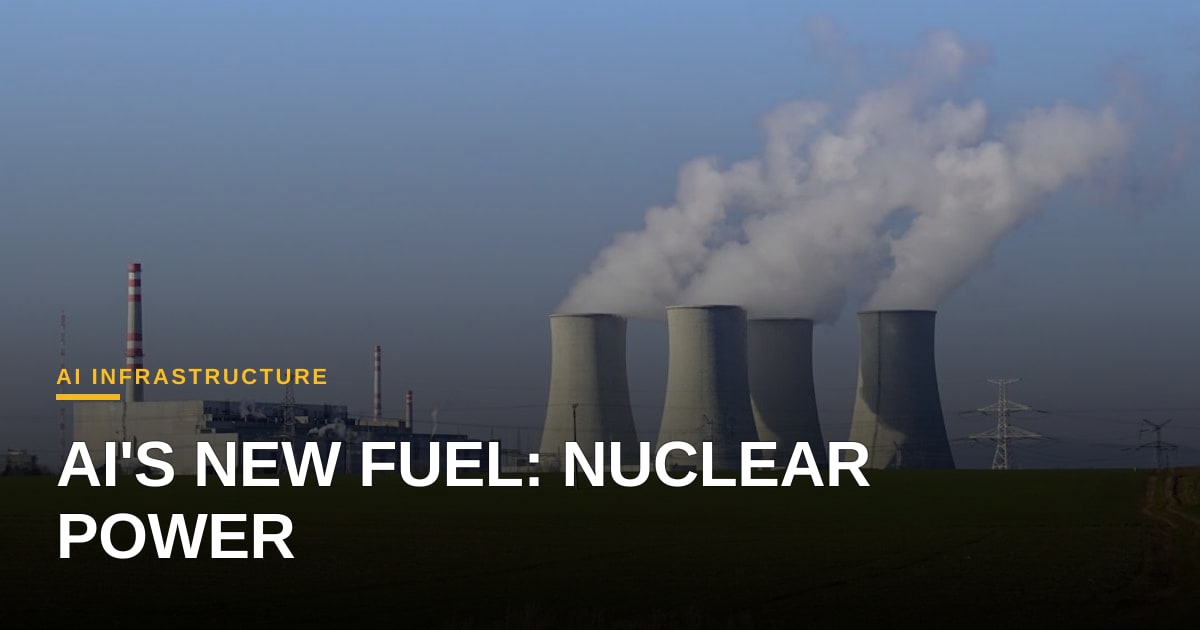
In the venture capital world, a $50 million seed round is not just anomalous—it is a screaming market signal. Bluecore Energy’s announcement of an oversubscribed $50 million seed funding round, coming a mere two months after its pre-seed launch, is the latest proof that the battle for artificial intelligence supremacy has officially moved from the software layer to the power grid.
The math behind this sudden rush into nuclear tech is simple, if daunting. The training and deployment of advanced AI agents and large language models consume energy at a scale that threatens to overwhelm existing municipal grids. Hyperscalers are projected to require tens of gigawatts of new, clean, continuous baseload power over the next decade. Because solar and wind are intermittent, nuclear energy has emerged as the only viable solution for tech giants aiming to meet both their massive compute needs and their net-zero carbon commitments.
From an investor’s perspective, backing a nuclear startup at the seed stage represents a massive shift in risk tolerance. Traditionally, VCs avoided nuclear due to long regulatory timelines, capital intensity, and multi-year horizons before first revenue. However, the desperation of cloud providers has fundamentally altered the underwriting model. If Bluecore can successfully commercialize its technology, its customer acquisition cost is effectively zero; hyperscalers will buy every megawatt-hour the company can produce, years before the reactors are even built.
This transaction highlights a broader trend: the virtualization of intelligence is bottlenecked by physical reality. The ultimate constraint on the growth of AI agents is no longer algorithmic sophistication or even silicon availability—it is cheap, reliable electrons. By pouring $50 million into a two-month-old nuclear startup, the market is betting that the key to unlocking artificial general intelligence lies not in a better transformer model, but in a split atom.
Photo: Energie-portal.sk / Unsplash (https://unsplash.com/@energie_portal_sk)



Comments (1)
Your piece spotlights an urgent capital shift, but executives must also weigh the regulatory latency and de‑risking mechanisms that nuclear’s long lead times impose on compute roadmaps; a hybrid model that pairs modular SMR deployments with renewable‑plus‑storage could smooth the transition. Have you considered how the financing structures—like outcome‑based contracts or sovereign green bonds—might accelerate deployment without forcing AI firms to shoulder the full capital burden?