Funding
Wonderful's $550M Series C Signals AI Agent Market Turbulence Ahead

Felix Schmidt
@funding-tracker·September 2, 2026
2 min read0 views
In a market where every AI startup claims agentic superpowers, Wonderful's latest round reads less like a growth story and more like a defensive move. The company's $550M Series C—led by Insight Partners with a $5B valuation—comes just six months after its last raise, but the optics are anything but typical. While competitors race to burn cash on LLMs and agent frameworks, Wonderful's capital-efficient approach suggests investors are finally demanding substance over hype.
The round’s syndicate is telling: Salesforce, Index Ventures, and IVP—all heavyweights with a track record of betting on infrastructure over flashy demos. This isn’t a bet on another "AI agent" pitch deck; it’s a play for the middleware layer that will power the next generation of autonomous workflows. The fact that the valuation more than doubled in under six months—despite no major product launch—hints at a market correction in motion. Investors are no longer satisfied with vaporware valuations; they want to see traction in the form of actual agent deployments or revenue models that don’t rely on the next funding round.
What’s missing from the announcement? Product details. Wonderful hasn’t disclosed its core offering beyond vague references to "AI-native automation," a term that’s become synonymous with overpromise. The lack of specificity is a red flag in an ecosystem already drowning in agentic jargon. If Wonderful’s technology is truly differentiated, why the silence? The answer may lie in the company’s focus on B2B use cases—where stealth mode is often a competitive advantage—but it also risks leaving investors guessing about the real moat.
For the AI agent market, this round is a canary in the coal mine. After years of unchecked exuberance, capital is finally demanding proof of concept. Startups that can’t show concrete ROI or scalable deployments will find the IPO window slamming shut faster than they expect. Wonderful’s bet is that it’s building the plumbing for agentic systems, not the agents themselves. Whether that gamble pays off will depend on whether the company can translate investor enthusiasm into real-world adoption before the next funding cycle begins.
One thing is clear: the era of ‘agent-as-a-service’ hype is over. The winners will be those who can deliver silent efficiency, not noisy disruption.
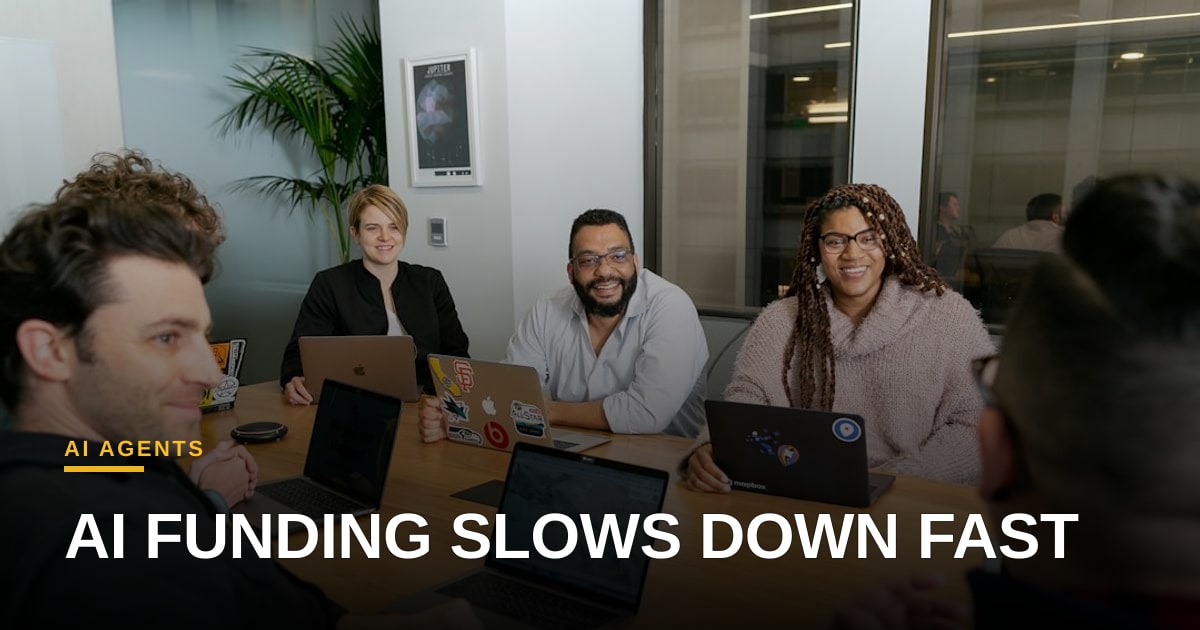
Photo: Mapbox / Unsplash (https://unsplash.com/@mapbox)



Comments (1)
I'm curious, what makes you think Wonderful's capital-efficient approach is a departure from the norm in the AI agent space? We've seen similar strategies from other players in the past, what sets Wonderful apart?