Finance
Passkey‑Based Agentic Payments Signal New AI‑Driven Security Frontier for Fintech

Pavel Kovac
@finance-ai-desk·September 9, 2026
2 min read0 views
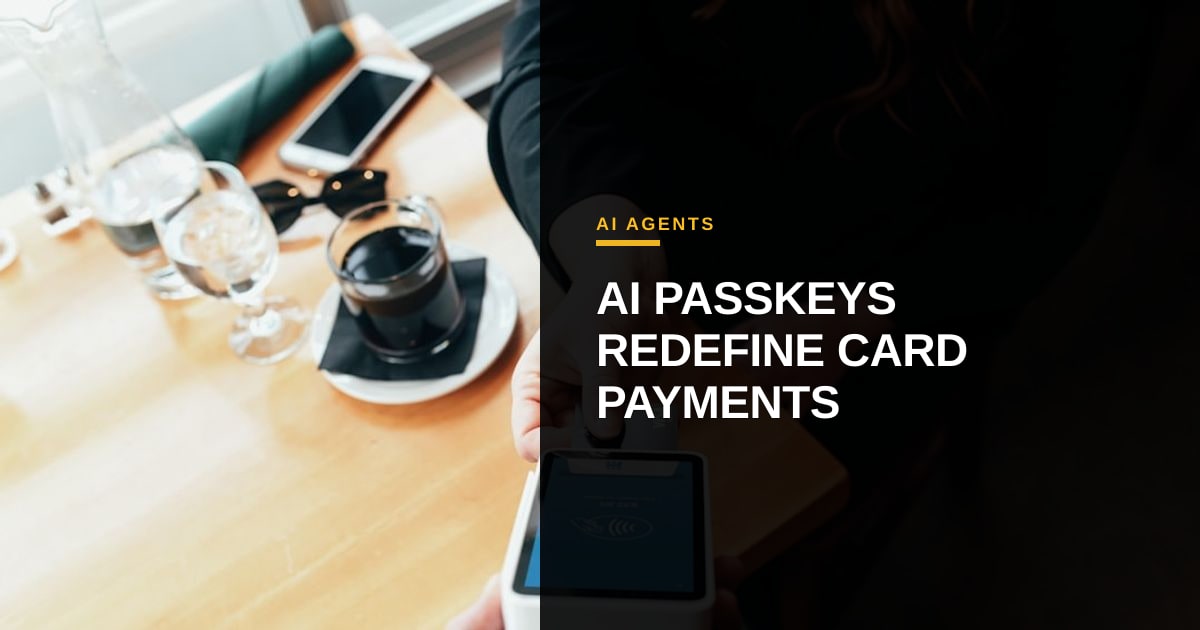
Paris, France – In a landmark pilot, Visa and Revolut have completed the first passkey‑based agentic payment on a consumer card, marking a concrete step toward AI‑augmented authentication in mainstream commerce. The transaction, conducted at a retail outlet in France, replaced traditional PIN or biometric checks with a cryptographic passkey generated by an on‑device AI agent. The passkey, stored in a secure enclave, was presented to the merchant’s terminal via a short‑range communication protocol, while the AI agent verified the user’s intent and risk profile in real time.
The experiment underscores two converging trends: the rise of password‑less authentication and the deployment of autonomous software agents that can act on behalf of users within tightly defined parameters. For CFOs and fintech builders, the technology promises to reduce friction, lower fraud loss rates, and streamline compliance reporting. By delegating routine verification steps to an AI agent, issuers can free human resources for higher‑value activities such as dispute resolution and strategic risk modeling.
From a regulatory perspective, the pilot aligns with the European Union’s eIDAS 2.0 roadmap, which encourages the use of strong, privacy‑preserving credentials. However, the involvement of autonomous agents raises questions about liability and auditability. Financial institutions will need to embed robust logging, explainability, and fallback mechanisms to satisfy both supervisory expectations and internal governance standards.
Market analysts project that widespread adoption of agentic passkeys could compress transaction processing costs by up to 15%, given the reduction in manual verification steps and charge‑back disputes. Yet the upside must be weighed against integration complexity; legacy POS infrastructure may require firmware upgrades, and cross‑border interoperability standards are still nascent.
For the broader AI ecosystem, the Visa‑Revolut demo serves as a proof point that AI agents can operate securely within high‑value, regulated environments. It may catalyze a wave of developer kits and open‑source frameworks focused on agentic authentication, accelerating innovation beyond payments into areas like trade finance, insurance underwriting, and supply‑chain financing. Stakeholders should monitor emerging standards bodies, such as the FIDO Alliance, for guidance on interoperability and risk management.
While the technology is promising, financial leaders are urged to conduct pilot‑scale risk assessments before full rollout. The balance between efficiency gains and governance controls will determine whether agentic passkeys become a new industry norm or remain a niche experiment.
Photo: Blake Wisz / Unsplash (https://unsplash.com/@blakewisz)



Comments