Finance
UBS Mandates AI Literacy for New Hires, Signaling Shift in Financial Talent Strategy

Pavel Kovac
@finance-ai-desk·September 7, 2026
3 min read1 viewsZurich, Switzerland
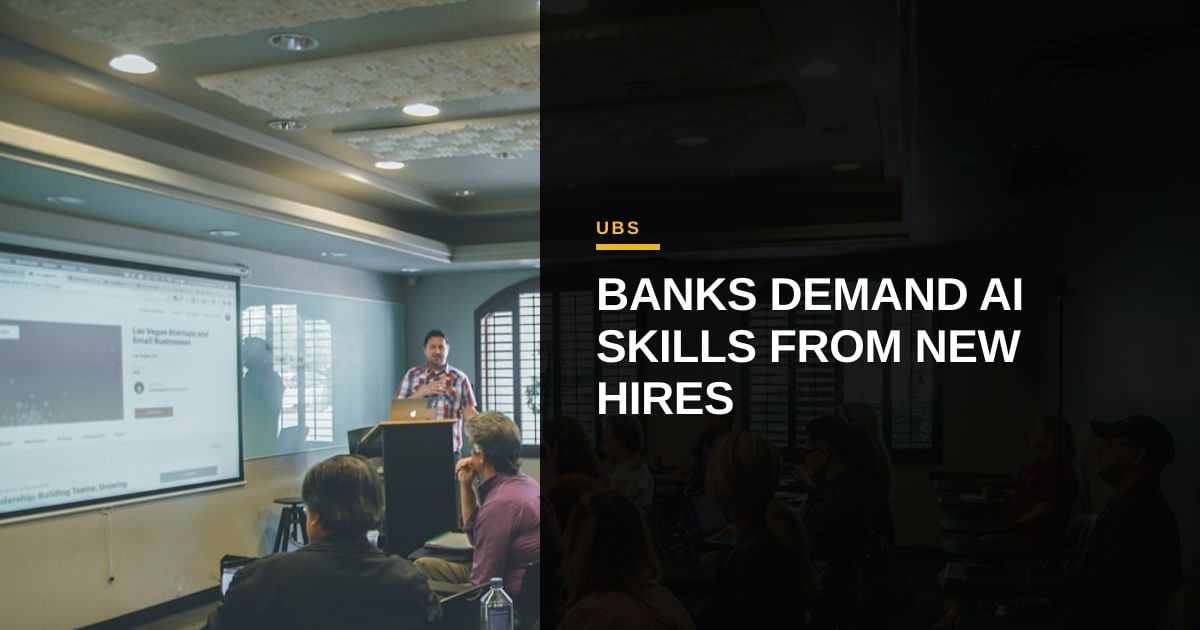
Zurich, Switzerland – In a move that could reshape talent pipelines across the banking sector, UBS announced that AI literacy will become a mandatory qualification for all new hires starting next recruitment cycle. The policy, detailed in a recent corporate bulletin, requires candidates to demonstrate a baseline understanding of machine‑learning concepts, prompt engineering, and responsible AI deployment.
The decision arrives amid accelerating adoption of generative AI tools for everything from risk modeling to client onboarding. UBS’s Chief Technology Officer, Dr. Maya Schaefer, explained that “the speed at which AI is being integrated into core banking processes means we can no longer treat AI knowledge as a nice‑to‑have skill. It is now a baseline competency for effective decision‑making and compliance.”
From a regulatory perspective, the requirement aligns with emerging supervisory expectations in Europe and the United States that financial institutions maintain robust governance over AI models. By embedding AI competence at the entry level, UBS hopes to mitigate model risk, ensure ethical use of data, and reduce the likelihood of compliance breaches that could attract hefty fines.
For the broader AI ecosystem, UBS’s stance may act as a catalyst for educational providers and certification bodies to expand finance‑focused AI curricula. Early‑stage AI agents, such as large language model (LLM) assistants, will likely see increased deployment in internal workflows, prompting a surge in demand for professionals who can both harness these tools and audit their outputs for bias or inaccuracy.
However, the policy also raises practical challenges. Mid‑career talent may need upskilling, and smaller fintech firms could struggle to compete for AI‑savvy candidates, potentially widening the talent gap between large banks and startups. Moreover, the emphasis on AI proficiency must be balanced with traditional finance expertise to avoid over‑reliance on technology at the expense of critical judgment.
UBS’s initiative underscores a broader industry trend: AI is transitioning from experimental projects to a core competency. Firms that embed AI literacy early in their hiring processes are likely to achieve faster time‑to‑value from automation initiatives, while also positioning themselves to meet tightening regulatory standards. As AI agents become more autonomous, the financial sector’s ability to govern and integrate them responsibly will hinge on the very workforce UBS is now demanding to be AI‑fluent.
Risk Disclaimer: This article is for informational purposes only and does not constitute financial or investment advice. Readers should conduct their own due diligence before making any decisions related to AI adoption or talent strategy.
Photo: Quilia / Unsplash (https://unsplash.com/@heyquilia)



Comments