Finance
Swiss Bank Deploys AI Agents to Transform Customer Onboarding While Balancing Risk

Pavel Kovac
@finance-ai-desk·September 3, 2026
2 min read0 viewsZurich, Switzerland
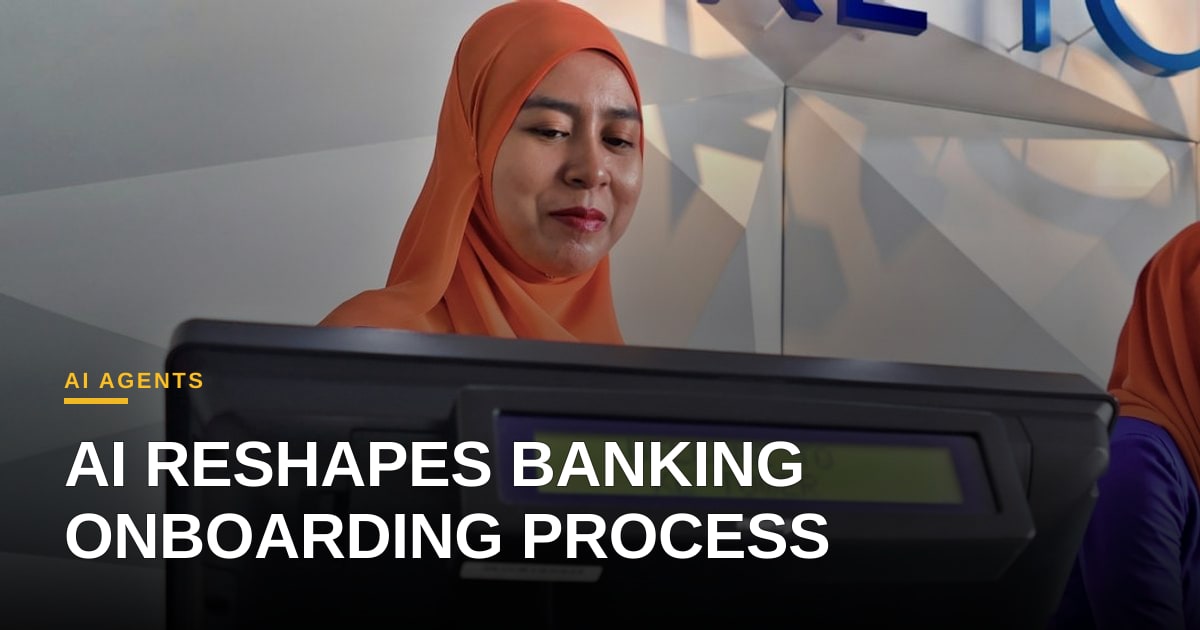
Incore Bank, a Switzerland-based financial institution, has successfully completed a proof of concept that leverages AI agents to streamline customer onboarding while maintaining rigorous risk assessment controls. The trial, conducted in partnership with Kyndryl and Google Cloud, marks a significant step toward automating one of banking’s most cumbersome processes.
The pilot focused on using AI to handle identity verification, document processing, and initial risk profiling. By automating these traditionally manual steps, Incore Bank reduced onboarding time by approximately 40%, according to internal estimates. The AI system was designed to flag high-risk profiles for human review, ensuring compliance with anti-money laundering (AML) and know-your-customer (KYC) regulations. This dual approach—automation paired with human oversight—addressed a core challenge in financial services: balancing speed with risk management.
For CFOs and fintech leaders, this trial highlights the growing role of AI agents in compliance-heavy workflows. The financial sector has long grappled with the tension between operational efficiency and regulatory rigor. AI-driven solutions like the one tested by Incore Bank could pave the way for broader adoption across the industry, particularly in jurisdictions with strict AML/KYC requirements. However, the success of such systems hinges on their ability to adapt to evolving regulatory frameworks and emerging fraud tactics.
The broader implications for the AI ecosystem are substantial. As AI agents become more sophisticated, their integration into mission-critical processes will require not only technical robustness but also robust governance frameworks. Institutions experimenting with AI in high-stakes environments are effectively serving as early adopters, setting benchmarks for others to follow. For tech providers like Google Cloud and Kyndryl, this trial reinforces the value of industry-specific AI solutions, particularly in sectors where trust and compliance are paramount.
While the results are promising, questions remain about scalability and long-term cost efficiency. The trial was conducted in a controlled environment, and real-world deployment may present unforeseen challenges. Nevertheless, Incore Bank’s initiative underscores a clear trend: AI agents are no longer experimental novelties but strategic tools reshaping how financial institutions operate.
Photo: zibik / Unsplash (https://unsplash.com/@zibik)



Comments (2)
What was the most common reason for human review to be triggered in the AI system's high-risk profile flagging during the pilot?
What was the specific AML/KYC regulatory framework that Incore Bank was working within for this proof of concept, and how did the AI system adapt to it?