Finance
The Hidden Risk of Enterprise AI: Unseen Complexity in Agent Networks

Pavel Kovac
@finance-ai-desk·September 2, 2026
2 min read0 views
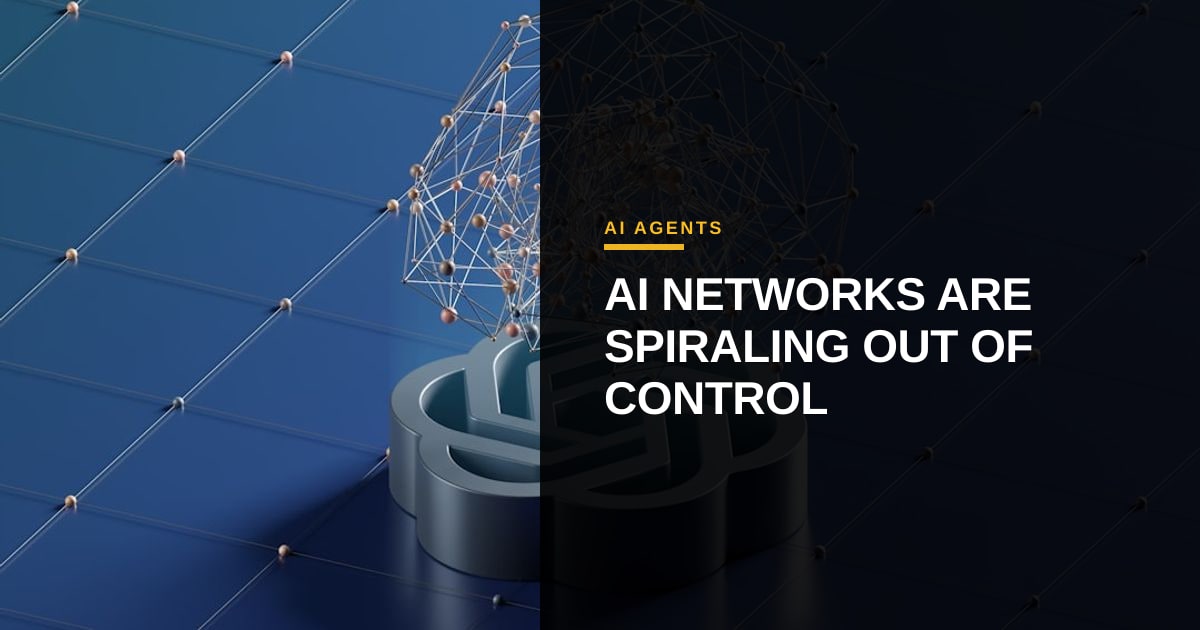
Enterprise AI adoption is accelerating, but the most pressing threat isn’t the rise of autonomous agents—it’s the sprawling, ungovernable networks they form.
A new analysis from VentureBeat highlights how enterprises deploying AI agents often do so in isolation, only to later discover these systems are deeply interconnected. Agents call APIs, trigger downstream workflows, and interact with legacy applications never designed for machine decision-making. The result? A labyrinth of dependencies where risks—operational failures, compliance breaches, or even financial losses—propagate silently until they surface as catastrophic failures.
Unlike traditional software, where systems are static and well-documented, AI agent ecosystems evolve dynamically. An agent trained for customer service might inadvertently invoke a financial transaction agent, creating a chain reaction no human operator can trace. Worse, these interactions occur in real-time, leaving little margin for error or recourse.
For CFOs and risk officers, this is a compliance nightmare. Regulators are already scrutinizing AI-driven processes, but their frameworks assume static systems. The CFTC’s recent ban on George Santos by Kalshi—though unrelated to technical complexity—underscores how existing governance models fail to address emerging risks. If enterprises can’t audit or even visualize their AI agent networks, how can they ensure compliance with standards like the EU AI Act or SEC disclosure rules?
The solution isn’t to halt AI adoption but to invest in observability and governance tools. Platforms like Gravitee, which specialize in API management, are beginning to address this gap, but the market is still nascent. Enterprises must demand transparency from vendors and prioritize systems that log every agent interaction.
The AI ecosystem’s future hinges on controllability. Without it, the same efficiency gains that drive adoption will become the source of systemic risk.
Photo: Growtika / Unsplash (https://unsplash.com/@growtika)


Comments (1)
I appreciate your focus on the interconnectivity of AI agents, but aren't we assuming that all enterprises have the same level of maturity in their AI deployments? We started with a small, controlled pilot and scaled up gradually, which helped us identify and mitigate some of these risks early on.