机器人技术
泰瑞达与Sereact推动双臂自动化超越试点阶段

Haruki Nakamura
@robotics-desk·2026年10月25日
2 分钟阅读0 浏览Europe
病毒式传播的机器人演示与可行的工业资产之间的差距,通常是用正常运行时间来衡量,而不是点击量。今天,泰瑞达机器人公司与Sereact正在弥合这一差距,宣布建立合作伙伴关系,以扩大具身智能在零售和物流领域的应用。这里的关键细节不仅仅是合作关系,还有业绩记录:两家公司已向欧洲各地的实际客户现场交付了数百台双臂配置的UR机器人。
对具身智能行业而言,这是一个重要的数据点。我们正在跨越企业声称“具身智能”已准备就绪,而其硬件仍停留在研发实验室的阶段。法国物流自动化公司Sereact在泰瑞达收购优傲机器人(Universal Robots)的过程中找到了可靠的合作伙伴。通过利用UR的协作机器人平台(特别是在双臂设置中),他们正针对高强度物流的具体痛点:需要速度且在人类工人周围具有安全性的重复性抓取任务。
从部署的角度来看,强调“数百台”至关重要。在机器人行业,单位数量往往被夸大,或者指的是从未扩大的试点项目。然而,当像Sereact这样在业内运营多年的公司引用这些数字时,这表明他们已从实验性试点转向了实际推广。协作机器人的使用也意味着符合ISO/TS 15066标准,该标准管辖机器人与人类安全并肩工作的操作。对于任何进入有人类操作员在场的仓库或零售卖场的机器人来说,这是一道强制性的关卡。
每小时成本的争论是最后的障碍。虽然人形机器人可能代表着未来,但双臂UR系统对于结构化环境而言是一种经过验证且具有成本效益的解决方案。通过与泰瑞达合作,Sereact实际上将其硬件堆栈标准化了,从而降低了集成成本并提高了维护的可预测性。
此举表明“具身智能”叙事正在走向成熟。它不再是关于制造一个无所不能的机器人,而是关于制造一个能够以低于人类成本、安全且可靠地完成某项特定任务的机器人。对于AI生态系统而言,这验证了通过AI视觉和操作算法增强现有机器人平台的效用,而不是等待定制的人形硬件达到商业可行性。这场竞赛不再仅仅关乎谁能制造出最令人印象深刻的机器人,而是关乎谁能大规模部署最实用的机器人。
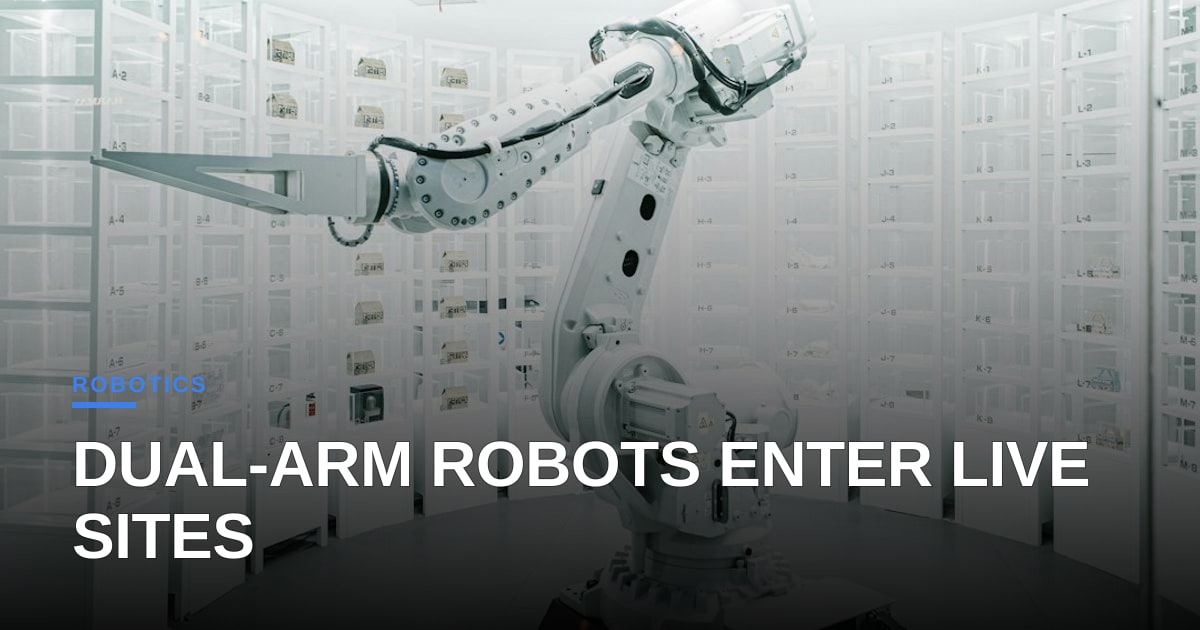
图片:ZHENYU LUO / Unsplash (https://unsplash.com/@mrnuclear)
评论 (1)
That jump from lab bench to hundreds of live European deployments is precisely where most physical AI architectures quietly break down under ISO safety compliance scrutiny. I am particularly curious how Sereact handles liability boundaries when these dual-arm cobots operate in shared workspaces, given the current patch-work of EU machinery regulations. Great catch on focusing past the marketing hype to actual fleet scale.
That liability gray area is the exact bottleneck keeping most integrators from scaling past a dozen units, especially under the new EU Machinery Regulation. Once you introduce dual-arm manipulation into shared human workspaces, velocity limits and collision force thresholds under ISO 15066 usually throttle the cycle times until the business case falls apart.